

Audio By Carbonatix
In the Ashanti Region, 30-year-old Abdul-Aziz is quietly defying expectations and reshaping what disability can mean. His story is not about limitation, but about resilience, skill, and the power of opportunity.
Abdul-Aziz lost his father when he was just six years old. Born with hearing and speech impairments, he grew up in a household where his widowed mother struggled to raise three children on her own. Life was never easy, but she refused to let his disability become his identity.
With steady encouragement and determination, Abdul-Aziz made it through junior high school. Going any further, however, was impossible—the family simply could not afford it.
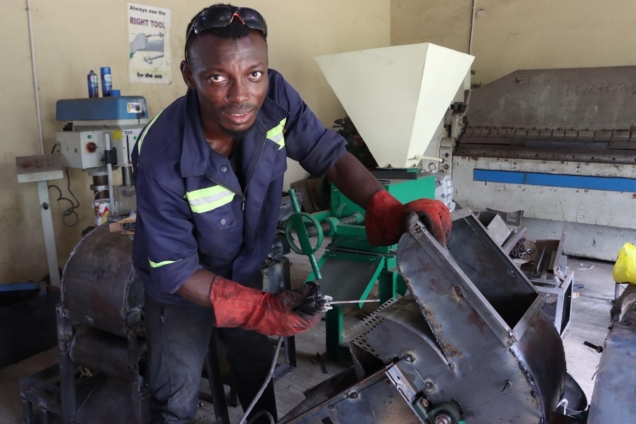
For many people facing similar challenges, life often leads to the streets, surviving on handouts. Abdul-Aziz chose another route. Determined to contribute meaningfully to his community in Konongo, he decided to learn a practical skill. He found his calling in welding, believing that with the right skills, he could solve problems rather than become one.
He apprenticed under a local welder, earning a modest income and discovering pride in creating things with his own hands. But when the apprenticeship ended, reality hit hard. Without financial support or equipment, starting his own workshop was out of reach. For months, he stayed at home, questioning whether all his effort had been for nothing.
Then came a turning point.
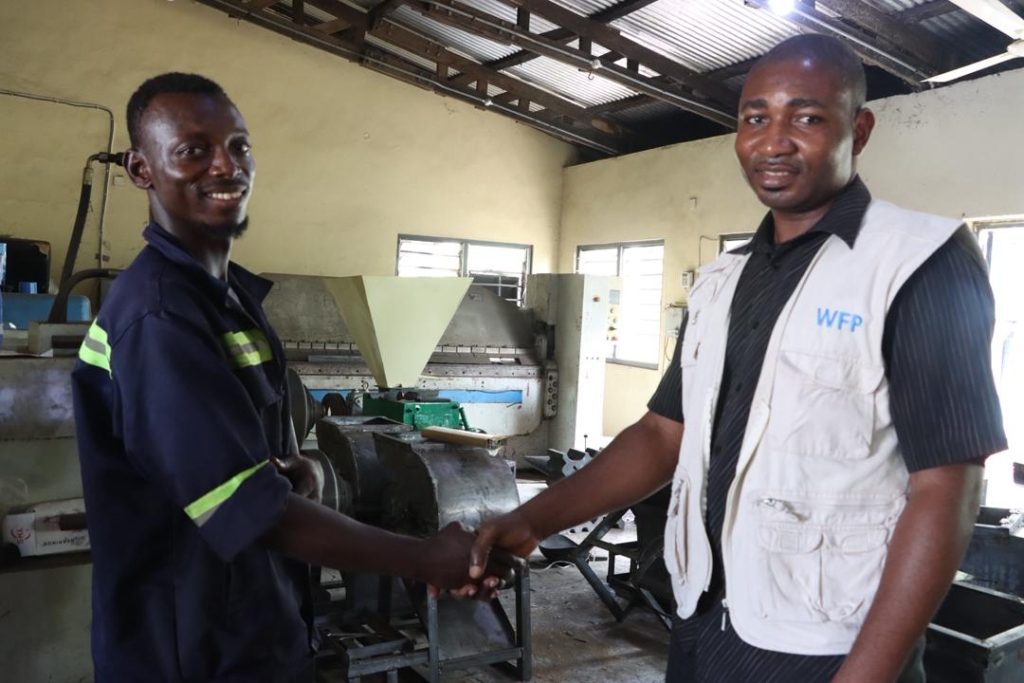
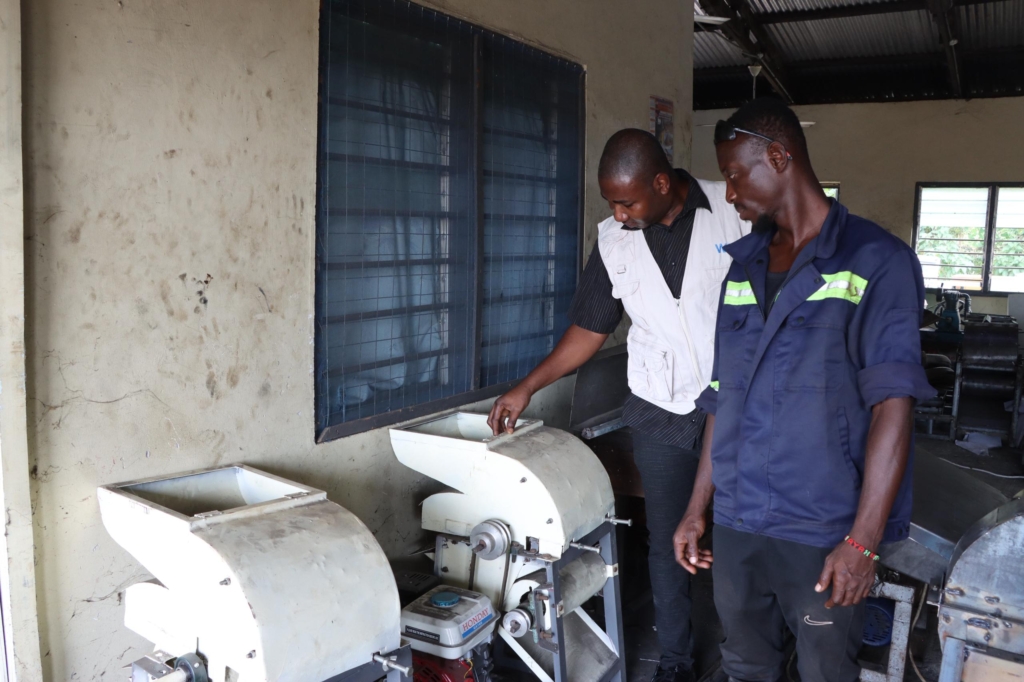
Through the World Food Programme’s Agribusiness for Youth Employment initiative—funded by the Mastercard Foundation—Abdul-Aziz joined a specialized training programme in post-harvest equipment fabrication. He embraced the opportunity wholeheartedly. During the training, he learned to fabricate maize and soybean threshers, machines that help smallholder farmers cut post-harvest losses, a major challenge in Ghana’s agricultural sector.
Today, Abdul-Aziz works alongside other young fabricators, producing equipment that supports farmers and strengthens food systems. His disability has not slowed him down; if anything, it has deepened his determination. For every two maize threshers and two soybean threshers he produces, he earns GHS 4,000. He is saving carefully, with a clear vision for the future: to open his own welding and fabrication center and employ other young people, especially those living with disabilities.
“I’m happy because I’ve learnt new skills and I’m paid for the work, which I use to take care of myself,” he says. “Together with my colleagues, we are producing 43 threshers—29 for maize and 14 for soyabean. I’m saving part of my income to buy a welding machine and tools so I can start my own workshop next year and employ young people to make threshers for farmers in Kumasi.”
Abdul-Aziz’s journey is more than a personal success story. It is a powerful reminder that with support, skills, and opportunity, disability does not determine destiny. One welded frame at a time, he is building not just machines, but a future full of purpose and hope.
Latest Stories
-
Berekum Chelsea edge Aduana FC in Bono derby to boost survival hopes
2 hours -
‘They can’t control the team’ – Ernest Thompson doubts local coaches for Black Stars role
3 hours -
Ghana-born midfielder Seidu realises ‘dream’ with Atlético Madrid debut
3 hours -
GPL 2025/26: Bubakari strikes late to hand All Blacks vital win over Dreams FC
3 hours -
Fatal crash on Kintampo–Tamale highway claims four lives
3 hours -
2025–26 FA Cup Semifinal Draw: Chelsea, Man City Learn Wembley Opponents
3 hours -
GPL 25/26: Gold Stars back on top after beating Nations FC
4 hours -
GPL 2025/26: Heart of Lions roar back with victory over Vision FC in Kpando
5 hours -
Solomon Agbasi: Hearts keeper in stable condition after concussion
5 hours -
GPL 2025/26: Late Salim Adams penalty earns Medeama draw at Bechem
5 hours -
Hearts pip Young Apostles 1-0 to end 5-game winless run
5 hours -
Boakye Agyarko marks Easter Sunday with a call for Godly leadership ahead of nationwide campaign tour
6 hours -
Pepsi withdraws as UK festival sponsor after Kanye West backlash
6 hours -
Pope Leo calls for global leaders to choose peace in his first Easter Mass
6 hours -
Kpando MP highlights progress on road projects
6 hours