

Audio By Carbonatix
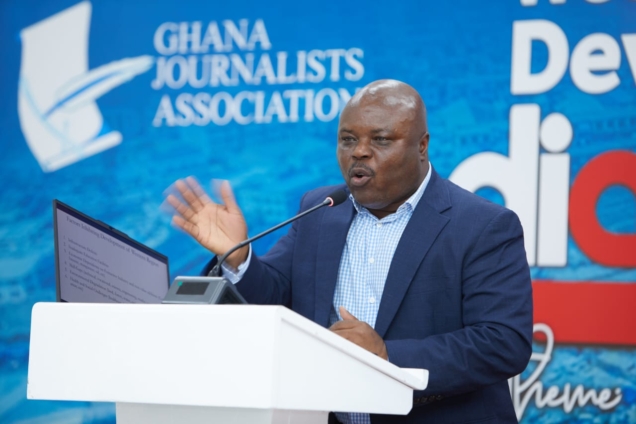
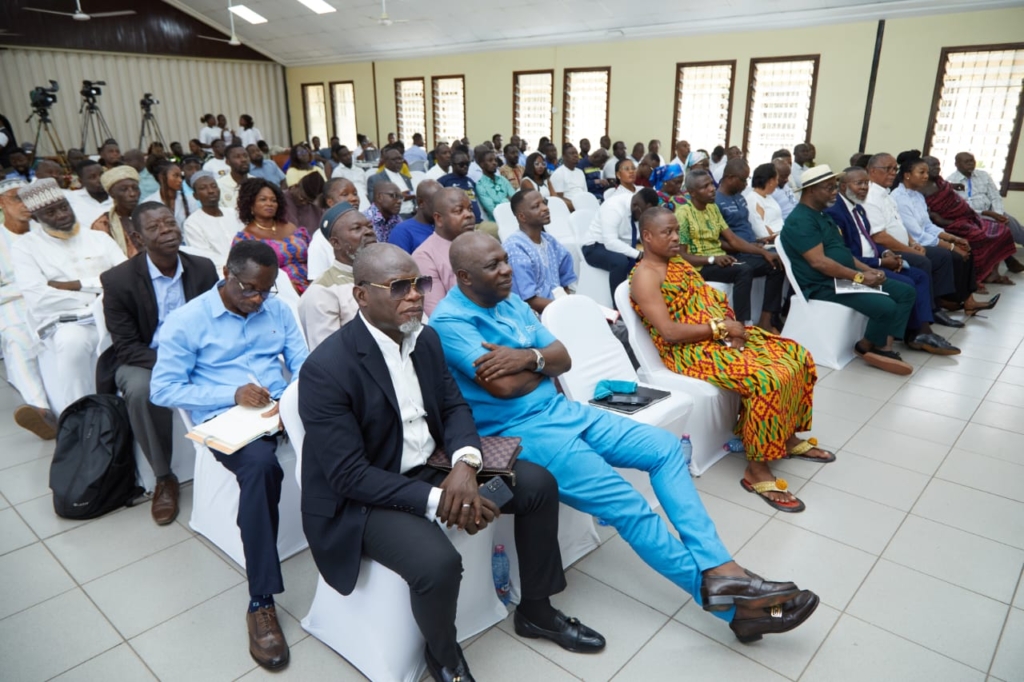
Under the glow of the morning sun, a diverse assembly of leaders, stakeholders, and citizens gathered in the Western region. It was no ordinary event it was a moment of reckoning. The Western Region Development Dialogue, organized by the Western Region Chapter of the Ghana Journalists Association (GJA) with funding from the Canada Fund for Local Initiatives (CFLI), was more than just a forum; it was a clarion call to redefine the region’s development agenda.
The room buzzed with a sense of urgency. Traditional rulers, government officials, civil society organizations, and media professionals sat shoulder to shoulder, united by a common goal charting a sustainable path for the region’s growth.
A Region of Wealth and Woes
The Western Region, home to rich deposits of gold, bauxite, manganese, oil, and timber, is one of Ghana’s most resource-abundant areas. Yet, paradoxically, it grapples with infrastructure deficits, environmental degradation, and youth unemployment.
In his keynote address, Dr. Richard Gyimah, speaking on behalf of the Minister of Lands and Natural Resources, acknowledged the paradox. He referenced a 2012 Western Region Spatial Development Framework, which was designed to guide sustainable development but had largely remained on paper.
"Our region covers only 10% of Ghana’s landmass but contributes over 50% of the nation’s wealth," he noted. "Yet, we continue to battle land degradation, illegal mining, and weak governance structures that delay development projects."
The statistics were staggering. While the region's extractive industries fueled national revenue, many of its communities lacked basic healthcare, quality education, and proper road networks.
"How do we ensure that our people benefit from the riches beneath their feet?"
It was a question that lingered in the minds of many.
Voices of Change: From Dialogue to Action
The dialogue was not just about problems it was about solutions.
The Chairman of the Western Region GJA, Desmond Cudjoe, set the tone, emphasizing the media’s role as a bridge between policymakers, communities, and stakeholders.
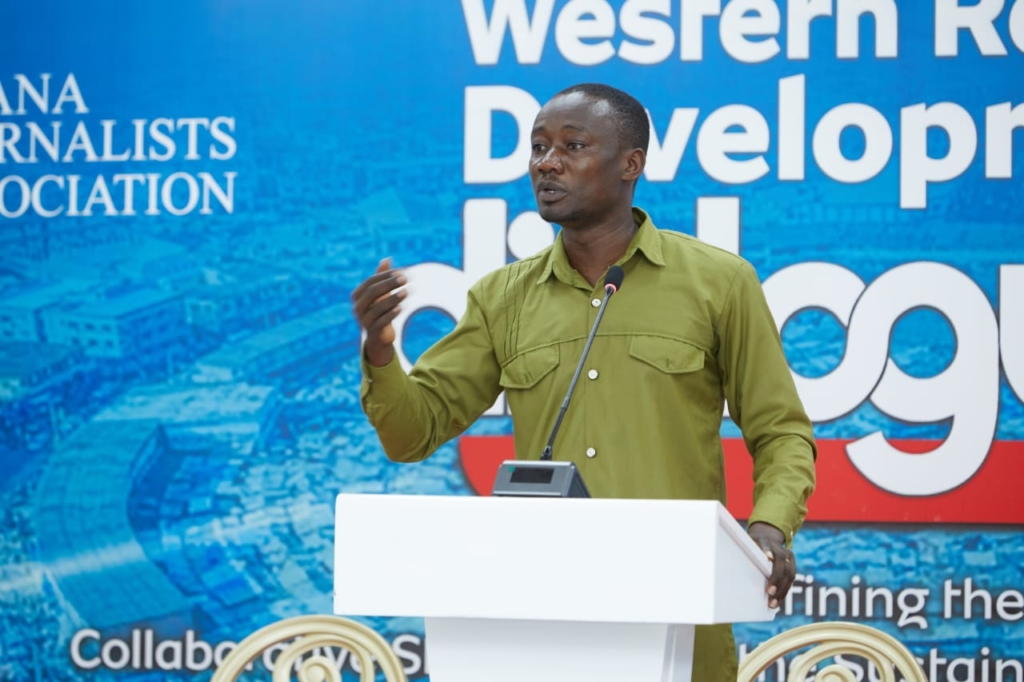
"We, as journalists, are not just storytellers; we are enablers of change. This dialogue must lead to action, not just another document on a shelf," he asserted.
Joseph Cudjoe, former Minister of Public Enterprises, took the conversation further, outlining strategies for job creation and economic diversification. He challenged the region to move beyond its over-reliance on raw material exports and instead invest in local processing industries that add value to its vast resources.
"We need a new generation of entrepreneurs. Our region must embrace STEM education, material science, and innovation to drive sustainable wealth creation," he urged.
Traditional authorities also played a crucial role. Awulae Angama Tu Agyan II spoke passionately about the need for vocational training and tourism development, calling attention to the region’s untapped cultural and artistic potential.
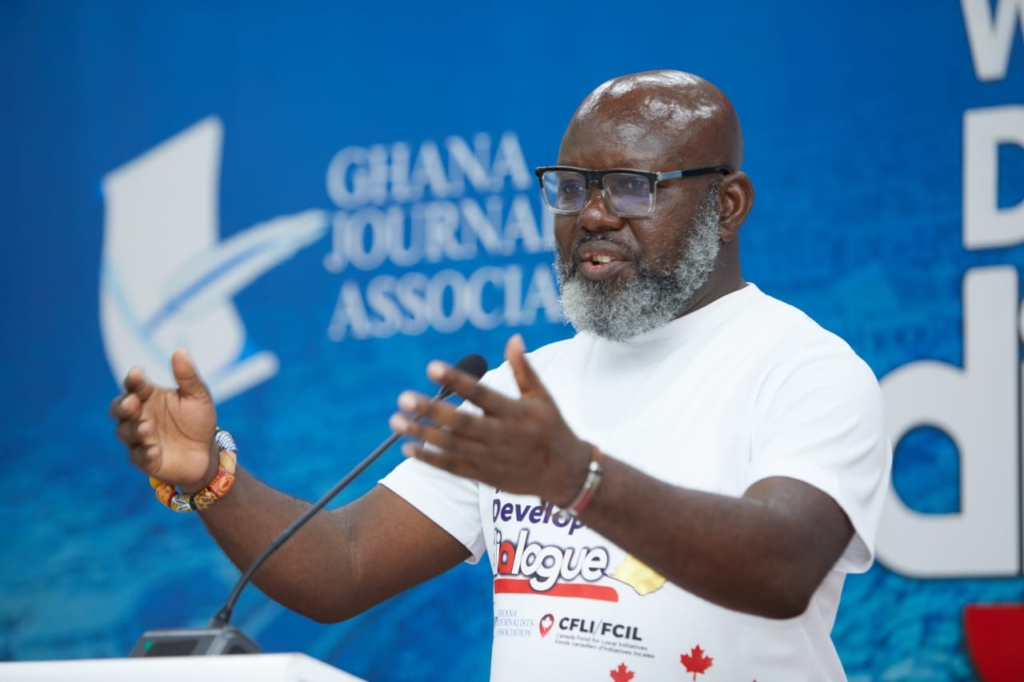
"Our festivals, our music, our arts—they are assets. Let’s develop them into a thriving industry that creates jobs and preserves our identity," he said, citing global icons like C.K. Mann, Kofi Kinaata, and Martha Bissah, whose talents have put the Western Region on the map.
The Battle Against Galamsey and Environmental Decay
But no conversation about the Western Region could ignore the looming shadow of illegal mining (galamsey).
With water bodies turning brown and farmlands swallowed by craters, the dialogue echoed with urgent calls for stricter enforcement of environmental laws.
"We can not watch our forests and rivers disappear. Strict regulation, community policing, and alternative livelihoods must go hand in hand," said one environmental advocate.
The "Tree for Life" initiative, aimed at reclaiming degraded lands, was among the proposed solutions.
A Future Built on Collaboration
As the dialogue drew to a close, one message was clear: progress will not come from a single entity. It will take collective action government, traditional rulers, businesses, the media, and ordinary citizens.
The Western Region is at a crossroads. With bold leadership, sustainable policies, and community-driven initiatives, it has the potential to transition from an extractive-based economy to a hub of industrialization, tourism, and environmental excellence.
"Help me, and let me help you," goes the Akan proverb. If all hands are on deck, the Western Region’s best days lie ahead.
The dialogue has ended. The real work begins now.
Latest Stories
-
Kwahu Business Forum: Ghana Sports Fund calls for stronger corporate backing for sports dev’t
9 minutes -
Penplusbytes’ statement on police action against deepfake and misinformation activities in Ghana
40 minutes -
QNET, EOCO partnership showcased at UN global fraud summit as model for fighting organised crime
40 minutes -
Mussa Dankwah is like a ‘lotto doctor’ – Miracles Aboagye
46 minutes -
Investors target Ho Airport for training and maintenance hub — GACL Chair
51 minutes -
NDC’s ‘grand deception’ on anti-LGBTQ+ bill exposed – Ntim Fordjour
52 minutes -
Speak out against Mahama government’s LGBTQI+ u-turn – Ntim Fordjour to clergy
56 minutes -
Ghanaians worse off despite improved macroeconomic indicators — Miracles Aboagye
59 minutes -
Police intercept narcotics, arrests five suspects in Upper West
1 hour -
Government to establish Kumasi Machinery Innovation Park under 24-Hour Economy programme
1 hour -
When Hormuz Fails: The day a waterway stops the world
1 hour -
Ghanaian students in UK to protest over unpaid fees, stipends
1 hour -
Inflation to go up marginally in April 2026 – Report
1 hour -
Newborn baby found abandoned at Kronkromase cemetery, residents in shock
1 hour -
VIP Jeoun Transport increases fares effective April 8
1 hour