

Audio By Carbonatix
The Ghana Card has once again been positioned as a key tool in the fight against fraud in the financial sector, as government announces new measures targeting money laundering and related financial crimes.
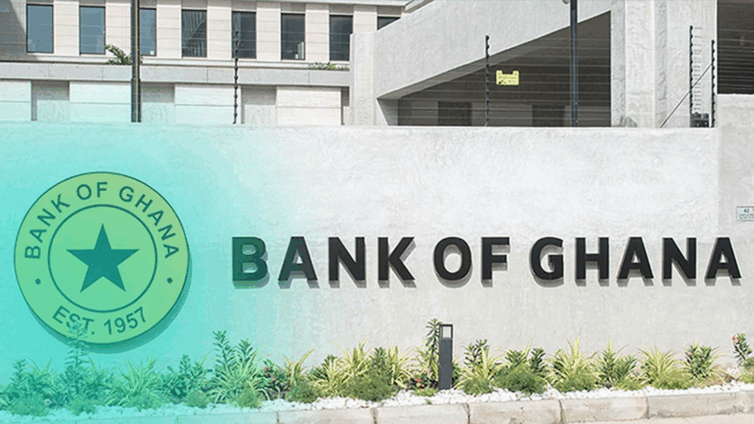
In a joint move, the Bank of Ghana (BoG) and the Financial Intelligence Centre (FIC) have introduced stringent requirements mandating foreign exchange bureau operators to demand a valid Ghana Card from customers before conducting transactions.
The measures form part of the Anti-Money Laundering, Combating the Financing of Terrorism and Combating the Proliferation Financing (AML/CFT/CPF) Guidelines for Foreign Exchange Bureaux, which took effect immediately upon their issuance in September 2025.
Foreign exchange bureaux have long been identified as vulnerable points for money laundering and other financial crimes. Authorities say the mandatory use of the Ghana Card—already the primary identification document for banking transactions—will help close existing loopholes and strengthen regulatory oversight.
The guidelines are expected to enhance the detection, prevention, and mitigation of risks associated with money laundering, terrorism financing, and proliferation financing. They also require forex bureaux to strictly enforce Customer Due Diligence (CDD) procedures using the Ghana Card.
Under the new rules, foreign exchange bureaux are required to prominently display a notice in customer areas informing clients that a valid Ghana Card must be presented for all transactions. For transactions involving amounts of US$10,000 or more, operators are mandated to capture customers’ Ghana Card details and conduct biometric verification to confirm their identities.
The guidelines further require operators to apply enhanced scrutiny to transactions involving Politically Exposed Persons (PEPs). Forex bureaux are expected to identify such individuals and report any suspicious transactions to the relevant authorities within 24 hours.
The Ghana Card has increasingly become the country’s primary form of identification and has played a significant role in reducing identity fraud in both the financial and telecommunications sectors. It is also required to access a wide range of government services, including passport and driver’s licence applications, vehicle insurance, and business registration.
Regulators say the latest directive reinforces the central role of the Ghana Card in safeguarding the integrity of Ghana’s financial system.
Latest Stories
-
Hubtel willing to contribute to Ghana’s proposed AI fund – CEO
3 minutes -
Nkrumah family pays tribute to Gamal, says he died after prolonged illness
13 minutes -
Police arrest eight suspects in anti-narcotics operation at Okaishie Drug Lane
24 minutes -
Benjamin Danso pledges grassroots empowerment in NDC regional chairmanship bid
26 minutes -
GES recommends reposting of Obuasi SHTS headmaster after August 2026 campus riot
29 minutes -
Rocky Dawuni celebrates King Ayisoba for taking traditional music global
41 minutes -
Ghana targets $5bn in annual economic gains from AI – Sam George
43 minutes -
From childhood dreams to future careers: Ecobank’s Big Pitch seeks to promote early savings and investment
45 minutes -
Public office demands make party work difficult for NDC appointees – Mahdi Gibril
46 minutes -
AI could deepen rural-urban inequality without better connectivity – Sam George
49 minutes -
One of six inmates who escaped from Konongo police cells rearrested
54 minutes -
Sam George cautions ministers against reading unverified AI-generated speeches
58 minutes -
Ghanaian entrepreneur Mary Nyamekye Asamoah wins Africa Travel 100 award
1 hour -
Obuasi SHTS abuse: Sanction all officials who failed to act – Moving Masculinity
1 hour -
Lucy Agyepong honoured for excellence in engineering education at maiden GAAS Women’s Awards
1 hour