

Audio By Carbonatix
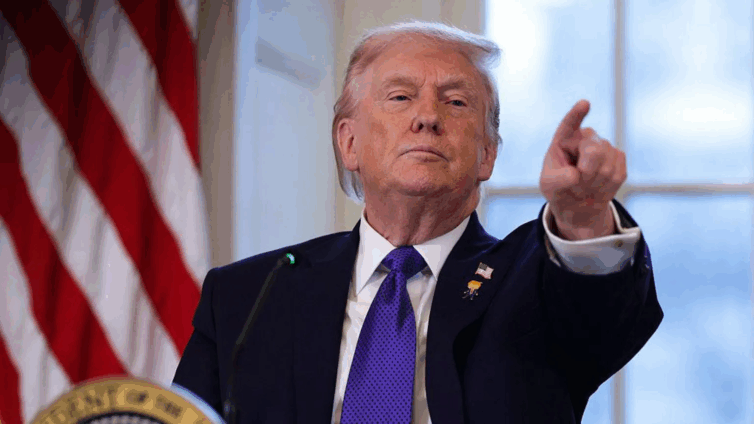
Donald Trump has urged Cuba to "make a deal" or face consequences, warning that the flow of Venezuelan oil and money would now stop.
The US president has been turning his attention to Cuba since US forces seized Venezuela's leader Nicolás Maduro in a 3 January raid on its capital, Caracas.
Venezuela, a long-standing ally of Cuba, is believed to send around 35,000 barrels of oil a day to the island.
Cuba's foreign minister responded by saying his nation retained the right to import fuel "without interference", while its president said: "No one dictates what we do."
The Trump administration's tactic of confiscating sanctioned Venezuelan oil tankers has already begun to worsen a fuel and electricity crisis in Cuba.
On Friday, it seized a fifth oil tanker it said was carrying sanctioned oil from Venezuela.
"Cuba lived, for many years, on large amounts of OIL and MONEY from Venezuela. In return, Cuba provided 'Security Services' for the last two Venezuelan dictators, BUT NOT ANYMORE!" Trump posted on Truth Social on Sunday.
"THERE WILL BE NO MORE OIL OR MONEY GOING TO CUBA - ZERO! I strongly suggest they make a deal, BEFORE IT IS TOO LATE."
Trump did not specify the terms of a deal or the consequences Cuba could face.
But Cuban foreign minister Bruno Rodriguez said the Caribbean island nation had "the absolute right to import fuel" from any willing exporter "without interference or subordination to the unilateral coercive measures of the United States".
He added that, unlike the US, Cuba does not lend itself to "blackmail or military coercion against other States".
Trump also referenced the raid to seize Maduro and his wife, Cilia Flores, who are now facing drug trafficking and other charges in the US.
Cuba has for years supplied Maduro with his personal security detail. The Cuban government said 32 of its nationals were killed during the US operation in the Venezuelan capital, Caracas.
Trump said: "Most of those Cubans are DEAD from last week's USA attack, and Venezuela doesn't need protection anymore from the thugs and extortionists who held them hostage for so many years.
"Venezuela now has the United States of America, the most powerful military in the World (by far!), to protect them, and protect them we will."
Rodriguez said Cuba had "never received monetary or material compensation for the security services it has provided to any country".
While the Trump administration has not stated clear plans for Cuba, the US president has previously said that a military intervention was unnecessary because the country was "ready to fall".
US Secretary of State Marco Rubio indicated last week that Cuba's leaders should be worried, saying that he would be "concerned" if he were in the Cuban government and that "they're in a lot of trouble".
On Sunday, Trump also re-posted on social media a message suggesting that Rubio, a Cuban-American former Florida senator and the son of Cuban exiles, could become president of Cuba.
Trump shared that post with the comment: "Sounds good to me!"
Trump has increasingly framed US policy through the lens of a revived 1823 "Monroe Doctrine" that promises US supremacy in the western hemisphere - rebranding it the "Donroe Doctrine".
The last few months of US foreign policy have become increasingly focused on Latin America and the left-wing leaders with whom it has ideological differences, with US actions justified as combating drug trafficking.
After the unprecedented raid on Caracas, Trump said a military operation targeting Colombia "sounds good" and has repeatedly told its President Gustavo Petro to "watch his ass". The US imposed sanctions on Petro - Colombia's first left-wing leader - in October, saying he was allowing drug cartels to "flourish".
Trump has also said that drugs were "pouring" through Mexico into the US, adding, "we're gonna have to do something."
The US president has offered to send US troops to Mexico to combat cartels, but President Claudia Sheinbaum has publicly rejected any US military action on Mexican soil.
The US and Cuba have had a strained relationship since the communist Fidel Castro overthrew a US-backed government in 1959.
While steps were taken to improve diplomatic relations, particularly under former US President Barack Obama, the Trump administration has reversed many of these moves.
Shortly after being sworn in to a second term, Trump reinstated Cuba's designation as a state sponsor of terrorism, which had been lifted just days before by then-President Joe Biden.
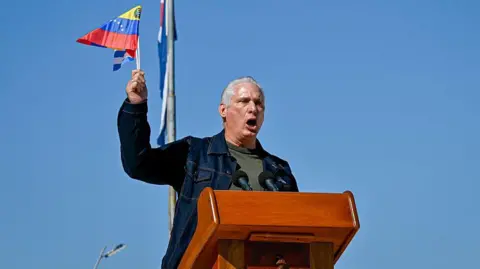
Cuba's President Miguel Diaz-Canel said on Sunday: "Those who turn everything into a business, even human lives, have no moral authority to point fingers at Cuba for anything, absolutely anything.
"Those who today hysterically rail against our nation do so out of rage over the sovereign decision of this people to choose their political model."
Latest Stories
-
Ghana’s economic salvation lies not in shifting geo-political allegiances – Dr Atuahene
1 minute -
BoG proposes tougher rules on loan repayment assessment
6 minutes -
Government plans mandatory drug tests for public service jobs — Muntaka
11 minutes -
Media urged to intensify awareness campaigns on breast cancer
16 minutes -
Interior Minister urges public to share drug intelligence
22 minutes -
Afadzato South DCE commissions water projects, teachers’ bungalow
27 minutes -
Council of State urges sustained dialogue, negotiations as teachers resume work
32 minutes -
We are committed to leaving a legacy in Mandari – Bole-Bamboi MP
36 minutes -
Greater Accra teachers resume work after strike suspension
44 minutes -
Education Minister assures teachers of salary adjustments by October 16
49 minutes -
Abass Osabutey declares bid for NDC Deputy National Organiser position
51 minutes -
Education Minister inaugurates NDU Governing Council, announces $25m seed funding
59 minutes -
THE LAW 101: La Beach Demolitions – The State’s own documents, the courts’ orders – and the bulldozers
1 hour -
DVLA contributes GH¢17.7m to Consolidated Fund in 2025
1 hour -
Why disaster risk reduction must connect early warnings, preparedness and financial protection to household-level resilience
1 hour