

Audio By Carbonatix
I have followed with keen interest the range of public responses to the leadership of Captain Ibrahim Traoré in Burkina Faso, ranging from enthusiastic applause by many, to cautious scepticism by some, and vocal criticism by a minority.
Over the past two years, the country has experienced a reported GDP growth of approximately 18%. Traoré’s administration has rejected external loans from institutions such as the IMF and the World Bank, reduced the salaries of ministers and parliamentarians by 30%, and increased civil servant pay by 50%.
His government has reportedly cleared domestic debt arrears, established two tomato processing plants to boost agro-industrial employment and reduce import dependence, inaugurated a modern gold refinery to enhance value addition and reduce raw mineral exports, and launched the country’s second cotton processing facility.
He has also created the first National Support Centre for Artisanal Cotton Processing to support smallholder producers. Agricultural output has increased markedly, and infrastructure development—including road upgrades and a new airport—is underway.
Against this backdrop, public admiration appears understandable. Yet this experience raises fundamental questions about governance and the relationship between democracy and development.
While liberal democracy is often championed as the optimal political system, its legitimacy ultimately rests on its ability to deliver tangible improvements in people’s lives. As Amartya Sen has argued, “A country does not have to be deemed fit for democracy; rather, it has to become fit through democracy.” However, when democracy is reduced to periodic elections with little accountability, and when it primarily benefits a narrow political elite, citizens may begin to question its value.
As the events in Burkina Faso suggest, citizens appear to be yearning not merely for democratic form but for pragmatic, results-oriented leadership that addresses structural poverty, inequality, and underdevelopment. The philosopher John Dewey once noted that “democracy is more than a form of government; it is primarily a mode of associated living.” But when that mode of living fails to secure livelihoods, dignity, and hope, its foundations begin to erode.
The most sobering lesson is this: in literal terms, people do not eat democracy. Governance must be judged not solely by its institutional design, but by its capacity to uplift the lives of the many.
If democratic systems are repeatedly used as a façade for elite capture and mass impoverishment, we risk undermining not just institutions but the very idea of democratic legitimacy. As history reminds us, the gap between democratic ideals and material deprivation can become fertile ground for disillusionment—and ultimately, instability.
-
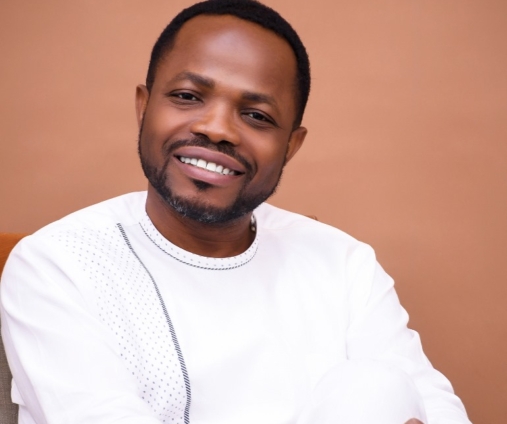
The author, FM Dzanku is a Development Economist, ISSER, University of Ghana.
Latest Stories
-
[Watch Live] Shatta Wale, Kofi Kinaata, and others ignite the grand finale of Gomoa Easter Carnival
2 hours -
Berekum Chelsea edge Aduana FC in Bono derby to boost survival hopes
5 hours -
‘They can’t control the team’ – Ernest Thompson doubts local coaches for Black Stars role
6 hours -
Ghana-born midfielder Seidu realises ‘dream’ with Atlético Madrid debut
6 hours -
GPL 2025/26: Bubakari strikes late to hand All Blacks vital win over Dreams FC
6 hours -
Fatal crash on Kintampo–Tamale highway claims four lives
6 hours -
2025–26 FA Cup Semifinal Draw: Chelsea, Man City Learn Wembley Opponents
6 hours -
GPL 25/26: Gold Stars back on top after beating Nations FC
7 hours -
GPL 2025/26: Heart of Lions roar back with victory over Vision FC in Kpando
8 hours -
Solomon Agbasi: Hearts keeper in stable condition after concussion
8 hours -
GPL 2025/26: Late Salim Adams penalty earns Medeama draw at Bechem
8 hours -
Hearts pip Young Apostles 1-0 to end 5-game winless run
8 hours -
Boakye Agyarko marks Easter Sunday with a call for Godly leadership ahead of nationwide campaign tour
9 hours -
Pepsi withdraws as UK festival sponsor after Kanye West backlash
9 hours -
Pope Leo calls for global leaders to choose peace in his first Easter Mass
9 hours