

Audio By Carbonatix
In Ghana’s most vulnerable coastal communities, the sea is no longer just swallowing homes, it is tearing at the very foundations of public infrastructure. As the coastline retreats year after year, schools, hospitals, and health centers are edging closer to collapse.
In communities such as Fuveme, Salakope, Agavedzi, Kporkporgbor, and Kedzikope, the question hangs heavily: When the sea vomits again, where will the people run?
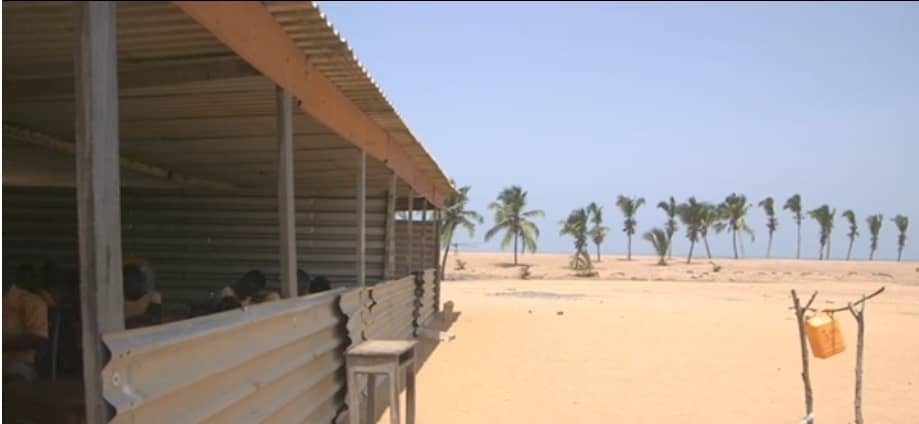
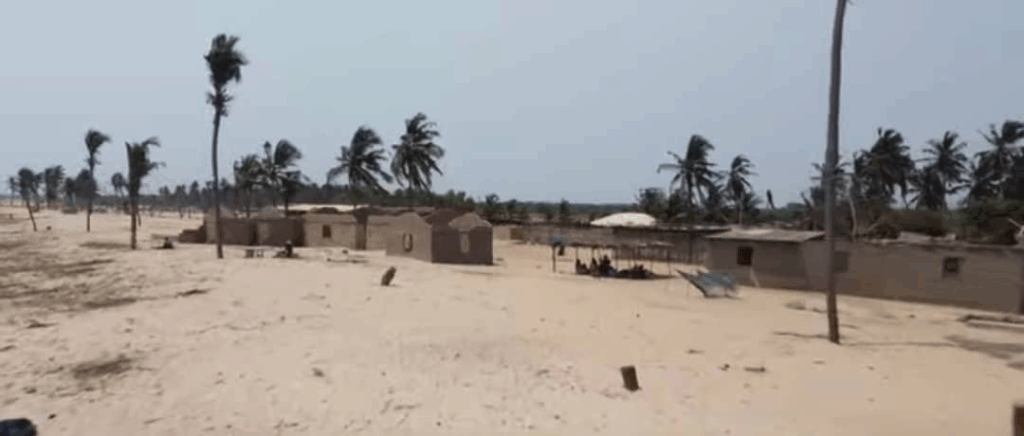
In Fuveme, the school compound once echoed with laughter. Today, it stands fractured, its foundation eaten by waves.
Mr. Nyatefe, the headteacher, now holds classes under trees.
“I cannot risk the children’s lives,” he told JoyNews.
“When the tide is strong, the ground shakes. We have lost too much already.”
Three school blocks along this stretch have partially collapsed. Others stand dangerously close to the shoreline.
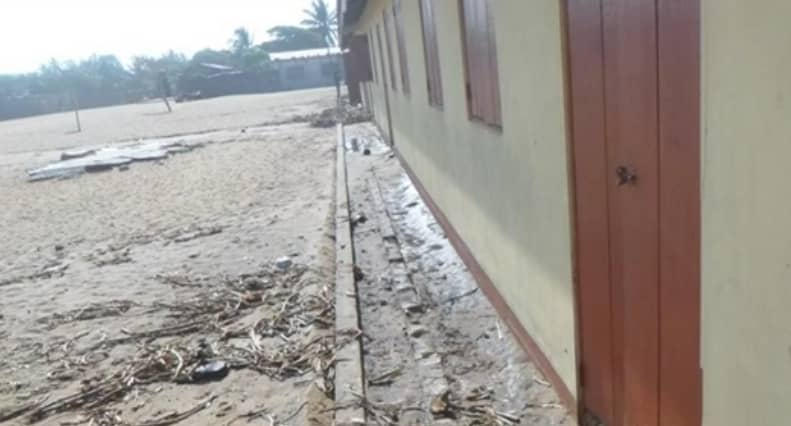
At the Kedzikope Health Centre, nurses work while watching the sea inch closer every day.
For nurse Elorm, every night brings dread.
“When the waves hit the walls, I panic,” she admits. “We cannot run fast enough if something happens.”
Ambulances can no longer access flooded roads. Pregnant women now walk up to nine kilometres for care. Medical supplies are delayed for days because transport routes are repeatedly cut by water.
Infrastructure on a Tight Rope
Experts estimate that sections of Ghana’s coastline are eroding at over five meters a year.
That rate threatens: School buildings, health facilities, water and electricity lines, and community roads.
This deterioration is fueled by sea level rise, extreme tidal waves, sand mining, mangrove loss, and decades of unmanaged coastal development.
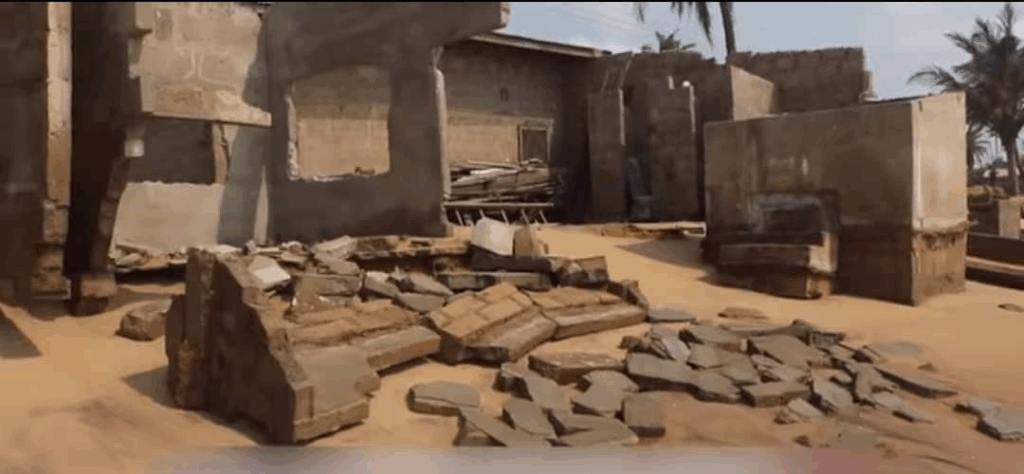
When a school collapses, children lose their right to education. When a clinic is cut off, lives are lost. When a community road vanishes, the entire local economy stalls.
The threat is not theoretical, it is unfolding now. Experts call for a national emergency plan, not piecemeal projects. Ghana must: reinforce or relocate endangered public facilities, restore mangroves to buffer the coastline, implement sustainable dredging, and build climate-resilient infrastructure.
“The sea is moving faster than policy,” a district official warns.
“If we delay, we will lose more than buildings; we will lose lives.”
***
This article is written as part of a collaborative project between JoyNews, CDKN Ghana, and the Centre for Climate Change and Sustainability at the University of Ghana, with funding from the CLARE R4I Opportunities Fund.
Latest Stories
-
One week observance for highlife legend Ebo Taylor takes place this Saturday in Saltpond
2 hours -
Lamborghini Saga: EOCO boss has tarnished my brand and cost me business deals – Shatta Wale
5 hours -
Mugabe’s son drops bail request – what has happened to the family after losing power
5 hours -
Tyla deserved to win Grammy ahead of Nigerian artists – Joeboy
5 hours -
Ishmael Norman hails Interior Minister for choosing merit over politics in security recruitment
5 hours -
Iranian minister says country will not play in World Cup
5 hours -
No evidence Swiss bus fire was terrorism, officials say
5 hours -
Three brothers arrested after explosion at US embassy in Oslo
5 hours -
‘Disgusting but not surprising’: Domelevo demands dismissal, prosecution of officials in GH¢8.1bn audit rot
5 hours -
Nitiwul sounds alarm over Sokoto strike: Claims Ablakwa’s disclosure exposes Ghana to terror risk
6 hours -
Police arrest suspect for defilement, possession of child sexual abuse materials
6 hours -
Security services recruitment: Ntim Fordjour accuses Interior Ministry of milking over GH¢100m from applicants
6 hours -
Why risk protection is the unsung partner of growth for Ghana’s SMEs, households
6 hours -
New US ambassador to South Africa summoned over ‘undiplomatic remarks’
7 hours -
Three firms roll out AI-powered security platform for financial institutions
7 hours