

Audio By Carbonatix
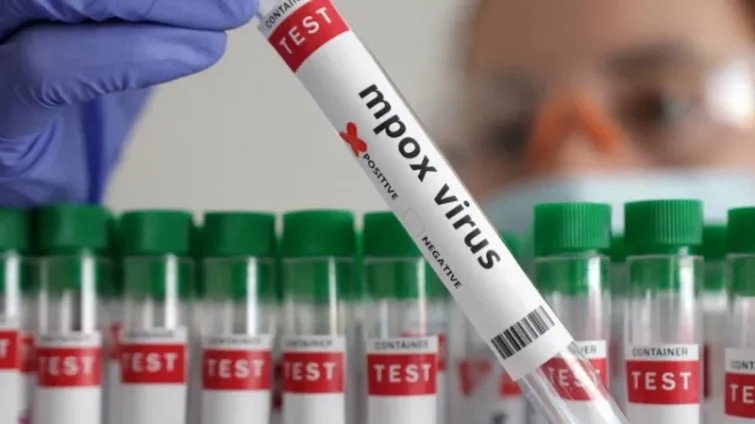
The World Health Organization (WHO) has approved the first diagnostic test for mpox where the results can be immediately known, saying it could prove pivotal in helping to stop the rising global cases of the deadly virus.
The new PCR test enables the detection of the mpox DNA taken from skin lesion swabs.
Currently, samples have to be sent to a laboratory for testing and the patient and medics have to wait days for the result.
Limited testing capacity and delays in confirming cases continue to be a challenge in Africa - worsening the spread of mpox that was previously known as monkeypox.
Of the more than 30,000 suspected cases reported in Africa this year, barely 40% had been confirmed through a test, the WHO said.
Yukiko Nakatani, the WHO's assistant director-general, described the new diagnostic test as "a significant milestone".
“Increasing access to quality-assured medical products is central to our efforts in assisting countries to contain the spread of the virus and protect their people, especially in underserved regions," she added.
The breakthrough comes as the Democratic Republic of the Congo, where the highest number of cases has been reported, prepares to begin an mpox vaccination programme on Saturday.
Mpox, which is a highly contagious disease, has killed at least 635 people in that country this year.
In August, the outbreak of the virus was declared a global public health emergency by the WHO for the second time in two years, following rising cases in DR Congo and its spread to neighbouring Burundi, Uganda and Rwanda.
Some Western countries have donated doses of mpox vaccines to combat the outbreak of the disease in Africa but reports say more are urgently needed.
Rwanda, which was the first to administer mpox vaccines in Africa last month, is set to receive 5,000 more doses on Friday, according to the Africa Centres for Disease Control and Prevention (Africa CDC).
In Nigeria, a vaccination drive against the virus is set to be rolled out next Tuesday, the Africa CDC said.
Frontline healthcare workers and close contacts of infected patients are set to be given priority in DR Congo, which has 200,000 vaccines donated by the European Commission, it said.
Latest Stories
-
“When history beckoned, we did what was right” – Mahama calls for justice for victims of slavery
12 minutes -
Gov’t investing in new tomato variety to boost local production – Agric Minister
13 minutes -
MUSIGA seminar, health screening empower musicians, rally industry support
16 minutes -
Into the Unknown Tours leads Chef Abbys’ nationwide food tour
19 minutes -
40 National Service Personnel complete military training at Michel Camp
20 minutes -
Full text: President Mahama’s speech at UN to commemorate International Day of Remembrance of victims of slavery
23 minutes -
NSAI inaugurates board to champion AI and data science in Ghana
25 minutes -
Women farmers power Ghana’s agriculture, but face major barriers
33 minutes -
Non-compliant banks, PSPs risk penalties under monthly cyber report guidelines – Sam George
41 minutes -
Fact Check: Did Kojo Oppong Nkrumah urge Ghanaians to “Pray for Iran” to harm government?
50 minutes -
Build careers on purpose and values – Telecel CEO urges women
56 minutes -
NAIMOS appeals for more resources as it intensifies galamsey fight
56 minutes -
IEA slams Ewoyaa Lithium ratification, new mining regulations
56 minutes -
Ghana marks World TB Day with renewed call to end disease
57 minutes -
Telecel DigiTech Academy cohort 3 nears graduation as students build bushfire robot
1 hour