

Audio By Carbonatix
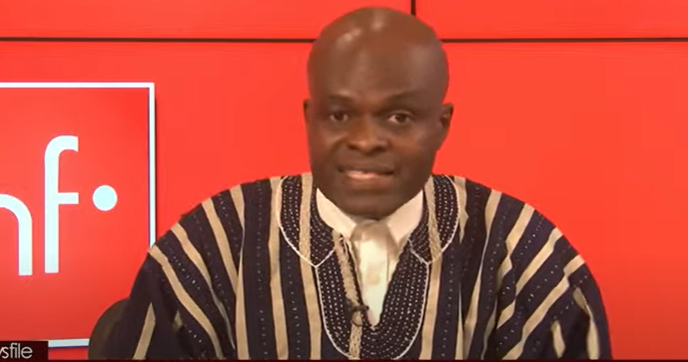
Private legal practitioner Martin Kpebu has thrown his weight behind a proposed plea bargain arrangement involving the Ashanti Regional Chairman of the New Patriotic Party (NPP), Bernard Antwi-Boasiako, popularly known as Chairman Wontumi, in the ongoing GH¢30 million Exim Bank fraud case.
According to Mr Kpebu, the prospect of recovering public funds allegedly lost to the state should not be dismissed merely because of the public profile of the accused person or the magnitude of the case.
Speaking on The Pulse programme on JoyNews on Thursday, June 11, the legal practitioner argued that plea bargaining remains a legitimate legal mechanism available to the state and should be considered on its merits rather than on emotions or political considerations.
"Take the money quickly. Close that one quick. So I support the plea bargain 150%,” he stated. "Yes, let's do this. In law, you cannot look at any case and exclude it. Thus, on the face of it, just looking at the figures, and you say, don't do plea bargain," he stated.
Law Provides for Plea Bargaining
Mr Kpebu's comments come amid growing public debate over reports that Chairman Wontumi may seek a negotiated settlement in the Exim Bank case, a development that has sparked differing views among anti-corruption advocates, legal experts and political observers.
Under Ghana's criminal justice system, plea bargaining allows an accused person and prosecutors to negotiate an agreement, subject to court approval, which may include restitution, reduced charges or other agreed conditions.
While critics argue that the practice could weaken the deterrent effect of anti-corruption prosecutions, proponents maintain that it can accelerate the recovery of state resources and reduce lengthy court proceedings.
Mr Kpebu noted that even anti-corruption campaigner Vitus Azeem, who had expressed reservations about plea bargains in corruption cases, acknowledged that the law remains necessary and should not be repealed.
"I like the way Mr Azeem put it. You see that his answer is nuanced, but he also went on, and he said no, he's not asking for the repeal of the law.
"Then he also said that he knows that it depends on the discretion of the Attorney-General. Then he also made another salient point, that inform the people why you accept it," Mr Kpebu said.
Recover the Money
The legal practitioner stressed that the state must carefully weigh its options and avoid rushing to reject an arrangement that could result in the recovery of substantial sums of money.
"So that is it. We can't exclude any law, any particular case. In other words, I can't wait for the state to take the 30 million back. It's good," he stated.
He argued that the alleged Exim Bank fraud case should not be viewed in isolation, particularly as Chairman Wontumi is reportedly facing other legal challenges.
According to Mr Kpebu, resolving one matter through a plea agreement would not necessarily shield the NPP chairman from accountability in any other ongoing or future cases.
"Chairman Wontumi has at least two other cases pending before him and it's likely that there may be other cases against him in future," he said.
"Because when the NPP was in power, he was all over. I would be surprised if after these three cases there will be no more cases against him in future."
Public Interest Considerations
Mr Kpebu maintained that the overriding consideration should be what best serves the public interest, particularly at a time when the country faces significant developmental challenges and competing demands for limited public resources.
He suggested that recovering GH¢30 million for the state could have a more immediate impact on national development than a prolonged legal battle.
"One of them is enough. Take the money quickly. Close that one quick. So I support the plea bargain 150 per cent," he stated.
The legal practitioner went further to argue that funds recovered through such arrangements could be redirected towards critical social interventions, including education infrastructure.
Latest Stories
-
Power restoration fault suspected in Kumasi Central Market fire
4 hours -
The 7-foot giant of Ngleshie Amanfro: Seven-foot Ghanaian Ephraim Saawa dreams of joining the national basketball team
4 hours -
Government promises support for Kumasi Central Market fire victims
5 hours -
Vibes The Movie: Big Ghun’s Ghanaian film earns five nominations at 2026 REFFA
5 hours -
MamaCare CEO warns unresolved conflicts among health workers could undermine maternal and neonatal care
5 hours -
Health professionals urged to translate medical knowledge into practice to save mothers
6 hours -
Conflicts among care providers linked to maternal, neonatal deaths – Expert
7 hours -
GIS marks 10th TIME conference, champions improved teaching practices
7 hours -
BRICS Or Balance? What Ghana’s bid really means
8 hours -
GPRTU wants full TRAFFITECH-GH implementation to start in 2027
8 hours -
Mahama announces plans to import electric wheelchairs for PWDs
8 hours -
KGL U17 Colts 2026: Western beat Prempeh Elite Academy to set up final final with Greater Accra Region
8 hours -
Late Solanke strike salvages 10-man Spurs draw at Man United
9 hours -
Gender Ministry to monitor welfare of Nana Akua Addo’s children amid domestic violence case
9 hours -
Benedict Okyere Yeboah: Ghana’s football problem goes beyond sacking a coach
9 hours