

Audio By Carbonatix
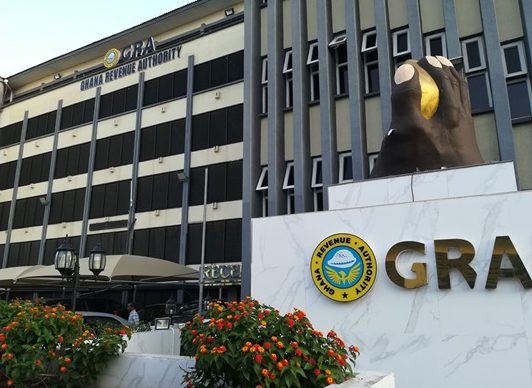
For many years now, foreign companies based in Ghana have been subjected to excessive tax checks conducted by the GRA designed to sanction any attempts to under-report their profits. As a result, silence has shrouded this practice that has targeted sectors across the board. We take a look.
It’s a well-established and insidious practice that affects private companies based in Ghana. Under the pretext of collecting taxes, the Ghana Revenue Authority (GRA) conducts audits every year, leaving no sector untouched. These audits are excessive but highly sophisticated and are conducted widely.
The method used is always the same: at the end of the year, the GRA audits foreign companies that it then contacts again at the start of the following year about a tax adjustment, under the pretext of it having underestimated reported profits.
“Once companies have reported their finances, the GRA hits them again a few months later with a tax audit”, says a foreign investor. And the result is an excessively high fine to drive the company into a corner. It might then be tempted to bribe the GRA agents to get them to waive the fine, or it might put down a sizeable down payment so that it can then contest the audit – a down payment that it will never get back.
A taboo phenomenon
The method is well known and has been anonymously denounced. Indeed, a diplomat has gone so far as to condemn it as “fully-fledged fiscal harassment that is getting worse and worse”, about which a “continuous and never-ending battle is being waged with the GRA”.
So why has it not been publicly denounced? Quite simply because the stakes are too high: divulging the practice would be to risk retaliatory measures from the Ministry of Finances, of which the GRA is the fiscal armed wing. “Companies complain but don’t want to come forward.
Any that do end up getting an extra audit”, says a business executive. If this code of silence is needed, it is also because the people with whom the targeted companies deal at the GRA are just underlings. The people who orchestrate these audits are impossible to get in touch with.
But eventually, this situation will prove counter-productive. It will hinder the growth of numerous companies or even result in their collapsing (those unable to pay the fines levied). Although this goings-on target the “insurance, agriculture and automotive sectors in particular”, according to a financial, the mobile phone sector – one of considerable strategic importance to the country’s economy – has not been spared either.
In 2014, for example, following an audit conducted in 2013, the Ghanaian subsidiary of South African operator MTN was accused of having under-reported its profits. The telecoms group challenged this information, pointing out that it was one of the country’s biggest taxpayers: 34.5% of the proceeds of each product it sells goes on tax.
Despondency among investors
Meanwhile, in 2014, prominent French construction company Bouygues entered into a $220 million contract via its subsidiary Americaribe Ghana Limited to build an extension to the Ghana Ridge Hospital, one of the country’s leading medical centres right in the heart of Accra. Four years later, this company, too, was unfairly audited.
As a result, Bouygues decided to leave the market and refrain from operating in Ghana until such a time as an end is put to such practices. As far as the extractive sector is concerned, Ghana’s Ministry for Lands and Natural Resources has just announced that it will be undertaking audits of all major mines.
It is not yet known how these audits will be conducted, nor whether they will be duplicates of the ones conducted by the GRA. Neither is it known whether or not the process will be transparent or if the companies mentioned above will have any right of appeal, where there are grounds.
Ultimately, these practices run the risk of further discouraging investors who have already been scared by Ghana’s worsening business development and corruption indicators. This is on top of the dubious goings-on at the GRA reported last October by Myjoyonline.com.
Following these new corruption revelations, there have been increasing calls for the government to take control of the institution to end these recurring incidents. Unfortunately, this comes at a particularly inconvenient time since the government continues its raft of reforms designed to broaden its tax base.
Latest Stories
-
Power restoration fault suspected in Kumasi Central Market fire
3 hours -
The 7-foot giant of Ngleshie Amanfro: Seven-foot Ghanaian Ephraim Saawa dreams of joining the national basketball team
3 hours -
Government promises support for Kumasi Central Market fire victims
3 hours -
Vibes The Movie: Big Ghun’s Ghanaian film earns five nominations at 2026 REFFA
4 hours -
MamaCare CEO warns unresolved conflicts among health workers could undermine maternal and neonatal care
4 hours -
Health professionals urged to translate medical knowledge into practice to save mothers
4 hours -
Conflicts among care providers linked to maternal, neonatal deaths – Expert
6 hours -
GIS marks 10th TIME conference, champions improved teaching practices
6 hours -
BRICS Or Balance? What Ghana’s bid really means
7 hours -
GPRTU wants full TRAFFITECH-GH implementation to start in 2027
7 hours -
Mahama announces plans to import electric wheelchairs for PWDs
7 hours -
KGL U17 Colts 2026: Western beat Prempeh Elite Academy to set up final final with Greater Accra Region
7 hours -
Late Solanke strike salvages 10-man Spurs draw at Man United
7 hours -
Gender Ministry to monitor welfare of Nana Akua Addo’s children amid domestic violence case
8 hours -
Benedict Okyere Yeboah: Ghana’s football problem goes beyond sacking a coach
8 hours