

Audio By Carbonatix
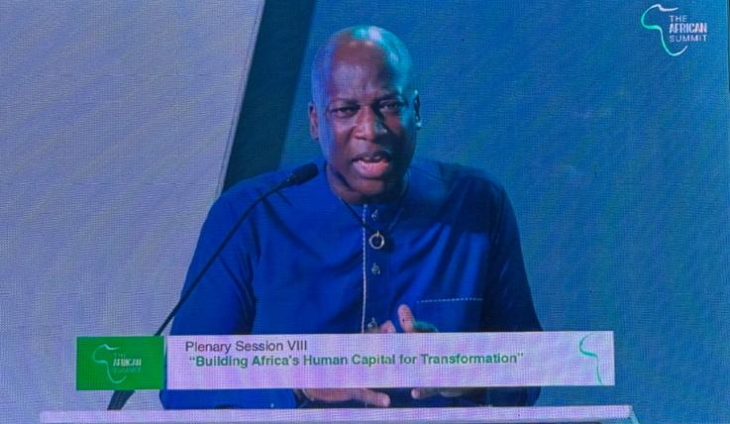
Business executive and public intellectual Yaw Nsarkoh, has called on African leaders to fundamentally rethink how “human capital” is defined and deployed in the continent’s development agenda, warning that current approaches risk entrenching elite-driven growth while leaving the majority behind.
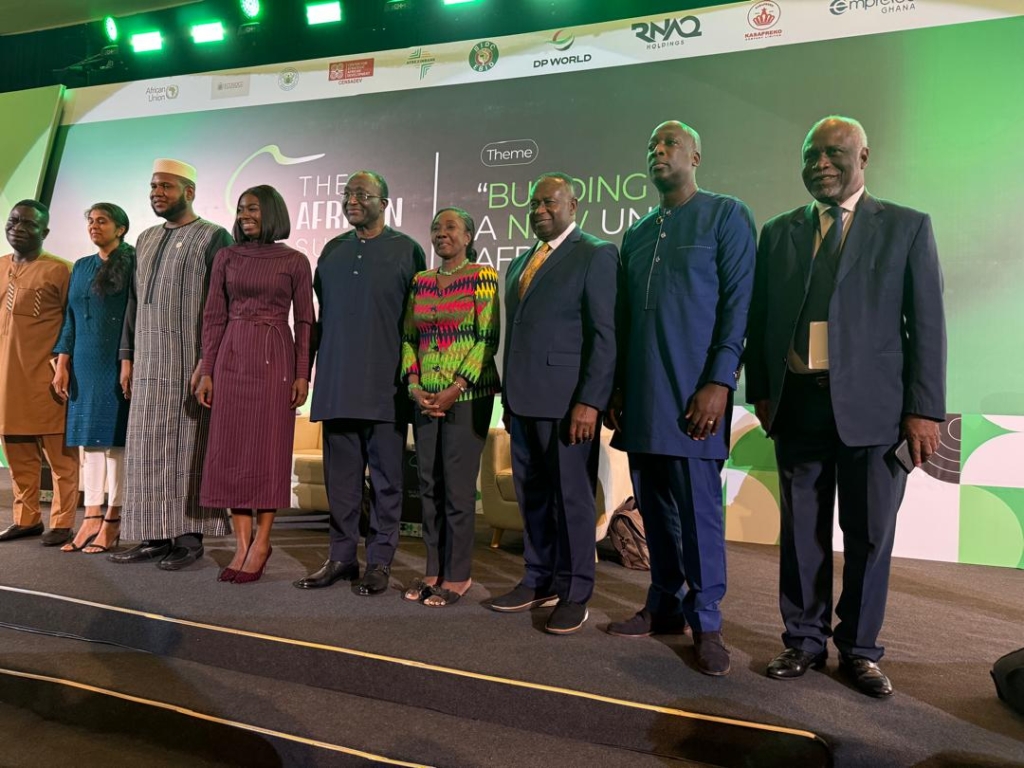
Speaking on December 17 at a high-level summit in Accra themed “Building a New United Africa”, Nsarkoh questioned whether policymakers genuinely include workers, peasants and informal-sector participants when they speak about human capital, or whether the concept has been reduced to a narrow focus on professionals and elites.
“The way human capital is used in policy spaces betrays an elite consensus,” Nsarkoh argued, asking whether this exclusion was itself one of Africa’s deepest structural problems.
Addressing the African Union’s Agenda 2063 and the African Continental Free Trade Area (AfCFTA), Nsarkoh described Africa’s long-term vision as ambitious but weak on execution, arguing that unity must be treated as a means to improve livelihoods, not an end in itself.
He challenged leaders to confront uncomfortable questions about governance, corruption and institutional capacity, noting that what he described as “Santa Claus democracies” across the continent had failed to deliver material improvements in people’s lives, contributing to democratic backsliding and renewed military coups.
Nsarkoh warned that Africa’s development debate remains trapped in outdated orthodoxies, including neoliberal reforms of the 1980s and 1990s, which he said had failed to build strong public institutions or inclusive economies.
He called for major educational reforms, a renewed focus on vocational and agricultural capabilities, and a move towards people-centred development models grounded in Africa’s lived realities.
He also urged African leaders to better read global geopolitical shifts, pointing out that Africa continues to export largely unprocessed commodities while failing to build value-added trade links with emerging regions such as ASEAN and Latin America.
According to Nsarkoh, the true measure of progress lies not in GDP growth but in improvements in well-being, echoing the work of economists Joseph Stiglitz and Amartya Sen. “If AfCFTA is only about numbers, it will fail. If it is about people, it will endure,” he said.
Latest Stories
-
YEA clears majority of beneficiary arrears, assures completion of outstanding payments
2 minutes -
AfCFTA key to building globally competitive African businesses – Zambia envoy urges Ghanaian CEOs
14 minutes -
Albert Kobina Mensah, soil pollution and remediation: Risk assessment, phytoremediation, revegetation
20 minutes -
GIFEC supports national rollout of One Million Coders Programme with laptop presentation
28 minutes -
Old Tafo MP rolls out street lights project to boost security and night-time economy
35 minutes -
Telecel Ghana CEO urges urgent education reform and stronger industry-academia partnership at UEW Public Lecture
45 minutes -
Nigerian army general and several soldiers killed in assault on military base in northeast
46 minutes -
Dagbamete chief urges completion of road project, expansion of vocational training
54 minutes -
Urgently cancel Truedare AI Customs deal over cost concerns – Joseph Cudjoe to Mahama
60 minutes -
Poor safety habits to blame for recurring boat fatalities — GMA boss, Kamal-Deen Ali
1 hour -
Owabi 75% blocked, Barekese loses 40% capacity as siltation, plastics threaten water supply crisis
1 hour -
Ashanti RCC seeks to clear unauthorised garages under new car mall initiative
1 hour -
DPS International steals spotlight at Ghana Interschool Festival Part 2
1 hour -
Republic Bank Ghana PLC leverages Kwahu Business Forum deliberations
1 hour -
Ghana and Artemis II: Hospitality, Love, and Conquest
1 hour