

Audio By Carbonatix
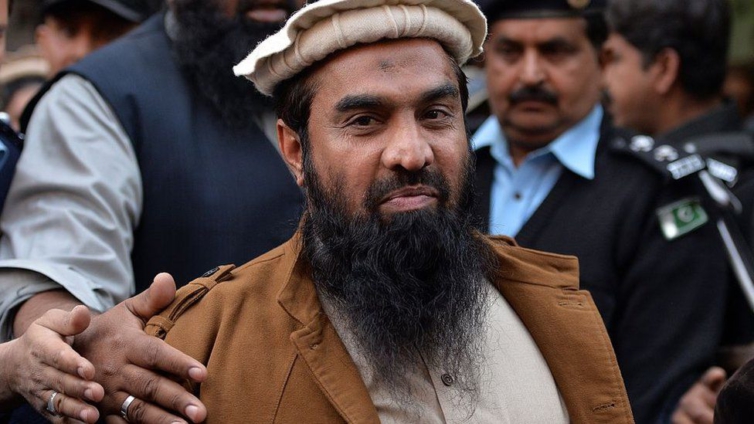
A Pakistan court has sentenced Zakiur Rehman Lakhvi, a senior leader of the militant group Lashkar-e-Taiba, to five years in prison for terror financing.
Lakhvi has been accused by India and the US of orchestrating the 2008 Mumbai terror attacks, in which at least 160 people were killed.
Zakiur Rehman Lakhvi, suspected Mumbai attack leader, jailed in Pakistan https://t.co/QALbq3HjpP
— BBC Asia (@BBCNewsAsia) January 8, 2021
He was sentenced on Friday to three concurrent five-year sentences.
The court found Lakhvi guilty of collecting and dispersing money for terrorist attacks by Lashkar-e-Taiba.
He was arrested on Saturday in Pakistan's Punjab province where he was running a medical dispensary, which the state's counter-terrorism team said he used to collect funds.
The US welcomed Lakhvi's arrest last weekend, calling it "an important step in holding him responsible for his role in supporting terrorism and its financing".
"We will follow his prosecution and sentencing closely and urge that he be held accountable for his involvement in the Mumbai attacks," the US state department said on Twitter.
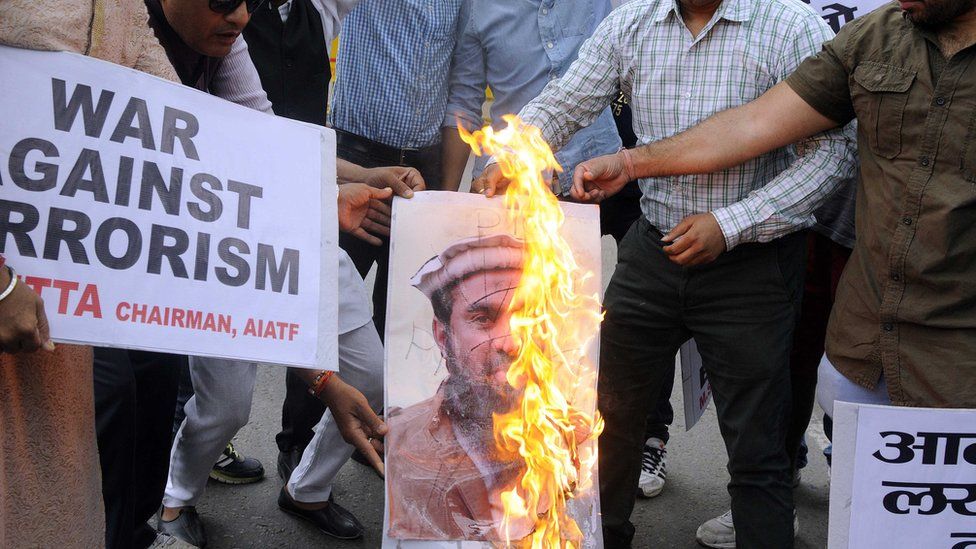
Ten gunmen attacked Mumbai in 2008, carrying out assaults on two luxury hotels, a train station, a hospital, a Jewish cultural centre and some other targets in Mumbai.
Lakhvi was quickly named by India as one of the major suspects in the attacks. Indian officials said Lakhvi had spoken to the attackers during their journey and may have been in touch during the attacks. They said he was identified by the sole surviving gunman, who said Lakhvi helped to "indoctrinate all the attackers".
He was arrested in Pakistan, reportedly at a training camp for Lashkar-e-Taiba, on 7 December 2008.
Six years later he hit the headlines again when an anti-terrorism court in Pakistan trying him for the Mumbai killings ordered his release on bail, and in April 2015 he walked free from prison.
During his more than five years in prison, Lakhvi reportedly had special treatment including uninterrupted access to guests, mobile phone use and internet access, keeping him in effective contact with the rank and file of Lashkar-e-Taiba.
Last year, the founder of Lashkar-e-Taiba, Hafiz Saeed, was also sentenced to jail in Pakistan.
Indian officials have accused Pakistan of secretly supporting the militants, and have suggested the verdicts are linked to pressure on Pakistan from the international terrorist financing watchdog, the FATF.
Pakistan is hoping to be removed from the organisation's "grey list" at a meeting in February.
Latest Stories
-
Iran war lands ‘triple blow’ to flood-ravaged Sri Lankans
7 minutes -
Gunmen kill at least 11 people at Afghanistan picnic spot
20 minutes -
Woman, 25, in court for stealing baby at Bogoso
21 minutes -
Trump unveils giant gold-accented victory arch design for US capital
25 minutes -
We spoke to the man making viral Lego-style AI videos for Iran. Experts say it’s powerful propaganda
29 minutes -
Hungarians vote in big numbers on whether to end Orbán rule and elect rival
30 minutes -
At least 30 feared dead in crush at Haitian tourist site
30 minutes -
Boxing: Abdul Ahmed wins WBA Africa Cruiserwight title after dispatching Nigeria’s Eradeye
44 minutes -
Nearly 2,000 displaced, schools damaged as windstorm wreaks havoc in Gushegu
1 hour -
Ghana’s Derrick Kohn to work under Marie-Louise Eta as she becomes first woman to coach men’s Bundesliga team
1 hour -
Accra Open Championships conclude with strong performances ahead of African Championships
1 hour -
Ghana to begin camping with 12 athletes after Accra Open Championships – Bawa Fuseni
2 hours -
Anthony Joshua declines showdown with Tyson Fury but admits they ‘probably’ clash next
2 hours -
Tyson Fury dominates Makhmudov, calls out Joshua next
2 hours -
I have supported highway authority financially to fix roads in my constituency – A Plus
3 hours