

Audio By Carbonatix
In a bold move to reshape the energy sector and alleviate debt burdens while ensuring a steady power supply for industries, the government has initiated a series of measures, including quarterly tariff increments.
To align with the IMF’s revenue mobilization objectives, Ghana unveiled a comprehensive Medium-Term Revenue Strategy in September 2023.
This strategic framework focuses on crucial tax policies and revenue administration measures essential for achieving both Ghana's domestic goals and the IMF's program revenue objectives.
Watch video: JoyNews' Isaac Kofi Agyei explains why Government of Ghana is introducing a 15% VAT of electricity
Ghana has already taken significant strides towards enhancing revenue generation, implementing measures such as quarterly adjustments to electricity tariffs, raising the VAT rate from 12.5% to 15%, restructuring the E-levy, and eliminating discounts on customs benchmark values.
Looking ahead to 2024, the government plans to introduce additional measures, encompassing 12 tax reforms and the implementation of new tax mechanisms.
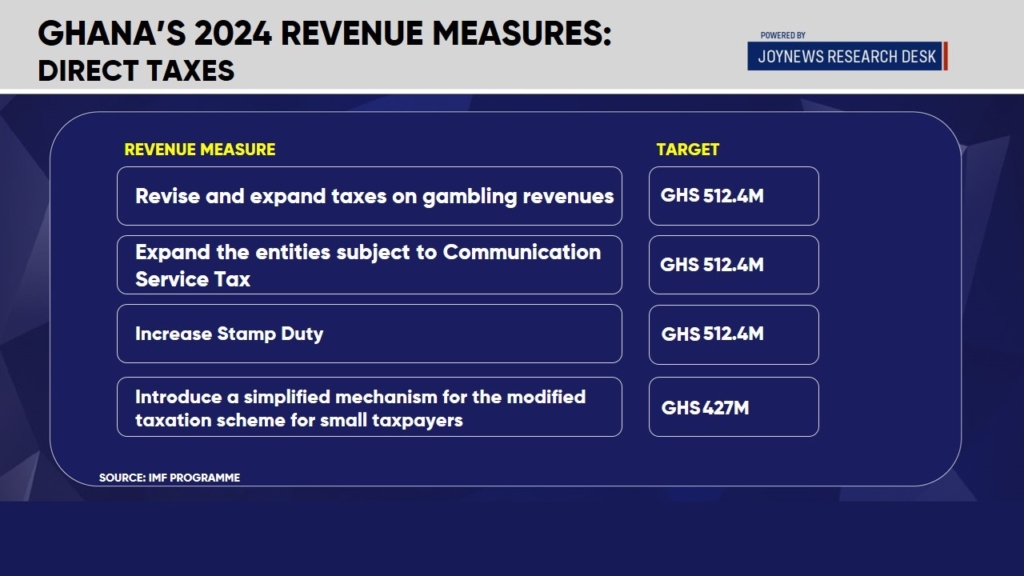
One of the pivotal strategies involves the removal of selected VAT exemptions, amounting to approximately GHS4.4 billion this year.
Also read: VAT on power consumption: From free electricity to taxing times
Additionally, there will be revisions to income-based taxes and a scrutiny of the headline rate of the Communication Services Tax (CST).
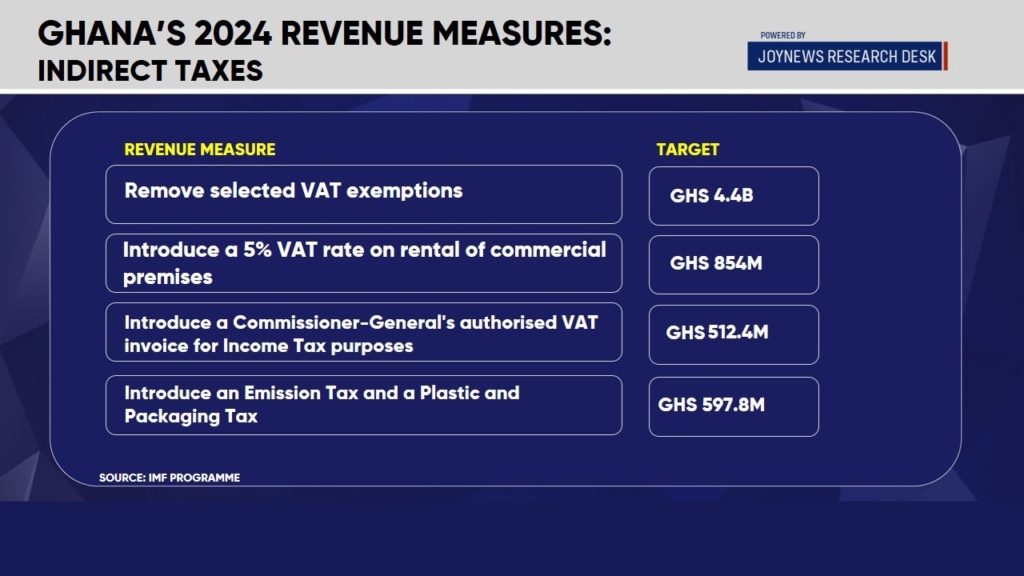
The Government of Ghana also aims to expand taxes on gambling revenues, heighten Stamp Duty, introduce a 5% VAT rate on the rental of commercial premises, and unveil new taxes, such as the Emission Tax and the Plastic and Packaging Tax.
Adding more, the government is set to strengthen the implementation of the Vehicle Income Tax (VIT) sticker mechanism and embark on the reform of corporate income tax by gradually phasing out tax holidays and exemptions.
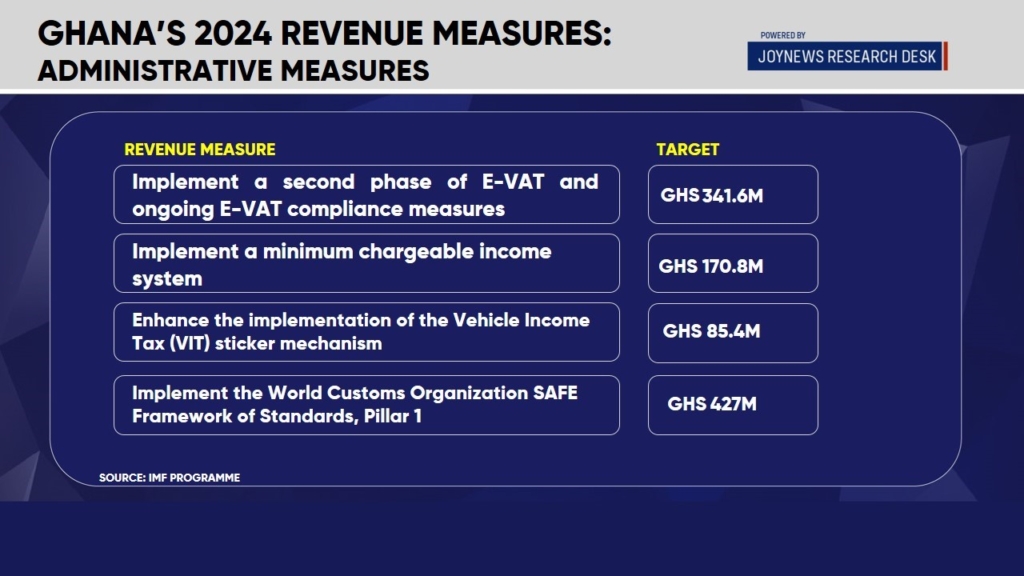
It is crucial to note that these measures are intrinsic to the government's independent revenue mobilization strategy and not dictated by the IMF.
As Ghana navigates these reforms, stakeholders and citizens alike will closely observe the impact on various sectors and the overall economic trajectory.
Latest Stories
-
Adenta Circuit Court remands Pastor William Gyimah over viral threats against Vice President
24 minutes -
“We’ve implemented changes to prevent a repeat of the AFCON final” – CAF President Motsepe
27 minutes -
Gov’t orders deployment of Metro Mass buses to cushion commuters amid fuel price hike
1 hour -
Key Indian state polls begin in test for Modi’s party
2 hours -
Playback: Gomoa Easter Carnival in photos
2 hours -
Gov’t orders removal of fuel taxes to ease pump price hikes
2 hours -
“Whatever the decision of CAS, we will respect it” – CAF President Motsepe after AFCON final meetings in Morocco
2 hours -
Emma Ankrah: When waiting becomes part of treatment – Reflections on hospital care
2 hours -
Ghana urges travellers to prepare for new EU border system roll-out
2 hours -
Mahama enforces fuel coupon ban for ministers as cabinet moves to slash fuel taxes
2 hours -
Task force probes strange fish deaths in Tema
2 hours -
Neglected traffic lights turn Awoshie–Anyaa highway into deadly hotspot
3 hours -
EOCO declares Dr Gabriel Tanko Kwamigah-Atokple a fugitive over alleged gold fraud
3 hours -
GSE records GH¢1.09bn trade in equity market; 10 stocks register gains
3 hours -
Fuel prices: Ghana places 15th in Africa
3 hours