

Audio By Carbonatix
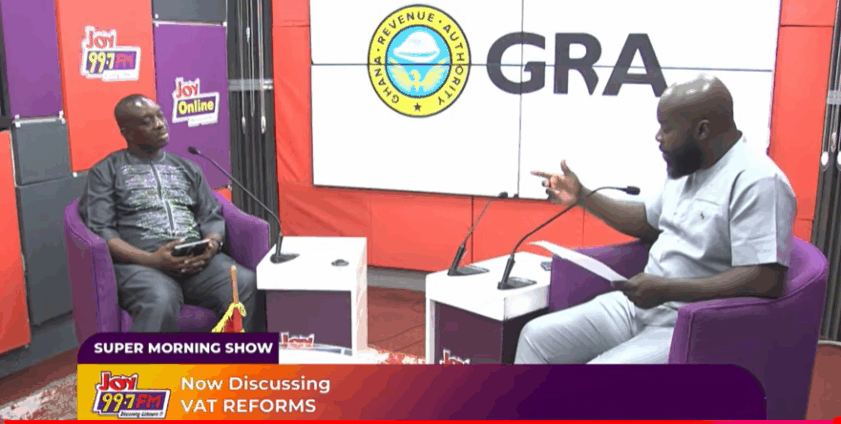
Chief Revenue Officer at the Domestic Tax Revenue Division Free Zones Unit of the Ghana Revenue Authority (GRA), Dominic Adamnor Nartey, says the newly passed VAT Act 2025 (Act 1151) will not automatically lead to higher prices of goods and services, despite concerns over the shift from a 4% flat rate to a 20% standard Value Added Tax.
He explained that the new law was introduced to simplify Ghana’s tax system and address long-standing distortions, stressing that price increases attributed to the policy are largely due to business pricing decisions rather than the tax itself.
Speaking on JoyFM’s Super Morning Show on Thursday, February 19, Mr Nartey said the VAT Act 2025 was necessary because Ghana’s VAT framework had become fragmented after years of multiple amendments.
“The Act was brought into existence because the last time we had a comprehensive review of VAT was 2013,” he said. “After that, it suffered a lot of amendments, making the Act fragmented. Act 1151 has come to consolidate all the scattered amendments and simplify the system.”
The new legislation has generated widespread public debate, particularly among traders who argue that the move to a higher standard VAT rate could increase the cost of goods and affect business competitiveness. Some business groups have expressed concern that companies not registered for VAT often charge lower prices, placing VAT-registered traders at a disadvantage.
However, Mr Nartey dismissed claims that the revised tax structure inevitably results in higher prices, insisting that proper pricing methods would prevent such outcomes.
“That is not exactly correct,” he said. “If you build your price according to what the GRA expects you to do, there is no difference.”
He further noted that the Act also seeks to correct tax distortions, including the cascading effect of taxes where multiple layers of taxation raise the final cost of goods. According to him, streamlining the VAT system will improve tax administration, enhance compliance, and make domestic revenue mobilisation more efficient.
The VAT reform forms part of broader government efforts to strengthen Ghana’s revenue base and improve fiscal management, although public discussion continues over its potential impact on businesses and consumers.
Latest Stories
-
Asantehene plants trees to commence Jimi Watercourse Rehabilitation destroyed by galamsey
19 minutes -
15 arrested, 6 trucks impounded over sandwinning activities on Kumasi-Accra Expressway
19 minutes -
OFFICIAL: Vinicius will miss El Clásico, suspended four games
22 minutes -
Prayer vigil held after four arson attack murders
29 minutes -
GRA fully recovers $154k legacy debt owed by foreign entities between 2022 and 2024
31 minutes -
Kwesi Pratt Jr warns bus preachers are adding to passengers’ stress with accident prophecies
32 minutes -
MTN Ghana to spend $1.1bn in 3 years, build 500 new sites as MoMo hits 44% Growth
34 minutes -
I have no regrets joining Assemblies of God – Mahama
34 minutes -
Starlink restrictions in Ukraine war linked to political situation, Zelensky aide says
37 minutes -
Furniture boost for Techiman North schools as MP donates to 20 institutions
37 minutes -
Assemblies of God to loan 10,000-seater dome for Ghana@70 celebrations
38 minutes -
Government to audit 2,016 community network sites – Communications Minister
38 minutes -
Heritage Series notes: BoG promises more inclusive cedi with improved sizes, tactile features
55 minutes -
‘We want answers’ – Family seeks probe into 14-year-old’s death 12 days after starting SHS
1 hour -
No preacher has the right to impose beliefs on bus passengers – Kwesi Pratt Jr backs preaching ban
1 hour