

Audio By Carbonatix
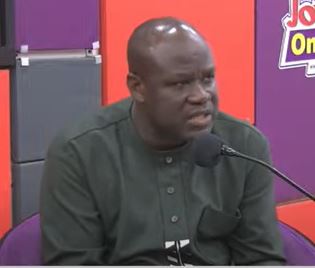
The Chief Executive Officer of the Ghana National Chamber of Commerce and Industry (GNCCI), Mark Badu-Aboagye says the structure of Ghana's taxes and the implementation of the same is a threat to the survival of businesses.
According to him, the businesses are overburdened with taxes, which makes it very difficult for them to expand.
Speaking on Joy Business’ Pre-Budget Forum, he said “Some of the taxes that we have now, they are not necessary, nuisance taxes. Those taxes were brought in purposely to solve a specific problem, for example, the COVID tax.”
He explained that this tax has accomplished what it was set up for and must be scrapped.
Although Mr Badu-Aboagye agrees that these monies were borrowed and must be repaid, he said the government must first give an account of what the money was used for.
He stressed despite the claim by the government that the money was used to support stakeholders, those monies were not free monies because the government placed more taxes on their businesses which in a way crippled their industry.
“I haven’t heard anywhere the amount that they have been able to collect from that business that they gave the money to. Otherwise, it becomes a waste of money and you come back to the individuals and businesses to tax them," he said.
He stressed that the structure should be able to generate revenue and should be able to simulate the activities of the private sector adding that "If the businesses are collapsing you end up not getting the revenue that you want."
Mr Badu-Aboagye added that the government has not been able to create a balance between revenue generation and enhancing the activity of businesses which should be the most important thing the 2024 budget must address.
On the same show, the Dean of the School of Business, Professor John Gatsi sharing a similar view, said the government must not act as though taxing businesses was the only way to generate revenue.
He said that government must make the business environment friendly which will enable businesses to expand.
“We should not make the need to raise revenue a mutually inclusive idea such that it is the only tool left for government and government must do anything possible even if the policy the government is rolling out in terms of raking in more revenue is inimical to the business environment.
Professor Gatsi stressed that if the government pushed too hard on taxing businesses, some of these taxes would be counterproductive.
He continued that, this implies that people’s commitment to the payment of taxes might be reduced and the tax effort will not yield much.
Latest Stories
-
VAST calls for urgent policy overhaul as air pollution kills thousands in Ghana
9 minutes -
Outcome to The Drama: 10 of the best films to watch this April
14 minutes -
Britain led the fight to end slavery; we shouldn’t be paying for a crime we helped eradicate – Kemi Badenoch
34 minutes -
“Who should compensate whom?” – Afenyo-Markin sparks heated Parliamentary debate over slavery reparations
1 hour -
Iran strikes injure US troops at Saudi base
1 hour -
NPP deploys regional heavyweights to oversee polling station and electoral area polls
2 hours -
Akufo-Addo to lead ECOWAS election observers for Benin’s high-stakes presidential transition
3 hours -
Iran war splits older and younger conservatives – as pressure builds for Trump to find exit ramp
3 hours -
Callistus Mahama writes on slavery reparation: ‘We cannot confuse participation with responsibility’
3 hours -
‘The gravest crime against humanity’: What does the UN vote on slavery mean?
4 hours -
Catholic Bishops back Mahama after US university rescinds honorary degree over LGBTQ stance
4 hours -
Ablakwa expresses disappointment over US ‘no’ vote on the UN Slavery Resolution
5 hours -
Luxury watches and cash theft: Joy Sports Editor Fentuo details what happened at the Black Stars camp before the Austria game
5 hours -
India grants ‘penalty-free’ exit window for overstayed Ghanaian nationals
6 hours -
Panic selling sweeps GSE: Market cap sheds GH¢44billion in two days
6 hours