

Audio By Carbonatix
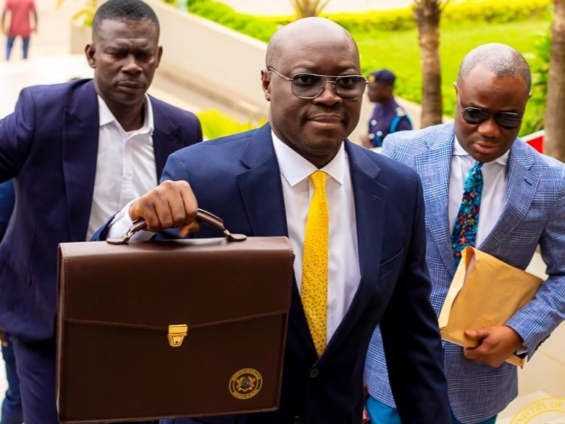
Finance Minister Dr. Cassiel Ato Forson has announced a series of tax reforms under the 2026 Budget aimed at creating a fairer, simpler, and more business-friendly fiscal system.
Presenting the budget to Parliament, Dr Forson said the reforms mark a turning point in Ghana’s tax administration and are designed to make compliance easier for businesses while strengthening domestic revenue mobilisation.
“This is not just a tax reform. It is a step toward a more just, predictable, and business-friendly economy,” Dr. Forson stated. “It honours our pledge to lighten the load on honest taxpayers while building a stronger foundation for national development.”
Among the measures, government has abolished the COVID-19 Health Recovery Levy, reduced the effective VAT rate from 21.9 percent to 20 percent, and raised the VAT registration threshold from GH¢200,000 to GH¢750,000 to ease the burden on small and medium enterprises.
These steps, Dr Forson explained, will return about GH¢5.7 billion to businesses and households and enhance Ghana’s competitiveness.
In addition, VAT on mineral exploration and reconnaissance has been scrapped to encourage new investments, while the zero-rating for locally manufactured textiles has been extended to 2028 to protect local jobs.
The government will also introduce digital VAT monitoring systems, fiscal electronic devices, and a VAT reward scheme to improve compliance and transparency.
Beyond VAT, the Ministry of Finance will undertake a comprehensive review of key tax laws, including the Income Tax Act, the Customs Act, and the Excise Duty Act, to align them with international standards.
Dr Forson said these reviews will simplify compliance, promote equity, and strengthen investor confidence.
“We must move from patchwork reforms to a coherent, modern framework,” he noted. “Our goal is to ensure Ghana’s tax system keeps pace with changing business realities, protects our tax base, and rewards compliance.”
The Finance Minister also indicated that new systems will be deployed at the ports to curb smuggling, under-invoicing, and misclassification.
These measures are expected to close long-standing revenue leakages and improve customs efficiency.
“Through these reforms, we are not merely raising revenue,” Dr Forson emphasised. “We are rebuilding trust between citizens and the state, ensuring that every cedi collected is used to build the Ghana we want.”
The 2026 tax reform package forms a key part of the government’s fiscal consolidation agenda, designed to sustain macroeconomic stability while encouraging private sector growth and job creation.
Latest Stories
-
Airline pilots fear retribution over refusing to fly in Middle East, aviators’ group says
10 minutes -
Police intensify security in Bosomtwe communities after deadly clash
18 minutes -
Corporate Income Tax contributes highest to 2025 petroleum revenue
20 minutes -
Ghana less exposed to global oil disruptions — Fitch
23 minutes -
Property rates: Stakeholders advocate digitisation, transparency, …
25 minutes -
Police officer killed in road crash at Atortorkorpe in Ada
25 minutes -
EKMA begins dredging major storm drains ahead of peak rainy season
30 minutes -
US has let in 4,499 refugees since October – all but three were South African
34 minutes -
Child Protection Units to be part of MMDA Performance Assessment
41 minutes -
Pub thief jailed over £2.2m Fabergé theft
47 minutes -
Show us the money – COMAC CEO demands full disclosure on ‘dumsor levy’ windfall
59 minutes -
Melania Trump denies ties to Jeffrey Epstein and urges hearing for survivors
1 hour -
Prosecutors seek Tiger Woods’ prescription drug records after Florida arrest
1 hour -
Five persons arrested for robbing Chinese nationals at Asankragwa
6 hours -
I don’t have evidence of leakage report on fuel contamination – Witness
6 hours