

Audio By Carbonatix
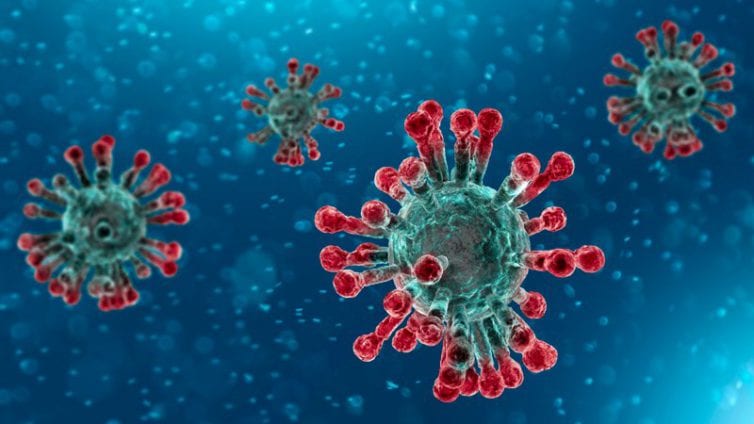
Researchers in China have found that two different types of the new coronavirus could be causing infections worldwide.
In a preliminary study published Tuesday, scientists at Peking University’s School of Life Sciences and the Institut Pasteur of Shanghai found that a more aggressive type of the new coronavirus had accounted for roughly 70% of analyzed strains, while 30% had been linked to a less aggressive type.
The more aggressive type of virus was found to be prevalent in the early stages of the outbreak in Wuhan — the Chinese city where COVID-19 was first detected late last year.
But the frequency of this type of virus has since decreased from early January.
The researchers said their results indicate the development of new variations of the spike in COVID-19 cases was “likely caused by mutations and natural selection besides recombination.”
“These findings strongly support an urgent need for further immediate, comprehensive studies that combine genomic data, epidemiological data, and chart records of the clinical symptoms of patients with coronavirus disease 2019 (COVID-19),” they said.
Researchers cautioned that data examined in the study was still “very limited,” emphasizing that follow-up studies of a larger set of data would be needed to gain a “better understanding” of the evolution and epidemiology of COVID-19.
The findings were published in the National Science Review, the journal of the Chinese Academy of Sciences.
Travel restrictions
The study comes shortly after the WHO confirmed the fast-spreading virus had infected more than 93,000 people worldwide, with at least 3,100 deaths.
The vast majority of those cases have been reported in China, although the number of new daily infections overseas has now exceeded those in the world’s second-largest economy.
South Korea, Italy, Iran and Germany have all recorded sharp upticks in cases of the flu-like virus in recent days, with many countries imposing travel restrictions on virus-hit areas worldwide.
The outbreak has now spread to more than 70 countries, while the WHO has warned that COVID-19 could soon reach most, “if not all,” nations around the world.
Latest Stories
-
I support calls for Energy Minister to appear before Parliament – Sagnarigu MP
4 minutes -
Frequent power trips alarming; urgent measures needed to prevent nationwide blackouts – Ben Boakye
8 minutes -
Blackout: Akosombo control station works to be completed next month – Energy Minister insists
11 minutes -
ACEP warns frequent power trips expose weaknesses in Ghana’s transmission system
18 minutes -
Ageing transmission infrastructure needs urgent investment – Agyapa-Mercer
22 minutes -
Ghana must address root cause of 330kV line trips to avert blackouts – ACEP
34 minutes -
Global Mercy Hospital Ship arrives in Tema for 10-month Ghana field service
37 minutes -
Wontumi eligible to pick NPP nomination form, but vetting will determine his fate – Opare-Ansah
39 minutes -
Michael Tetteh Kwetey to contest NDC Greater Accra Regional Chairmanship
2 hours -
Mahama disappointed by US opposition to UN slavery resolution
2 hours -
Chamber of Mines commends government for breakthrough in Adamus Resources dispute
3 hours -
CMC launches 24-hour cocoa operations
3 hours -
Construction work on Winneba-Accra Highway poses challenges for commuters
3 hours -
Audit irregularities surged in 2024 as GACC flags weak financial controls
3 hours -
World Rugby chair Brett Robinson and Rugby Africa president Herbert Mensah to visit Zimbabwe as Sables prepare for Rugby World Cup
4 hours