

Audio By Carbonatix
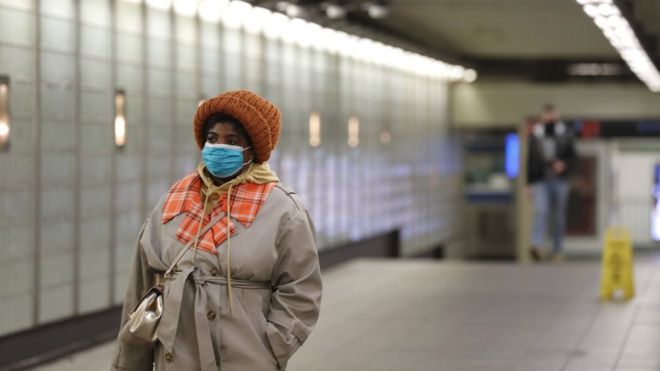
The state of New York has ordered staff at all "non-essential" businesses to remain at home as the number of coronavirus cases continues to rise.
The move expands earlier restrictions and comes as California on the west coast said its nearly 40 million residents should "shelter in place".
The US has confirmed more than 14,000 cases of the coronavirus, including more than 7,000 in New York.
The surge has started to strain its health care system.
"This is the most drastic action we can take," New York Governor Andrew Cuomo said,
New York said pharmacies, grocery stores, banks and shipping firms were among those exempt from the order, which goes into effect on Sunday.
Many places have already been forced to shut, including schools, shopping centres, and theatres.
Mr Cuomo also issued additional rules for the state's 8.6 million citizens, saying healthy people who are not at risk may go outside for exercise and to go grocery shopping, but should otherwise remain at home.
Dr Anthony Fauci, the director of the National Institute of Allergy and Infectious Disease, who has been a leader of the national response, said he supported the move.
"Please co-operate with your governor," he said at the White House's daily coronavirus briefing.
The US also said it would bar non-essential travel between the US and Canada, from midnight.
However, US President Donald Trump said he did not think shelter in place orders needed to be expanded nationally, noting that many states have far lower infection rates.
"They're watching it on television but they don't have the same problems," he said.
Restrictions aimed at reducing the spread of the coronavirus have expanded rapidly this week and are already having a devastating economic effect, with the number of Americans seeking unemployment benefits surging more than 30% this week.
Economists are predicting a sharp contraction in economic growth in coming months, and have warned that millions of jobs are at risk.
Congress is working on a more than $1tn relief bill, that is expected to include direct payments of more than $1,000 for each American who earns less than a certain amount. It would also include millions for businesses affected by the pandemic, such as airlines and hotels.
Latest Stories
-
469 farmers paid compensation as Accra-Kumasi Expressway clearance progresses
1 minute -
Malaysian boy acquitted for murder of schoolgirl on grounds of insanity
9 minutes -
Arabic, Chinese teaching debate should end after Mahama’s clarification – Asah-Asante
10 minutes -
Ashanti Regional Minister halts 24-Hour Market project in Mankranso over school demolition concerns
12 minutes -
The Forgotten “Little Children”
20 minutes -
Zambians warned not to eat dead wildlife after anthrax kills dozens of animals
22 minutes -
AG urges GBA to remain the conscience of Ghanaian society
34 minutes -
24-Hour Economy: Minority questions demolition of schools, markets and other public assets
37 minutes -
China criticises idea it is in ‘malicious competition’ over AI
39 minutes -
Russia hits Ukrainian train shortly after Boris Johnson and top European officials leave station
39 minutes -
Sista Afia reveals fears about becoming a single mother
42 minutes -
Gov’t 24-Hour Economy markets programme is an afterthought – Minority
43 minutes -
Minority wants traders, residents heard before 24-Hour Market projects
44 minutes -
Minority demands review of 24-Hour Market programme over ‘poor planning’
46 minutes -
GIPS calls for strategic procurement to drive inclusive industrial growth
48 minutes