

Audio By Carbonatix
The Wuhan wet market was not the origin of the coronavirus pandemic as previously thought, studies show, but may have been the site of a super-spreader event.
Genetic evidence has confirmed that the virus originated in Chinese bats before it jumped to humans, but the exact location of the transition is unknown.
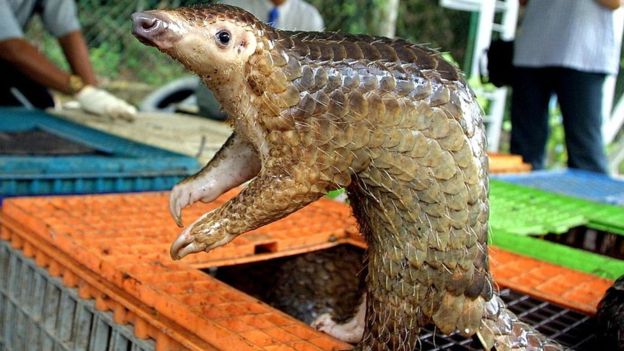
Originally Chinese authorities said the first cases of the virus emerged at the local seafood market, but a new investigation of the animals being sold ruled that out.
The Chinese Centres for Disease Control and Prevention took samples of the animals in the market and found none of them had coronavirus.
As the animals in the market were negative for coronavirus it means they can't have infected shoppers.
This led to the new theory that someone visiting the market had already contracted COVID-19 and became a super-spreader - giving it to many others.
The Chinese CDC said 'it turns out the the wet market was a victim of the virus'.
A majority of the original 41 cases of COVID-19 reported to the World Health Organisation in December were linked to the 116 acres market.
This led to the wet market being shut down on January 1 - the majority of its 3,600 shops had reopened by April 14, according to reports.
The virus was likely circulating in Wuhan before those first 41 cases were reported.
In fact, 13 of the original cases showed no link to the wet market, according to the Chinese CDC study.
Research from January showed the first person confirmed to have coronavirus was likely exposed as early as December 1 - showing symptoms on December 8.
Carlson said the idea of the wet market being the origin had become a useful narrative but the evidence hasn't been particularly conclusive.
The narrative came from the fact wet markets sell exotic, endangered and trafficked animals that could be the link between bats and humans.
The fact none of the animals in the market that were sampled tested positive led to the super-spreader theory.
It wouldn't be the only super-spreader event - as the virus progressed and spread around the world a number of infected individuals caused clusters of infections.
'The novel coronavirus overturns much of what people have known and many of its patterns are beyond our cognition,' said George Gao Fu of the Chinese CDC.
It could be some times before we know exactly what animal caused the virus to spread from bats to humans or even when - it's taken months to rule out one site.
'That takes time. The study that really definitively showed the bats that SARS came from was published in 2017,' - 15 years after SARS first broke out.
'It took that long to go through caves, to go through samples, and build an evidence base where we could confidently say: 'This was the sort of bat, in this cave, at this time,' Carlson said.
Latest Stories
-
‘The future is bright’ – Gyan backs Black Princesses squad after U-20 World Cup exit
4 seconds -
We should treat AI has an opportunity rather than a threat – ALX Enterprise
8 minutes -
Malta and Ghana set sights on practical AI partnership
11 minutes -
2026 U-20 WWC: ‘Not all wishes come true’ – Gyan inspires Black Princesses after elimination
16 minutes -
‘I am not a magician’ – Zdravko Logarušić on Nations FC exit from Africa
30 minutes -
Three nights. 28 titles. Ultimate history made
40 minutes -
Ghanaian delegates at IYF 2026 could become bridges for stronger Russia ties – John Aggrey
44 minutes -
Nigeria: Over 30 dead, 50 hospitalised after consuming alcoholic substance in Ondo State
47 minutes -
UK lawmakers demand new law to address AI threat to human rights
56 minutes -
WAFU B U-17 Girls Cup: Black Maidens depart Accra for tournament in Yamoussokro
56 minutes -
Sweden’s center-left bloc narrowly ahead as election remains too close to call
1 hour -
GPL 2026/27: ‘We won ugly’ – Kotoko head coach unimpressed after Lions victory
1 hour -
7 out of 10 human trafficking cases in Ghana never reach prosecution — JoyNews Research
1 hour -
Music, football to converge at Music Meets Football Summit 2026 in Lusaka
2 hours -
Putin invites young global leaders to partner with Russia in shaping future world order
2 hours