

Audio By Carbonatix
The President, Nana Akufo-Addo has said government through the administrator of the District Assembly Common Fund is constructing 98 courts and bungalows for judges in all 16 Regions of the country.
He said government has also taken note of the inadequate numbers of courts in various parts of the country, resulting in citizens traversing long distances in order to gain access to the country’s courts.
“For example, there is no Court between Adjabeng and Amasaman in the Greater Accra Region, neither is there a Court between Adum in Kumasi and Asante Bekwai or Obuasi in the Ashanti Region.
"Indeed, it has been barely nine months since I commissioned the three-storey Court Complex at Frafraha, in Adenta, Accra, and I am reliably informed that there are already some three thousand cases pending there,” he said.
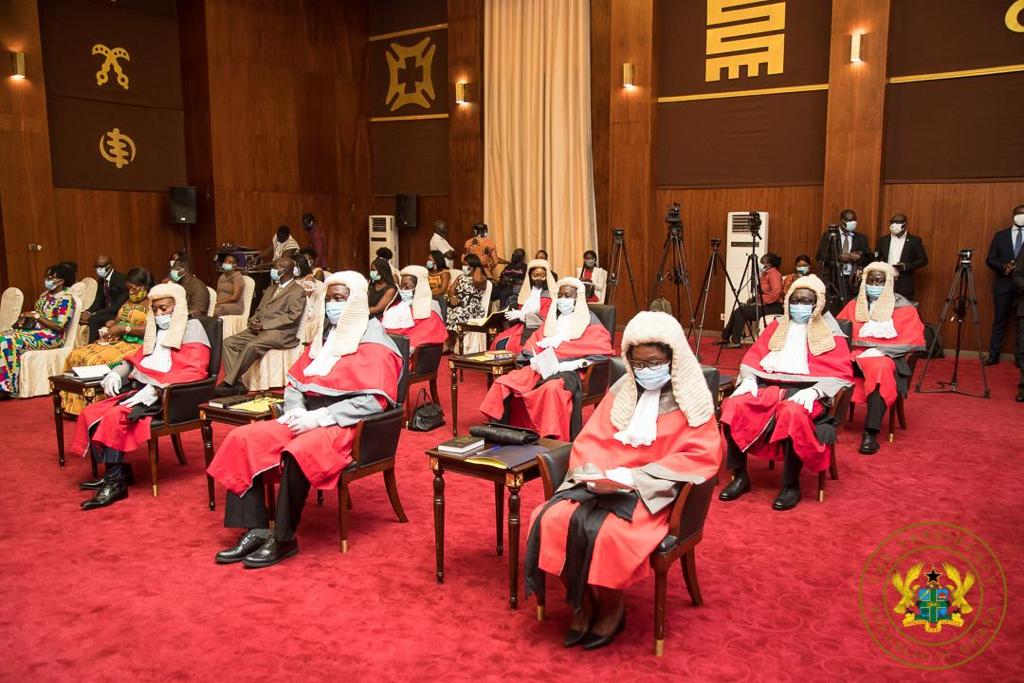
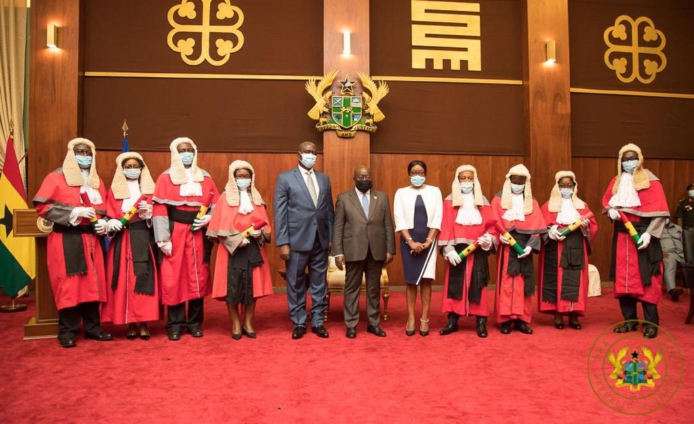
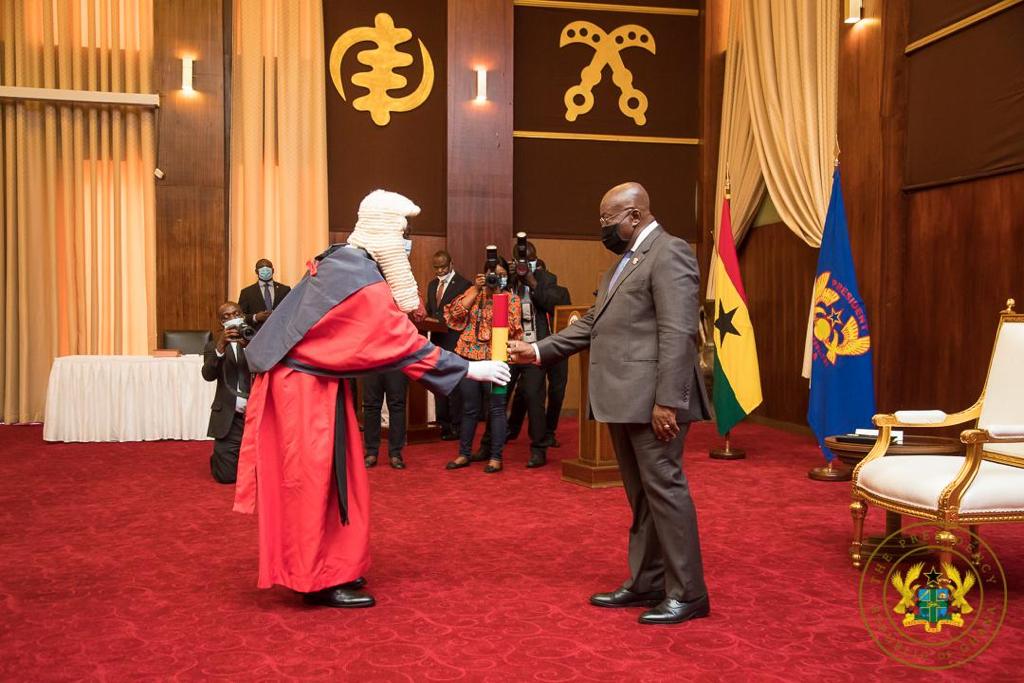
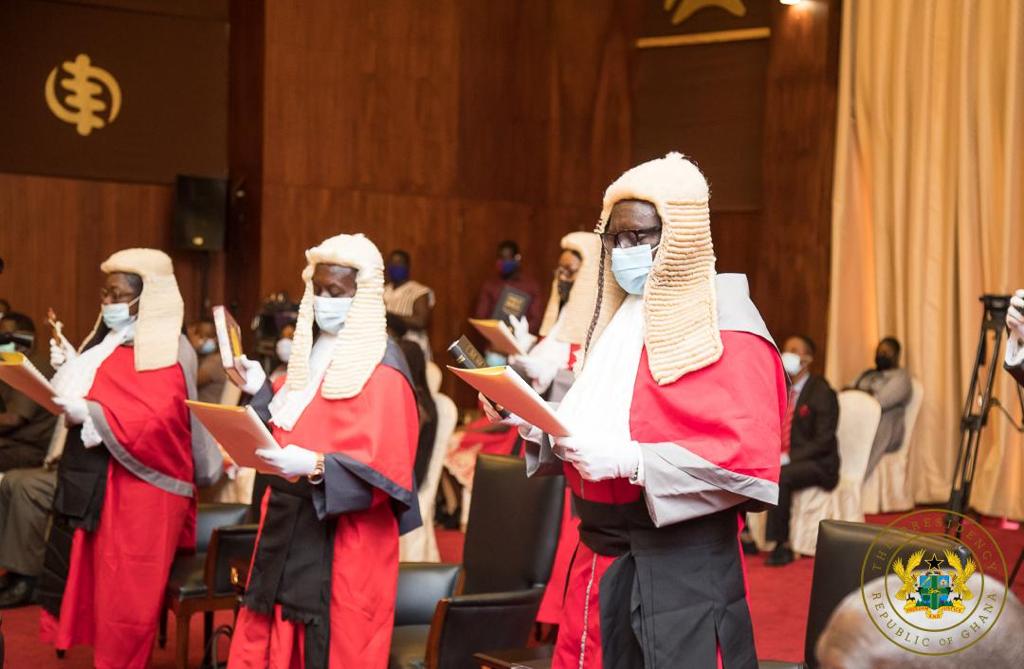
Swearing into office 16 new Justices of the High Court on Wednesday, 16th September 2020, at a ceremony at Jubilee House, the seat of the nation’s presidency, the President said there would be eight courts and eight bungalows in Greater Accra; eight courts and eight bungalows in Volta; four courts and eight bungalows in Oti; 12 courts and 10 bungalows in Eastern; and seven courts and eight bungalows in Western.
Additionally, there would be four courts and four bungalows in Western North; four courts and four bungalows in Central; five courts and five bungalows in North East; 20 courts and 14 bungalows in Ashanti; eight courts and eight bungalows in Ahafo; four courts and six bungalows in Bono; and five courts and five bungalows in Bono East.
There would also be three (3) courts and three (3) bungalows in Northern; three (3) courts and three (3) bungalows in Savannah; two (2) courts and two (2) bungalows in Upper West; and three (3) courts and three (3) bungalows in Upper East.
To the sixteen (16) Justices, the President reminded them that the dispensation of justice requires that application of the laws of the land must occur, in the hallowed words of the judicial oath, without fear or favour, affection or ill-will, that is, without recourse to the political, religious or ethnic affiliations of any person before you.
“When a citizen falls foul of the law, that citizen, high or low, must be dealt with accordingly, and the law enforcement agencies, including you, our new judges, must ensure this is done. That is the true meaning of the concept of equality before the law,” he said.
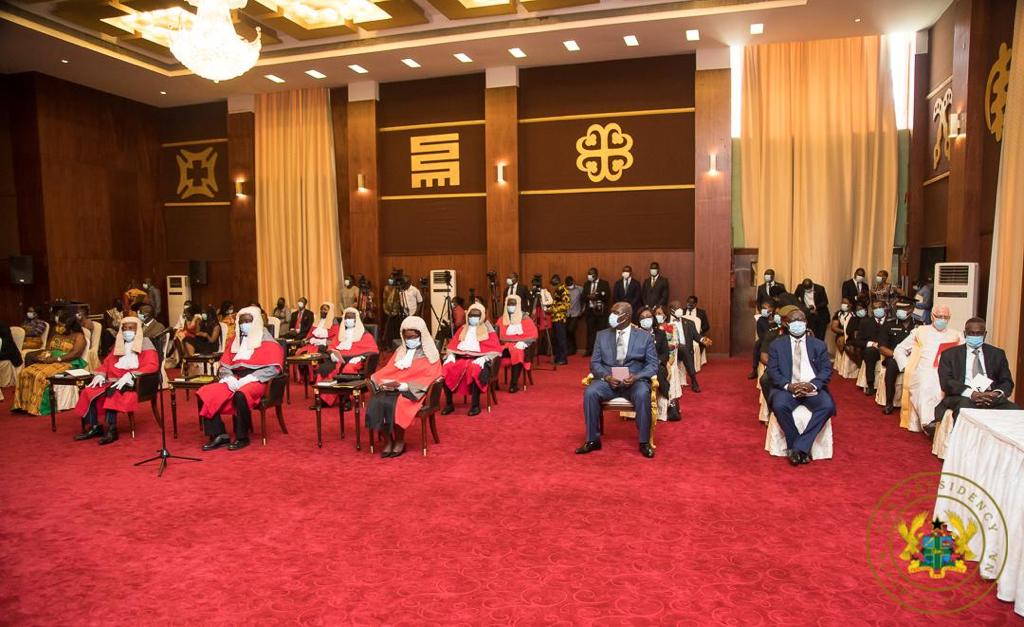
To assist them on this path, President Akufo-Addo stated that his Government, since his assumption of office, has, since my assumption of office, introduced a number of policy measures to help bridge the technology-gap, explaining that they are necessary to shore up the nation’s reputation as a country governed in accordance with the rule of law.
“That is why, last year, I launched the e-justice system, which is designed to leverage technology in the delivery of justice. I encourage all of you to take full advantage of the e-justice system, to expedite the conduct of cases that come before you, and in the management of the Court. The transparent and efficient delivery of justice builds confidence in citizens, businesses and the investor community,” he added.
New Justices of the High Court
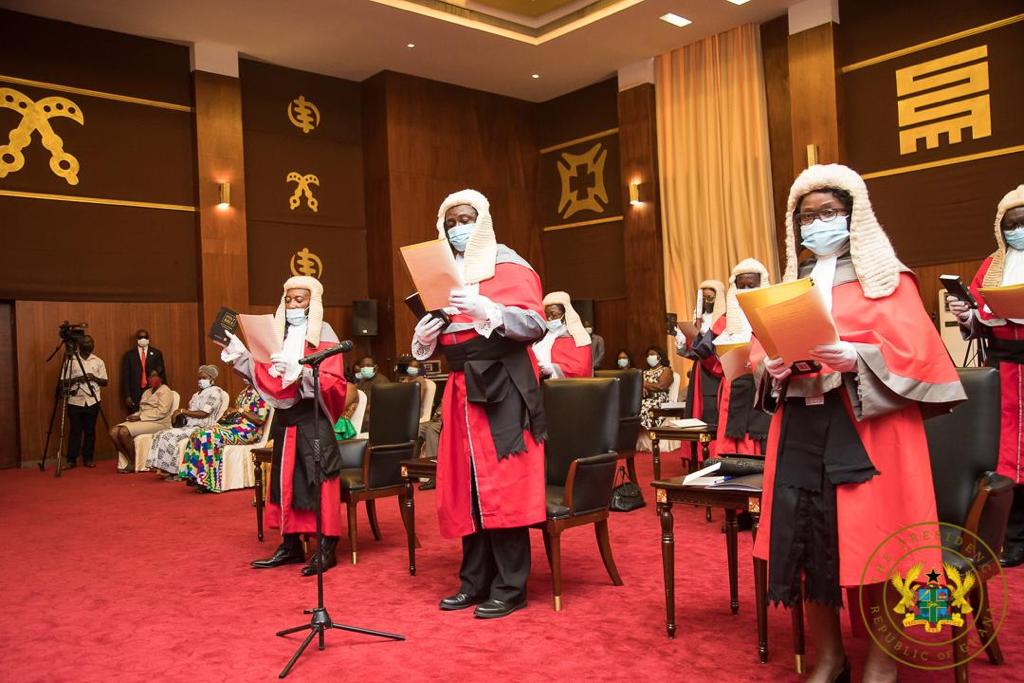
The Justices of the High Court sworn in by the President are Her Honour Eva Bannerman-Williams, His Honour Emmanuel Bart-Plange Brew, His Honour Yaw Owoahene Acheampong, His Honour Samuel Boakye-Yiadom, His Honour Abdul Yusif Asibey, Mrs. Elfreda Amy Dankyi, Mr. Samuel Faraday Johnson, Ms. Sheila Minta, Her Honour Audrey Kocuvie-Tay, Nana Yaw Gyamfi Frimpong, Mr. Ernest Yao Gaewu, Mr. Solomon Oppong-Twumasi, Mr. Charles Bentum, Mr. Joseph Adu-Owusu Agyeman, Mr. William Osei-Kuffour, and Mr. Douglas Seidu.
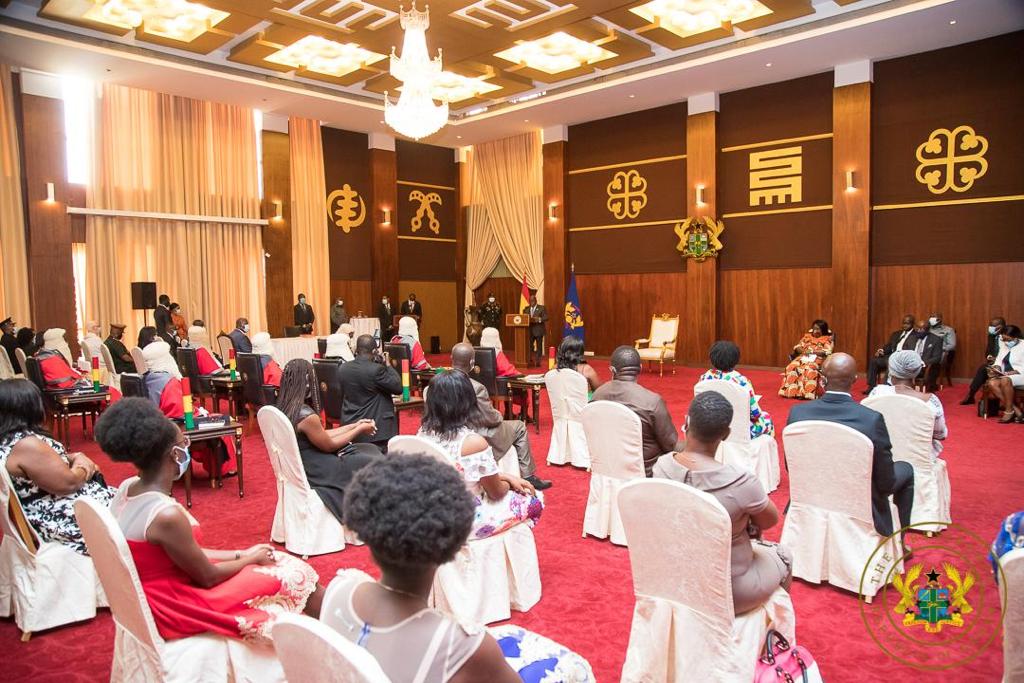
With the High Court having “jurisdiction in all matters, and, in particular, in civil and criminal matters, and such original, appellate and other jurisdiction as may be conferred on it by this Constitution or any other law”, and also “jurisdiction to enforce the Fundamental Human Rights and Freedoms guaranteed by this Constitution”, he noted that much of judicial work begins and ends there.
“It is, therefore, critical for the growth of the nation that the High Court commands the respect of the people by the quality of its justice, as well as by the comportment of its judges,” he added.
Latest Stories
-
Mustapha Hamid trial to continue during legal vacation despite defence plea
4 minutes -
NAIMOS launches major operation to clear illegal mining along Birim River
6 minutes -
Trump says it would be ‘terrible mistake’ to remove Infantino
7 minutes -
Ghana has not moved beyond macroeconomic stability since 1992 – Prof Godfred Bokpin
11 minutes -
‘Support Kotoko Board or their wives may advise them to quit’ – Sarfo Duku
11 minutes -
Housing affordability, not supply is Ghana’s biggest challenge – Managing Director of Republic Bank
14 minutes -
Chief Justice speaks on legal vacation; says it doesn’t stop judges from hearing cases
27 minutes -
Land buyers must conduct due diligence before purchase — Raphael Hokey
47 minutes -
Ghana, Burkina Faso sign Defence Cooperation to secure cross-border trade routes
57 minutes -
Legal vacation: Lawyers cannot decide when court cases proceed – Deputy AG
57 minutes -
Daily Insight for CEOs: Leading with data and Artificial Intelligence
1 hour -
Police arrest four, intercept 118 bags of cocoa destined for Togo
1 hour -
FC Basel donate football kits to clubs, schools in Upper West Region
1 hour -
Legal vacation is not lawyers’ vacation — Deputy Attorney-General
1 hour -
Lawyers can seek accommodation, but cannot declare court boycott – Deputy Attorney-General
1 hour