

Audio By Carbonatix
The Ghana Incentive-Based Risk-Sharing System for Agricultural Lending (GIRSAL) through its Technical Assistance Facility (TAF) is partnering with the National Banking College (NBC) under its ‘Agriculture and Agribusiness Lending Course for Staff of Financial Institutions’ to train staff of financial institutions on agriculture financing.
The TAF is a key pillar of GIRSAL’s strategy and aims at strengthening the institutional capacity of staff of participating financial institutions in assessing loan applications from agribusinesses and hence help reduce the risk associated with lending to farmers and agriculture projects.
This initiative is supported by Alliance for a Green Revolution in Africa (AGRA).
Training Modules
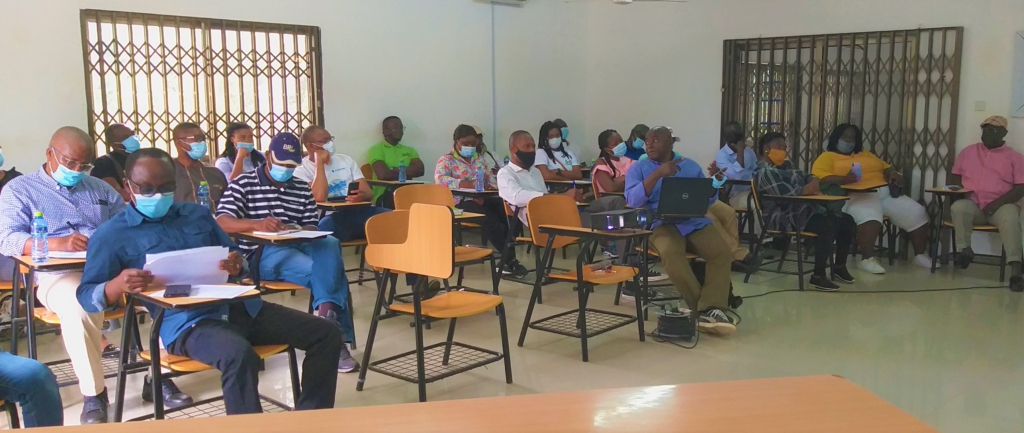
Due to the COVID-19 pandemic, the first batch of the training program was conducted virtually between August 11 and September 18, 2020, and was attended by 33 participants from 12 financial institutions.
The training combined classroom training, case studies and a field trip to an agribusiness. The 3-module training program was facilitated by well-experienced industry resource persons.
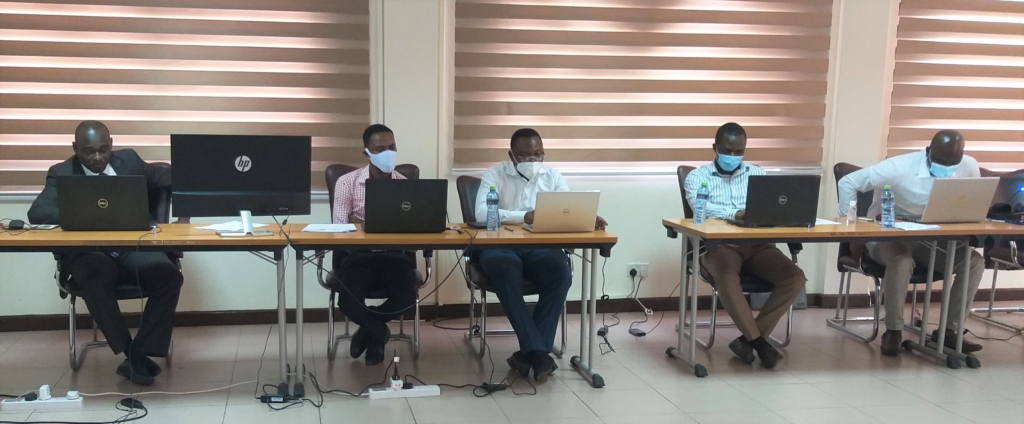
Modules 1 and 2 of the course covered the agribusiness environment, value chains in Ghana, and agricultural loan appraisal techniques, and targeted agriculture desk officers, relationship managers, credit risk officers and credit analysts.
Module 3 covered managing agriculture loan portfolios, with lessons ranging from agriculture insurance to commodity finance.
It targeted senior management and portfolio managers. The next round of the training is scheduled for the end of the year.
Field Trip to Golden Exotic Ltd
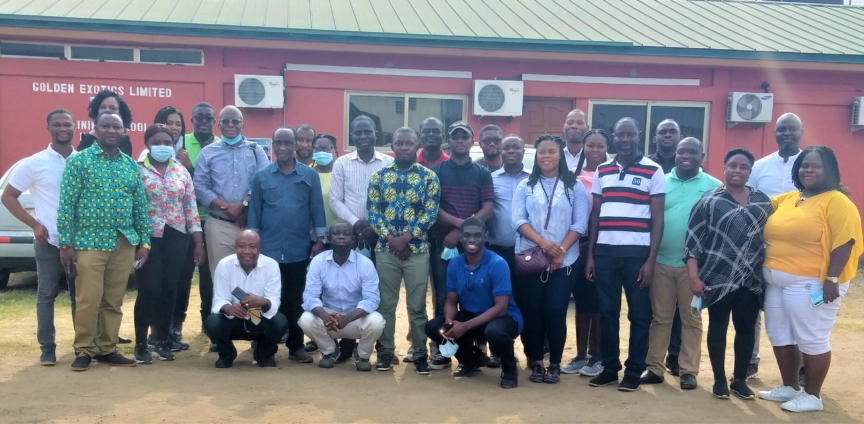
Participants visited Golden Exotics Ltd Banana plantation at Asutsuare (the largest banana plantation in Ghana) where they engaged the management on operational and financing challenges and opportunities.
There was also an interactive simulated credit application assessment session to identify, analyze, evaluate, and propose mitigation measures to value chain risks.
The field visit helped participants translate the classroom training to practical on-field operations of a typical agribusiness.
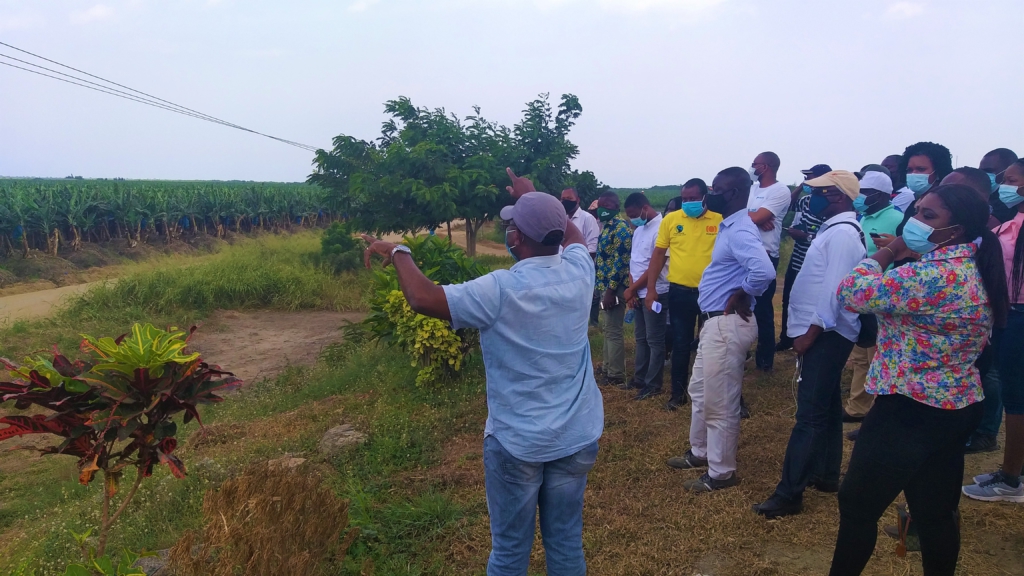
It also allowed participants to observe the good agronomic practices, post-harvest operations and learn the challenges and opportunities of large-scale farming operations as well as its financing and market environment.
The trip produced positive feedback from the participants who found it very educative and insightful and admitted the modules are very relevant to their work.
Latest Stories
-
GIPS calls for strategic procurement to drive inclusive industrial growth
2 minutes -
Ato Forson leads NDC 2028 flagbearer poll with 32% support – Global InfoAnalytics
5 minutes -
Daily Insight for CEOs: The CEO’s role in building leadership capability
10 minutes -
AG to introduce Legal Practitioners Standard Board Bill in Parliament
19 minutes -
AG proposes Bar Welfare Fund to provide social protection for lawyers
23 minutes -
No conditions attached: Rethinking Ghana’s duty of care for citizens in crisis abroad
24 minutes -
GES opens applications for non-teaching staff promotion; here’s who qualifies
38 minutes -
What Is Wrong With Us: We fly halfway around the world to admire discipline, then fly home to tolerate chaos
40 minutes -
Discipline must not become abuse in raising children – ARK Foundation
47 minutes -
Photos: Culture, technology and cuisine take centre stage at Russia’s youth festival
49 minutes -
‘Who approved Laboma structures?’ – Victoria Bright calls for review of permitting system
55 minutes -
“The Darkest Chapter”: Latif Abubakar’s 21st production brings President Mahama’s UN reckoning to the National Theatre stage
58 minutes -
Teacher, three others investigated over alleged kidnapping of suspected MoMo fraudster in Kumasi
59 minutes -
Afenyo-Markin mourns Bernice Offei, describes her songs as ‘sermons set to music’
59 minutes -
Don’t just learn AI tools, use them to improve productivity – ALX Enterprise
1 hour