

Audio By Carbonatix
Global sustainability is entering a decisive period. Energy systems are evolving, digital innovation is accelerating, and climate impacts are intensifying. Yet one system sits at the centre of all progress. Food systems connect land, water, energy, finance, biodiversity, trade, and human health. When food systems are strong, they anchor national stability and drive economic growth. When they falter, progress in every other sector slows. Nowhere is this system's reality more evident than in Africa. The continent holds some of the world’s greatest agricultural potential and its youngest workforce. It also faces some of the most urgent climate and market pressures.
If Africa’s farmers prosper, the continent becomes a powerful driver of global resilience. If they do not, the world will struggle to meet its climate and development goals. This is why the theme of Abu Dhabi Sustainability Week (ADSW) 2026, The Nexus of Next: All Systems Go, is so timely. Sustainability is no longer about managing single issues. It is about redesigning entire systems. It is about creating the conditions for innovation, investment, and human capability to work together. For Africa, the opportunity is clear. We stand on the cusp of unlocking a quantum leap for the farmers who feed the continent.
A quantum leap for farmers is within reach
African agriculture is on the verge of a shift from incremental improvement to transformational change. This means fast, significant gains in productivity, resilience, and income stability, and it is becoming possible because digital tools and artificial intelligence are reaching rural areas in ways unimaginable a decade ago. AI-enabled soil diagnostics, satellite-based pest alerts, and climate-informed advisory services can multiply the value of the knowledge farmers already possess. They convert uncertainty into insight and help farmers make more precise decisions about planting, water use, soil health, and market timing. These technologies are emerging across the continent. They are practical. They are scalable. They are designed around African realities. The challenge is not in innovation but in aligning investment, infrastructure, and institutions, so these tools reach millions, not thousands.
Finance is the missing link
Africa has a vibrant innovation ecosystem. What it needs is a financing system that matches the scale of the opportunity. Today, only a small share of climate and development finance reaches small producers. Many investment structures remain fragmented or too risk-averse, leaving farmers without the capital required to adopt new tools, improve storage, or access better markets. This is where system design matters. Finance must move from isolated project funding to investment architectures that connect climate action, regenerative agriculture, loss reduction, storage and logistics, digital integration, and market access. The goal is to strengthen entire value chains, not single interventions. A shift toward this systems approach is beginning.
A concrete example: RE-GAIN
AGRA and the Green Climate Fund have launched RE-GAIN, a next-generation model for food system resilience across seven countries. REGAIN brings together regenerative agriculture, climate-aligned storage and aggregation, digital integration, and farmer-centred market linkages under a unified investment structure designed for scale. Rather than treating food production, storage, climate adaptation, and market access as separate challenges, RE-GAIN connects them. It supports countries in reducing food loss, improving logistics, strengthening environmental stewardship, and expanding opportunities for smallholder farmers. It also demonstrates how climate finance can be structured to attract additional investment and accelerate national and regional progress. RE-GAIN is a blueprint for how Africa can build the systems needed for a quantum leap. It shows how innovation and finance can work together to deliver widespread and lasting value.
Systems thinking creates lasting solutions
Farmers experience sustainability as a combination of factors, not as isolated themes. For a smallholder family, that can mean moving from one uncertain harvest a year to two reliable ones, school fees paid on time, and a kitchen that does not run out of food before the next season begins.
They rely on timely climate information, reliable energy for storage or irrigation, functioning transport networks, and predictable markets. When any one link breaks, the entire system weakens. When these links are strengthened together, farmers thrive. For Africa, adopting a systems approach means aligning digital innovation, climate resilience, finance, and market access into one coherent strategy. It means designing policies and investments that recognise the interdependence of food, water, energy, trade, and nature. It means ensuring that farmers have the tools, incentives, and infrastructure required to prosper in a changing climate and a digitising world.
A call to action
ADSW gathers leaders who influence the future of sustainability, finance, and innovation. The opportunity before us is to accelerate a quantum leap for Africa’s farmers by aligning technology, investment, and systems design around a shared vision. Three priorities can drive this transformation: 1. First, expand access to AI and digital tools that give farmers timely, actionable insights. 2. Second, modernise climate and development finance, scaling models like RE-GAIN that align regenerative agriculture, storage, logistics, and market development. 3. Third, support national and regional systems that make food, data, and finance move efficiently and transparently. Africa’s farmers are ready for the next chapter. Innovators are building solutions. Governments are investing. Partners are aligning. If we design systems that work together, Africa’s farmers will feed the continent and help shape a more stable and sustainable world.
****
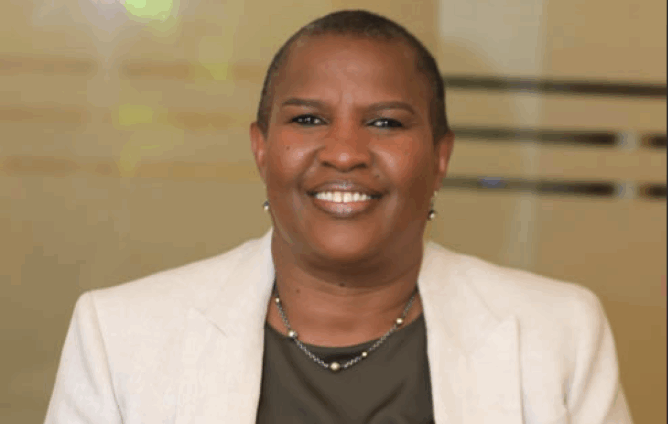
The writer Alice Ruhweza is the President of AGRA
Latest Stories
-
Young Positivist Writes : My Experience with GCLP
1 hour -
Strong Day 1 turnout sets tone for Day 2 of Republic Bank-JoyNews Habitat Fair Clinic
2 hours -
Ghana Army warns new soldiers against social media misuse, uniform abuse
2 hours -
AMA calls for science-led action to tackle environmental health risks in Accra
2 hours -
NPP Canada Organizer BigMo urges Diaspora to support Kodua Frimpong
3 hours -
He entered at eight. He is now 16: Ghana’s children growing up in prayer camps
6 hours -
‘Development must not always begin from Accra’ — Anwelle Foundation launched in Jirapa
6 hours -
PKO trio eye victories at Odwira Festival
8 hours -
346 Ghana Navy recruits pass out after 26 weeks of intensive training
9 hours -
Newsfile to discuss EOCO-MP arrest, drug trafficking, speech arrests and $235m water debt
9 hours -
JoyNews gets results as listeners raise GH¢40,000 to help 17-year-old student with cerebral palsy attend SHS
10 hours -
Vice President calls for stronger local pharmaceutical production to reduce medicine imports
10 hours -
The brewing tension at KNUST; Beware the Ides of October….
10 hours -
Health Ministry moves to integrate traditional medicine into mainstream healthcare
11 hours -
550 pupils in Kintampo South get educational lifeline as ‘Seeds of Hope’ reaches farming communities
11 hours