

Audio By Carbonatix
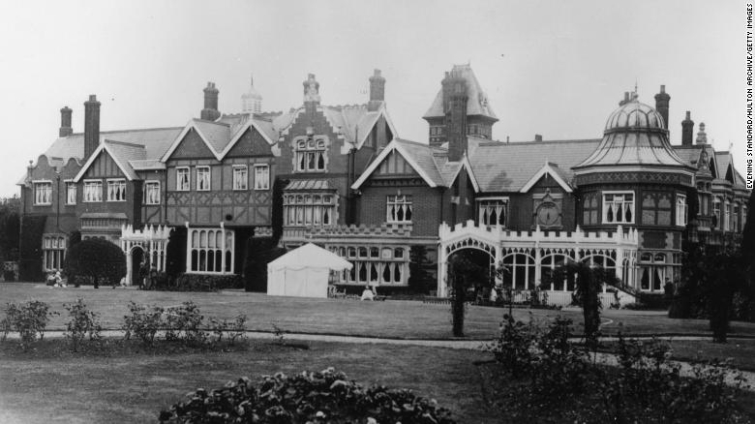
The contribution of famed codebreaking facility Bletchley Park to the Allied victory in World War II has been overstated, according to the author of an official history of British intelligence agency GCHQ.
Codebreakers at the GCHQ facility deciphered Nazi Germany's communications and were credited with turning the tide of the war, but John Ferris, whose book "Beyond the Enigma" was published Tuesday, told CNN that the British public had created a myth around the facility that overstated its influence.
"I'm second to none in admiring Bletchley and the way it operates, but the key thing is intelligence never wins a war on its own," said Ferris. "It can't, you have to have force."
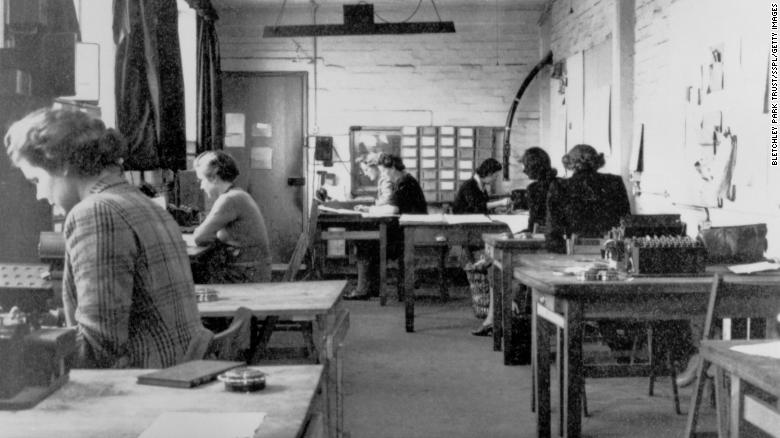
Ferris believes that a myth has been built around the codebreaking operation at Bletchley Park."For British people, 1940 has taken on greater and greater significance as time goes by," he said. "They see it almost as the moment when modern Britain was created."
Bletchley became part of this founding myth with the release of details about the operation, which seemed to suggest it was the reason Britain won the war, added Ferris.
The activities at Bletchley Park remained a secret for several years after the conflict.
Some historians have argued that the success in cracking the Enigma codes shaved two years off the war, but Ferris believes it more likely made victory easier, and quicker by several months.
"To say it did anything more than that I think is just unrealistic," he said.
GCHQ is the largest UK intelligence agency today and Ferris was given access to archives during his research, according to a press release announcing the publication of the book.
Ferris told CNN that before 1914 Britain didn't have a signals intelligence agency, but a raft of different organizations proved their worth in the field during World War I. Signals intelligence involves producing intelligence from intercepted communications.
"In the First World War British signals intelligence probably is close to being as influential as it was in the Second World War," he said.
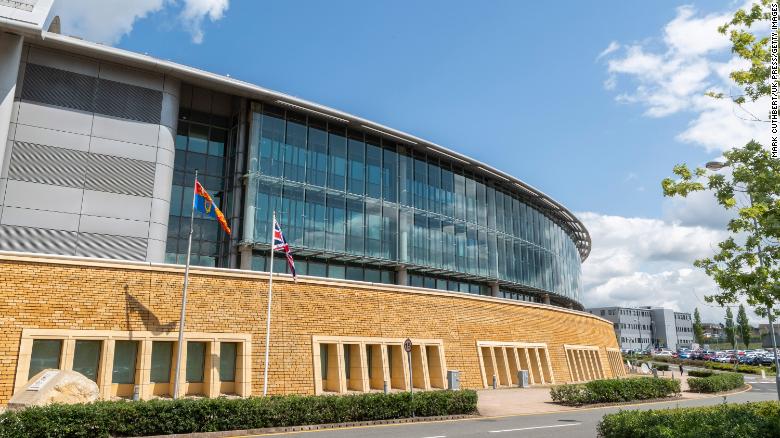
The organization's contribution has continued to grow, said Ferris, who called GCHQ a "very, very valuable tool for British power."Today it monitors cyber threats against the UK, and it's in the top five best intelligence agencies of its kind in the world, said Ferris."
It's an extremely able and effective organization," he said.
As conventional military forces have decreased in size, the role of technology has increased, and with it the importance of agencies like GCHQ, he added.
Latest Stories
-
FoSCel founder urges curriculum reform to strengthen sickle cell education in Ghana
5 minutes -
United States launches America.Gov for public services 5 years after Dr. Bawumia launched Ghana’s version Ghana.Gov
17 minutes -
Cocaine probe: Majority used super majority with Speaker’s support to weaken Parliament – Afenyo-Markin
20 minutes -
UGMC Research Director urges stronger clinical trials to bridge gap between research and patient care
30 minutes -
IEAG calls on FDA to resolve delays in import code issuance
30 minutes -
UGMC research must translate laboratory findings into healthcare solutions – Prof Evelyn Yayra Bonney
51 minutes -
Court remands 3 over alleged gold concentrate robbery
53 minutes -
Two bodies stuck at St. Anne’s mortuary after refrigeration engines break down
1 hour -
‘We will not let this matter rest’ – Afenyo-Markin after Bagbin rejects narcotics probe
1 hour -
AFCON 2027Q: Ghana suffer 4-2 defeat to Gambia
1 hour -
Your strike could disrupt academic calendar – GES urges teachers to return
2 hours -
Speaker’s ruling has failed integrity test required of Parliament to discharge its duties – Afenyo-Markin
2 hours -
St. John’s Grammar edges Mfantsipim in nail-biting NIQ showdown
2 hours -
Expanding Financial Inclusion: Advans Ghana’s client base more than doubles to 160,000
2 hours -
AFCON 2027Q: Ghana surrender two-goal lead to lose to Gambia
2 hours