

Audio By Carbonatix
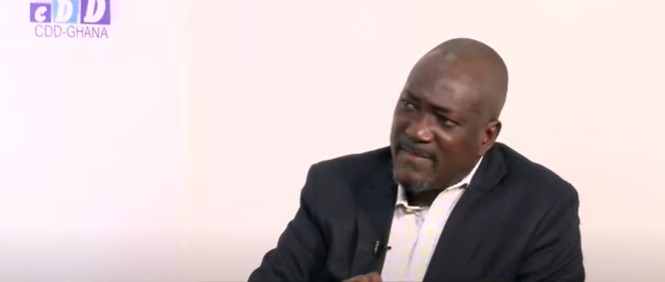
The Executive Director of the Center for Democratic Development, Professor H. Kwasi Prempeh has called on political parties to be transparent when drawing up manifestos for elections.
According to him, the current manifestos do not address the issues concerning the future of the country’s economy, nor does it explain how the various political parties intend to ease the challenges the economy is facing currently.
Speaking on JoyNews’ PM Express, Prof. H. Kwasi Prempeh said political parties could address these shortcomings by adding clear and concise projections concerning the economy to their manifestos to help minimize the uncertainties.
He said: “So if you can tell us what projections underline the assumptions you’re making about the economy; so you’re going to do this, by how much do you think the economy will grow year on year under your tenure? How do you project revenues? What’s the projection on this and that?
“You’re making promises based on a certain element of uncertainty about the future but you can minimise that uncertainty by at least helping us with your best estimate of what you think if you did all of this, by how much will the economy grow? If the GDP grows by this much, how much of it do you think you can capture in taxes? So we know some data.”
According to the Professor, such projections would afford Ghanaians and Civil Society Organisations to easily assess the feasibility of ones manifesto promises.
“Give us something that we can use to assess the feasibility of the things you’re promising to do. But if you just don’t mind the numbers on the revenue side, on the GDP side, on all the things you would need to implement that and you just tell us I’ll implement this, even the capacity of the public services to implement some of the manifesto promises is questionable,” he said.
He added that a well-drawn manifesto will highlight exactly how the said manifesto promise is going to be achieved and with what logistics and personnel.
According to him, successive governments over the years have sidestepped the established institutional frameworks and instead rolled out their own special purpose ministries to implement their their party agenda.
Prof. Prempeh describes this situation as problematic because “then you’re side-stepping the civil service, you’re side stepping the established public institutions that are there on the ground all the way to the district level and can implement these things, and you’re creating new ministries just around your party’s structures.”
“So all these are the things we should ask them about. Who are the personnel that are going to implement this across the country? Where are you going to find them? What kind of capacity do they have? Are you going to use the same civil service that we know? And if so, how are you going to equip them to be able to do this work across the country?” he stated.
Latest Stories
-
Benedict Okyere Yeboah: Ghana’s football problem goes beyond sacking a coach
2 minutes -
GPL 2026/27: Darkwah Wiafe’s winner sees All Blacks beat Kotoko
8 minutes -
ITF World Tour : Patel Wins Boys’ Singles Final at J100 Accra
20 minutes -
Ghana must pursue BRICS partnership if it brings economic benefits – Kpebu
23 minutes -
Success and Wright Claims J100 Accra Girls’ Doubles Championship
24 minutes -
ITF J100: America’s Wright wins J100 Accra Girls’ Singles Title
30 minutes -
Expedition hopes to find aviator Amelia Earhart’s plane on remote island
31 minutes -
US seeks changes to rejected $109m health compact with Ghana – Mahama
1 hour -
Nine dead in mass shooting at Pennsylvania home
1 hour -
‘Time for Ukraine to get new president,’ says Trump after Zelensky condemns diesel deal
1 hour -
Hincapie injury adds to Arsenal issues after Guimaraes rescue act
2 hours -
Henderson scores twice as Chelsea thumb Bournemouth
2 hours -
Photos: Mentapulse Africa convenes health and labour summit to address talent retention
2 hours -
Mahama inspects Nkokɔ Nketenkete plant, eyes Bechem as chicken capital
2 hours -
Ghana not seeking full BRICS membership, applying as Partner Country – Ablakwa
2 hours