

Audio By Carbonatix
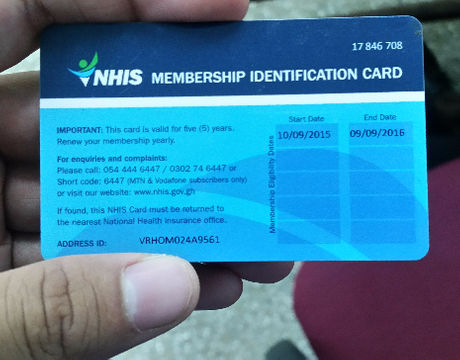
The Alliance for Reproductive Health Rights (ARHR), has asked the government to widen the population coverage of the National Health Insurance Scheme (NHIS) by absorbing the cost of registration and renewal for the poor.
This is because most poor people keep falling off the scheme due to extreme poverty, a situation, which will make it impossible for Ghana to attain Universal Health Coverage (UHC).
Policy and Advocacy Coordinator, ARHR, Leonard Shang-Quartey, said on Tuesday that since the UHC roadmap developed by the Ministry of Health (MOH) would rely on the NHIS to make quality healthcare accessible to all, it was prudent for Government to assist people who were unable to enrol on the scheme due to economic reasons.
He was speaking at a news briefing in Accra by the Alliance to commemorate the second anniversary of the “Declaration of Astana to strengthen Primary Health Care” in Accra.
The Astana Declaration was made by world leaders in October 25th and 26th in Astana Kazakhstan.
They committed themselves to make bold political choices to prioritise disease prevention and health promotion to build sustainable Primary Health Care (PHC) systems in their respective countries.
Astana aims at meeting the health needs of all persons through the provision of a comprehensive preventive, curative, rehabilitative services and palliative health care.
Mr Shang-Quartey said healthcare must not only be made available to all but also accessible to all, irrespective of a person’s social class or location.
“We call for a comprehensive and foundational essential health service package to be guaranteed for everyone living in Ghana to ensure that all persons are able to access basic health care at all times,” he said.
Director of Programmes at ARHR, Nii Ankonu Annorbah-Sarpei, said Government must ensure that the Community Based Health Planning and Services (CHPS) system was made effective to serve its purpose of promoting preventive care.
He said making the CHPS functional by encouraging Community Health Nurses to visit schools and homes to educate people on the need to adopt healthy living habits would ease the disease burden on people and reduce the huge funds spent on curative care.
Nii Annorbah-Sarpei said a recent study showed that only 13 per cent of CHPS selected for verification were functional, an indication that there was much to be done in ensuring that quality healthcare services reached everyone in Ghana.
He called for the provision of a national policy on PHC to guide an inter-sectoral collaboration and coordination for the effective implementation of primary healthcare services that focused on both disease prevention and clinical care.
Latest Stories
-
Conflicts among care providers linked to maternal, neonatal deaths – Expert
32 minutes -
GIS marks 10th TIME conference, champions improved teaching practices
39 minutes -
BRICS Or Balance? What Ghana’s bid really means
1 hour -
GPRTU wants full TRAFFITECH-GH implementation to start in 2027
1 hour -
Mahama announces plans to import electric wheelchairs for PWDs
1 hour -
KGL U17 Colts 2026: Western beat Prempeh Elite Academy to set up final final with Greater Accra Region
2 hours -
Late Solanke strike salvages 10-man Spurs draw at Man United
2 hours -
Gender Ministry to monitor welfare of Nana Akua Addo’s children amid domestic violence case
2 hours -
Benedict Okyere Yeboah: Ghana’s football problem goes beyond sacking a coach
2 hours -
GPL 2026/27: Darkwah Wiafe’s winner sees All Blacks beat Kotoko
2 hours -
ITF World Tour : Patel Wins Boys’ Singles Final at J100 Accra
3 hours -
Ghana must pursue BRICS partnership if it brings economic benefits – Kpebu
3 hours -
Success and Wright Claims J100 Accra Girls’ Doubles Championship
3 hours -
ITF J100: America’s Wright wins J100 Accra Girls’ Singles Title
3 hours -
Expedition hopes to find aviator Amelia Earhart’s plane on remote island
3 hours