

Audio By Carbonatix
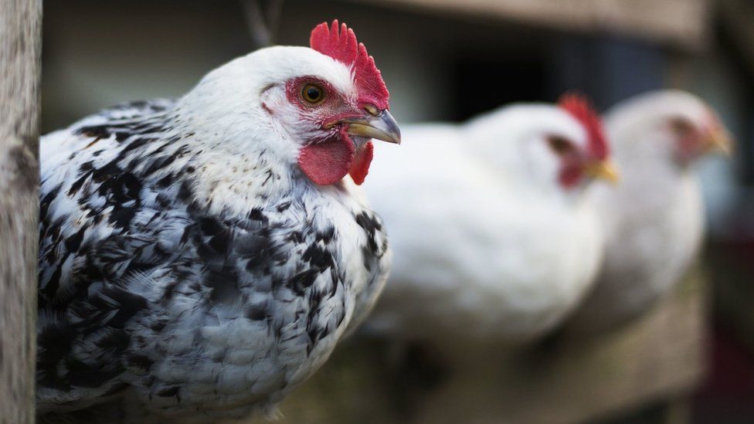
Hens, turkeys and other captive birds in Britain will have to be kept indoors from 14 December to prevent the spread of bird flu, the government has said.
The chief vets for England, Scotland and Wales made the decision after a number of cases were detected among both captive and wild birds.
All captive birds in Britain to be kept indoors amid bird flu outbreak
— BBC News (UK) (@BBCNews) December 5, 2020
The risk to humans is "very low" and should "not affect the consumption of poultry products", the government sayshttps://t.co/zB8Zf50yHx
The risk to humans is "very low", the government said, and should "not affect the consumption of poultry products".
But in a joint statement, veterinary chiefs said "swift action" was needed.
"Whether you keep just a few birds or thousands, from 14 December onwards you will be legally required to keep your birds indoors, or take appropriate steps to keep them separate from wild birds," read the statement.
"We have not taken this decision lightly but it is the best way to protect your birds from this highly infectious disease."
There are numerous strains of bird flu. Most either do not affect humans, or are not easily caught and spread by humans.
Deaths have been recorded outside of the UK related to some strains, but the H5N8 strain - which makes up the bulk of the UK's current cases - has not infected any humans worldwide to date, the NHS said.
A turkey farm in Norfolk is among those to found to have had an outbreak of the H5N8 bird flu strain. The birds will now be slaughtered to prevent the spread.
While the news will be of particular concern to poultry farmers in the run-up to Christmas, the new rules will apply to all bird owners in Britain.
However, despite the concern, the Department for Environment Farming and Rural Affairs said poultry products - including eggs - are still safe to consume.
Poultry includes chickens, ducks, turkeys, geese, pigeon (bred for meat), partridge, quail, guinea fowl and pheasants.
No end date for the measures has been given, but Defra said they would be kept under "regular review".
Latest Stories
-
ECG announces planned power outages in parts of Tema from Sept. 29 to October 1
12 minutes -
Sylvester Mensah urges Latenu FM to promote trade, export opportunities in Ga
26 minutes -
Ga language under threat of decline as children shy away from speaking it – Sylvester Mensah
31 minutes -
‘Let every Ga child you raise know the Ga language and story’ – Sylvester Mensah
37 minutes -
‘We are not deterred’ – Ablakwa responds to backlash over South Africa evacuation
39 minutes -
NCA announces major voice and data disruption across Northern Ghana due to fibre cuts
1 hour -
Photos: Housing solutions take centre stage at Day 2 of the 3rd Republic Bank-JoyNews Habitat Fair
2 hours -
Ghana Air Force passes out 293 recruits after six months of intensive training
3 hours -
EOCO vrs Baffour Awuah: EOCO should have secured warrant before arrest attempt at court – Inusah Fuseini
3 hours -
Triple fibre cuts disrupt telecom services across Northern, Oti regions – Sam George
3 hours -
Politicisation could undermine parliamentary probe into cocaine seizures – Dr Osae-Kwapong
3 hours -
EOCO chases MP: Can Section 41 cure lacuna in EOCO Act? – Inusah Fuseini asks
3 hours -
GNFS, GWL inspect fire hydrants in Ministries enclave; 23 found faulty
3 hours -
Gov’t directs release of 50,000 bags of grain to ECOWAS
3 hours -
Ghana, Germany deepen cooperation on railways, labour mobility
3 hours