

Audio By Carbonatix
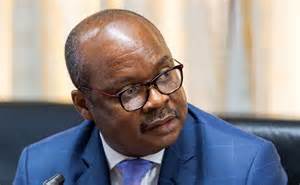
The fiscal costs in terms of stimulus package deployed to moderate the adverse socioeconomic consequences on the households and businesses in the country is estimated at over GH¢11.2 billion, the Governor of the Bank of Ghana, Dr. Ernest Addison has revealed.
However, the inclusion of the financial sector and the energy sector costs raised the estimate of the financial burden from the three sources to GH¢24 billion.
Speaking on the topic: “Pandemic, The Economy and Outlook at the University of Ghana Alumni lecture, Dr. Addison said difficult decisions will have to be taken to reorganize public finances and expenditure priorities while exploring more sustainable revenue sources.
The programme of interventions to revitalize businesses and cushion households will have to be defined to scale and there should be no expectation that these should become permanent obligations of government, he stressed.
“The wide fiscal gap raises important financing issues, and its financing should not be by recourse to central bank funds as this will weaken the central bank’s ability to serve as the anchor of monetary and exchange rate stability.
"Let me conclude by reiterating that, the global economy is not out of the woods yet and neither is the Ghanaian economy”, he emphasized.
Continuing, the Governor said “the pandemic [covid-19] and its socio-economic impact would be felt long after we have reached herd-immunity and started seeing the full benefits of the success in the vaccines. Which means as public policy makers, we will still be faced with tough decisions that require a response function asymptotic to Pareto principles. The critical decisions that we take will be judged by posterity.”
Ghana’s debt
Ghana’s public debt reached 71 percent of the estimated Gross Domestic Product at the end of September 2020, fairly above the maximum early warning sustainability threshold of 70% for the Market Access Countries (MACs).
Dr. Addison said the country’s debt service indicators and gross financing needs have breached the sustainability thresholds.
The non-resident holdings of the public debt, although declined, is still high at 59.9% of GDP, above the threshold of 45% for the MAC.
Public gross financing needs are also above the 10% MAC threshold on the back of increased fiscal obligations, suggesting constrained fiscal space for growth spending.
He added that although external financing requirement as a share of GDP has declined and within acceptable thresholds, efforts need to be put in place to increase buffer levels to help meet future external obligations.
Latest Stories
-
Every year, the lawyers come out, and so does the nonsense! – Ace Ankomah writes
25 seconds -
Digital transformation without an ownership culture can digitise poor service
4 minutes -
Fishing communities demand revocation of offshore gold exploration licences over livelihood concerns
7 minutes -
How Ghanaian tycoon Manoj Lakhiani built a water and plastics empire from a $25,000 loan
8 minutes -
GoldBod recovers GH¢38.7m of GH¢55.8m outstanding receivables; remainder subject to legal action – Sammy Gyamfi
15 minutes -
GEXIM Bank donates GH¢200,000 worth of medical equipment to Korle-Bu Child Health Department
18 minutes -
Majority rejects Minority’s claims over GH¢49.7m South Africa evacuation
20 minutes -
GEXIM urges banks to support refurbishment of Korle-Bu Teaching Hospital’s Child Health Department
23 minutes -
Don’t appoint your cheerleader as referee
27 minutes -
Ghana needs stronger international cooperation to fight cybercrime – CSA
29 minutes -
CSA warns of growing cyber threats as Ghana’s digital dependence increases
36 minutes -
USTED dean warns GAUA strike could disrupt Ghana’s restored academic calendar
49 minutes -
Bechem meat processing factory 50% complete, set for March 2027 completion – Kwakye Ofosu
1 hour -
NDC can appoint whoever they want to EC, but Ghanaians will make a decision in 2028 – Titus Glover
1 hour -
GoldBod initiative has created over 1,300 public and private sector jobs – Sammy Gyamfi
1 hour