

Audio By Carbonatix
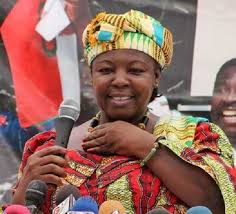
The Chairperson, Convention People’s Party (CPP), Nana Akosua Sarpong Kumakuma, says the overthrow of Dr Kwame Nkrumah and the CPP government on February 24, 1966 truncated Ghana’s national development.
She added that 55 years down the line, the Ghanaian economy was just moving in circles “not able to achieve much as compared to achievements chalked under the CPP government”.
Speaking to the Ghana News Agency, she said the CPP government had a clear plan to ensure development through the creation of jobs, factories, provision of good roads and the motivation and education of Ghanaians to solve their own problems, which were still evident to all.
According to her, the shameful act of 1966 was not a fight just against Nkrumah's political party but against national development and human progress which had led to challenges and untold suffering of Ghanaians.
Madam Sarpong intimated that to commemorate the day, party members and executives held a ceremony at Saltpond in the Central Region, where Dr Nkrumah planted a tree on the founding of the CPP as a symbolic representation of the Party, adding that, “the tree is here standing strong”.
The Chairperson, Convention People’s Party (CPP), urged politicians to rededicate themselves to national development and for the dignity of Ghanaians.
On February 24, 1966, while Dr Nkrumah was on a state visit to North Vietnam and China, his government was overthrown in a violent coup d'état led by members of the national military and the police, with backing from destabilizing and exploitative foreign interests.
The conspirators, led by General Joseph Arthur Ankrah, named themselves the National Liberation Council and ruled as a military junta for three years.
Dr Nkrumah did not learn of the coup until he arrived in China. He stayed in Beijing for four days and Premier Zhou Enlai treated him with courtesy.
He never returned to Ghana, but he continued to push for his vision of African unity and projection of the African personality, and lived in exile in Conakry, Guinea, as the guest of President Ahmed Sékou Touré, who made him honorary co-president of that country until his demise in 1972.
Latest Stories
-
Private security firms acting as political militias risk licence revocation, prosecution – National Security Coordinator
48 minutes -
Antoine Semenyo makes history as first Ghanaian named in PFA Team of the Year
1 hour -
Mahama calls for responsive healthcare regulation to improve patient safety
2 hours -
IERPP accuses GoldBod of breaching transparency law, says quarterly trading reports removed from website
2 hours -
Future of Energy Conference: Africa cannot industrialise in the dark – ECOWAS Bank President
2 hours -
Help comes to Alajo as DirectAid brings relief items to flood victims
2 hours -
“Somebody created the loss” – Haruna Mohammed backs Minority’s call for GoldBod probe
2 hours -
Hope for agroecological farmers: Scientific Research supports urine-based weed management as safer alternative to glyphosate
2 hours -
Israeli Film Festival returns to Accra with free screenings to boost cultural exchange
2 hours -
SONABEL considers opening Bagré Dam spillway on Friday amid rising water levels
2 hours -
Ghana Maritime Authority, Humanity First commission 4 boreholes in Wa to end water scarcity and keep children in class
2 hours -
In Photos: Day Two of ‘SYPALA 2026’ focuses on governance, economic freedom and youth leadership
3 hours -
Wontumi withdraws from NPP chairmanship race, urges support for Bawumia
3 hours -
UCC-IEPA, CEGRAD launches free digital skills programme to empower 1,000 women in education
3 hours -
NPP dismisses extortion allegation against Afenyo-Markin, says focus remains on GoldBod losses
3 hours