

Audio By Carbonatix
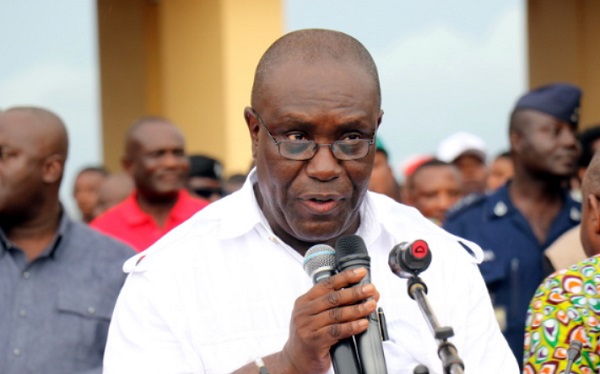
The Secretary-General of the Trades Union Congress (TUC), Dr Yaw Baah, Ghana, has called on the government to involve the leadership of Union bodies in negotiations and management of public agreements.
He said the Union body had experts who could work with government in negotiating contracts on behalf of the country to ensure value for money.
Dr Baah made the call at a TUC seminar on “Negotiation and Management of Public Agreements in Ghana - The Role of the Trade Unions”.
He said the country was endowed with natural resources but poor contract negotiations had affected its fortunes in terms of development.
“Ghana has been mining gold over 120 years, but foreigners are making lot of money to the detriment of the citizenry. There is poor road infrastructure in most of these mining communities coupled with hunger and poverty,” he stated.
Dr Baah called on Civil Society Organisations and other bodies to join the TUC to lead the process of creating the political will for government to involve key stakeholders in negotiating agreements.
He cited the Volta River Authority agreement in the 1960s, which was reviewed by Ghanaian experts like Professor George Akilakpa Sawyerr, an Academia, who got a better deal for the country.
He expressed disappointment over Parliament’s alleged approval of some contract documents without due diligence.
“It is worrying that some of these Parliamentarians approve these contracts because they do not understand the technicalities involved in the document while others do not have enough time to peruse the voluminous documents,” he said.
The Director, Labour Research and Policy Institute, TUC-Ghana, Dr Kwabena Nyarko Otoo, who presented a “Research Analysis of Negotiation and Management of Public Agreement in Ghana,” noted that from 2011 to 2016, the country had experienced extended blackouts - “dumsor”- largely due to generation problem of higher demand oversupply of energy.
The generation, he noted, had since increased far in excess of energy demand with current projections being that no additional power generation would be needed until 2027.
But the energy sector faced monumental challenges of the unreliability of power, mounting debts, rising tariffs and low investment, Dr Otoo said, and called for capacity building for government appointees on contract negotiations.
Latest Stories
-
Accra ranks among world’s top 20 cities for nightlife in 2026
35 minutes -
Police arrest two suspects over murder of Yidani chief and son
48 minutes -
How Albert Bondah, Fredima, Socrate Safo, Counselor Lutterodt engineered Dan Kwaku Yeboah’s comedy show
1 hour -
Yidani chief’s murder: Police arrest two suspects following intelligence tip-off
1 hour -
Government to connect 206 Volta communities to national grid within six months – Energy Minister
1 hour -
Petrol, diesel and LPG prices expected to rise marginally in September – COPEC
2 hours -
Canada installs large Lake Ontario sign in latest jab at US
2 hours -
Energy Minister commends Roads Minister for massive road projects in Volta Region
2 hours -
Executive support professionals must reposition as strategic partners – Centre for Executive Development
3 hours -
Ablakwa calls for end to African conflicts, urges leaders to create jobs
3 hours -
NSMQ 2026: Prempeh College withstands late Keta SHTS push to grab first semi-final spot
3 hours -
7 feared dead at reclaimed mining site in Atiwa East
4 hours -
Ghana Immigration Service removes 1,055 street beggars from the streets of Accra and Kumasi
4 hours -
Ghana @70: Litina outlines support services for diaspora visitors seeking to reconnect with Ghanaian roots
4 hours -
Boat carrying nearly 270 people capsizes off northern Cyprus
5 hours