

Audio By Carbonatix
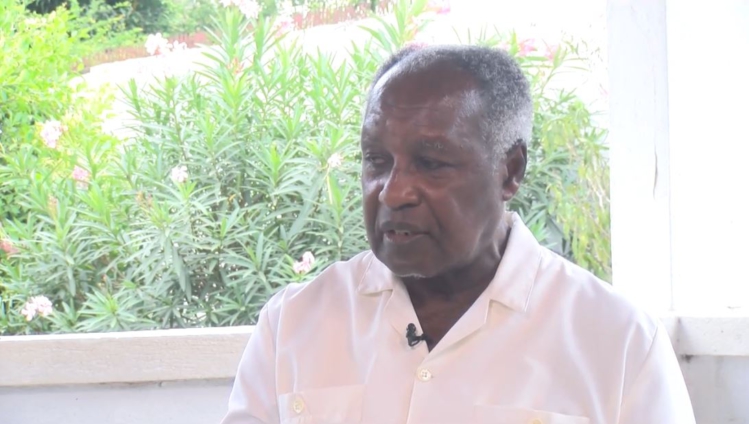
Former Vice-Chancellor of the University of Ghana, Prof Ivan Addae Mensah, is worried about the government's approach to improving education in Science, Technology, Engineering and Mathematics (STEM).
The Emeritus Professor believes that building new facilities to accelerate education in these fields is not the panacea to the country’s low percentage of non-grammar-based human resources capacity.
"This is a typical example of how we start schemes just for its novelty without thinking of the implications," he said on JoyNews' AM Show.
The Education Ministry has committed to erecting new structures across the country to encourage the training of students in STEM; this will help address the weak link that had existed since the introduction of the 1987 educational reforms that introduced the junior and senior high schools.
On the back of these, government has already announced the opening of six new STEM schools this year to improve the science to humanities ratio programme.
The schools include Abomosu STEM School, Kpasenkpe STEM School, Bosomtwe Girls STEM school, STEM Centre at Accra Senior High School and TVET School at East Legon.
Education Minister Yaw Adutwum said the government had commenced the development of 20 STEM centres and 10 model STEM Senior High Schools across the country, which were at various stages of completion.
But the former Vice-Chancellor believes though the intent may be valid, government is looking at the whole idea wrongly and not critically thought-through.
"Instead of investing in improving the quality in these schools, we are now going to start news schools from scratch without using the schools that already exist. We are going to build new structures so that we can show people that when we came, we built A, B, C, D schools called STEM schools," Prof Addae Mensah lamented.
The Professor explained that government will be doing the sector a great disservice if it continues to invest resources in additional structures rather than boosting the efficiency of the existing ones.
According to him, the nature of the equipment and consumables needed to run such institutions will make it economically inappropriate to disregard these alternatives.
"Pouring in more money when you cannot even equip those new structures. You may bring in new equipment, but with scientific equipment, a maximum of five years, they will become obsolete, and they have to be replaced. That is where the problem begins," he said.
In his view, though the policy has already been outlined on paper, if its implementation is not tweaked in the direction of quality, the desired results may not be achieved.
"You can call me a naysayer, but I think that if we concentrate on the schools we have now and make them functional and produce quality, we will be doing far better."
Latest Stories
-
Afenyo-Markin failed to comply with procedural rules in defamation suit – Sammy Gyamfi’s lawyers
4 minutes -
GRA recovered GH¢1.3bn out of about GH¢1.4 bn unpaid VAT from ECG – Anthony Sarpong
7 minutes -
KMA to extend daily toll collection to nights and weekends
8 minutes -
Ghana secures second consecutive term on UN Human Rights Council
12 minutes -
KATH Catheterisation lab targets December completion amid specialist staffing concerns
13 minutes -
Government working to address economic challenges driving youth into galamsey – Mahama
23 minutes -
Domestic Capital Africa campaign targets US$600bn pension funds for SME growth
24 minutes -
Women leaders’ wisdom and work deserve recognition – Mahama
34 minutes -
NRSA to refund surplus from auctioned vehicles of non-subscribers after deducting towing costs
35 minutes -
Ghana must integrate AI into mainstream education – DigiMarkt Project Board
35 minutes -
Armwrestling: Ghana unveils World Armwrestling Championship squad, appeals for travel support
36 minutes -
NPRA cites pensions college, data bank to justify 10-storey building project
41 minutes -
16 arrested as security team recovers guns, ammunition at Gbane mining site
41 minutes -
African group demands action on climate finance and adaptation ahead of COP 31
42 minutes -
GFA to receive $700,000 a year from CAF as continental body announces 33% increase in annual funding to member associations
48 minutes