

Audio By Carbonatix
The Ghana Chamber of Telecommunications is calling for a review of portions of the Electronic Transfer Levy law to exclude the 1.5% charge on payment of salaries made via mobile money (MoMo).
Even before it starts implementation, the agency responsible, the Ghana Revenue Authority (GRA), admitted that how the controversial law was crafted makes it imperative that the tax is factored into the revenue mobilisation stream.
A Principal Revenue Officer and Head of the Project Management Unit at the Authority told JoyNews that salaries are paid from their bank accounts onto mobile money platforms, and the 1.50% fee will be deducted into the government coffers.
However, the Authority has indicated its readiness to implement it from Sunday, May 1.
But the Ghana Chamber of Telecommunications wants this and other key challenges addressed before the day of implementation.
The Chief Executive Officer (CEO) of the Chamber, Dr Kenneth Ashigbey, says they will be working with the government to ensure that all unintended consequences do not arise.
According to him, after addressing the issues raised, the controversial law will be a good law.
“Some of the challenges we have seen with the law, as has been passed, which we hope to take up, are a few discriminatory elements within what’s happening.
"For example, if your salary is paid from a bank account, it won’t attract the E-Levy, but it will attract the E-Levy if you are paid with mobile money. That definitely is not equitable and is discriminatory.”
“We hope that going forward; such issues will be addressed. We know that one of the elements of a good tax is that it should not be discriminatory, especially due to the channels that one uses. All of these are things we will be working on with the government to ensure that the unintended consequences do not come and derail the government’s own digitalisation agenda that it’s put up,” he added.
Dr Kenneth Ashigbey made this known in an interview with Accra-based Citi TV.
About the law
The bill was passed on Tuesday, March 29, 2022, and was signed into law on Thursday, March 31, 2022, by President Nana Addo Dankwa Akufo-Addo.
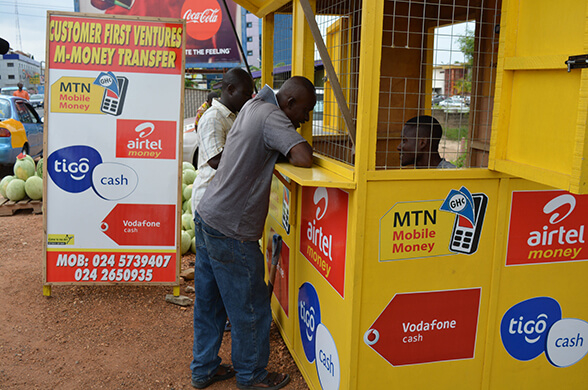
The levy is a 1.5% tax on electronic transfers that include but is not limited to mobile money transfers done between accounts on the same network, mobile money transfers from an account on one network to a recipient on another network, transfers from bank accounts to mobile money accounts, and transfers from mobile money accounts to bank accounts.
Latest Stories
-
History made! Accra Academy book first-ever NSMQ final Spot after dominant semi-final display
53 minutes -
Woman’s decomposed body found in gutter near Haatso DVLA office
1 hour -
Residents of Akaa, surrounding communities demand improved network coverage
1 hour -
‘Chief Justice’s role is to administer justice, not protect any agenda’ – Haruna replies Franklin Cudjoe
1 hour -
PRURide winners to receive GHS 15,000
1 hour -
AMA announces Post-Homowo clean-up exercise for September 5
1 hour -
Asantehemaa welcomes Otumfuo home after US engagements
2 hours -
No automatic duty on travellers carrying more than two phones – GRA clarifies Customs rules
2 hours -
School rivalry cannot justify arson – Peace Council condemns clashes between Okuapeman, Mount Sinai SHS
2 hours -
From recognition to redistribution: Women’s leadership and the future of Africa’s economy
2 hours -
Chief Justice’s visits to Executive institutions raise neutrality concerns – Prof Duah
2 hours -
Gbande rejects NPP’s call for Chief Justice to resign
2 hours -
AT Ghana’s PPL Net must clear audit arrears before spectrum allocation – Sam George
2 hours -
GSE to close 2026 with 81% return for investors
2 hours -
New oil agreements should spur economic development – Deloitte Senior Partner
3 hours