

Audio By Carbonatix
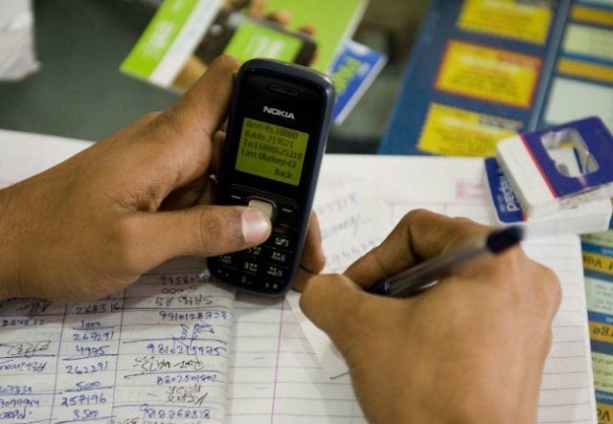
Mobile money has changed the way Ghanaians live and do business. It has brought financial inclusion to millions, especially people who previously had little or no access to traditional banking. In 2023 alone, mobile money transactions reached GHS 1.07 trillion, a 9.4 percent increase over 2022. But as the use of mobile payments grows, so do the risks. Fraud linked to mobile money is becoming one of Ghana’s biggest cybersecurity threats.
The numbers show the seriousness of the issue. The Bank of Ghana reported 13,451 fraud cases across the financial sector in 2023, with mobile money fraud accounting for about 20 percent of those cases. Losses reached GHS 56 million, compared to GHS 33 million in 2021. More than GHS 10 million of those losses came directly from mobile money fraud. In 2024, cyber and technology-related fraud caused almost GHS 10 million in losses, an increase from GHS 8.9 million the previous year.
Fraudsters use many tricks to deceive victims. Social engineering is one of the most common methods, where criminals impersonate officials, send fake messages, or call unsuspecting users with promises of prizes. Many victims are persuaded to give away their PINs or dial harmful USSD codes. Insider collusion is another major problem, with investigations showing that over half of financial fraud cases involve people working inside institutions.
SIM-card takeovers and scams that target mobile-money-only accounts have also caused growing concern and loss of confidence among users. The Bank of Ghana is responding with new measures. It has revised its Cyber and Information Security Directive to address modern risks such as artificial intelligence, cloud systems, and data protection. It has also expanded its Financial Industry Command Security Operations Centre to cover all regulated entities, not just banks.
In addition, the Cyber Security Authority has made the Bank the official Sectoral CERT for finance, giving it more responsibility in coordinating cyber incident responses across the industry. Peter of Fortishield Ghana explains, “Mobile money usage is soaring, but many still lack awareness of critical safeguards.” William Frimpong-Manso of Fortishield Ghana adds, “Only through coordinated efforts from users, providers, and regulators can we build a payment ecosystem secure enough to deter fraudsters.” Moving forward, Ghana must strengthen user education, especially in rural areas and among the elderly. Regular PIN changes should be encouraged.
Banks and telecoms should invest more in AI-based fraud detection and rapid response systems. Agents must be properly trained and monitored, and greater collaboration is needed between regulators, fintechs, and private cybersecurity firms to keep the system safe. Stay ahead of cybercriminals. Protect your online presence today. Visit us at: www.fortishieldghana.com Ghana must act now. Ghana’s cybersecurity measures are not strong enough to protect its leaders, institutions, or citizens.
With cyber threats growing globally, Ghana must shift from reactive responses to proactive defense strategies. Fortishield Ghana stands ready to tackle any challenge on a global scale, ensuring the ultimate protection of our nation.
Ghana must act now. Ghana’s cybersecurity measures are not strong enough to protect its leaders, institutions, or citizens. With cyber threats growing globally, Ghana must shift from reactive responses to proactive defense strategies. Fortishield Ghana stands ready to tackle any challenge on a global scale, ensuring the ultimate protection of our nation.
Written by Melinda Berko | Senior Account Director, Fortishield Ghana
Latest Stories
-
Ghana Medical Trust Fund, Hungary explore partnership to strengthen specialised healthcare
17 seconds -
Manhyia South MP Baffour Awuah pleads not guilty to EOCO charges, granted GH¢10m bail
4 minutes -
NPP conference: We need leaders to complement our efforts in Parliament – Annoh-Dompreh
6 minutes -
Sammy Crabbe steps down from NPP Chairmanship race, backs John Boadu
7 minutes -
NPP postpones constitutional amendments, including proposal on party leadership to next national conference
10 minutes -
NDC ‘running into opposition like Usain Bolt’ – Sammy Awuku
22 minutes -
Local pharma production can create jobs, strengthen Africa’s health security – Mahama
24 minutes -
Mahama calls for removal of barriers to boost Africa’s pharmaceutical industry
29 minutes -
NPP needs ‘war-like’ leaders to take fight to government – Annoh-Dompreh
32 minutes -
Mahama unveils HINGE digital platform to streamline health investment and regulation in Africa
39 minutes -
We won’t return to the classroom without concrete solutions – NAGRAT
44 minutes -
Mahama urges Africa to invest in local pharmaceutical manufacturing
50 minutes -
Akufo-Addo giving Bawumia space to assert himself as NPP leader – Gabby Otchere-Darko
56 minutes -
NPP delegates, not social media, will decide election winners – Miracles Aboagye
1 hour -
I have no interest in this election; I believe Bawumia will win 2028 election – NAPO
1 hour