

Audio By Carbonatix
Culture, education and agricultural cooperation are becoming important channels through which Russia is building relationships with Ghana and a wider network of West African countries.
A film screening, a poetry recital or a language lesson may appear a modest affair in the world of international relations. Yet these encounters can open doors to something more enduring: an understanding of another country's people, history and worldview.
At the Partner Russian House of the Center for Public Diplomacy (CPD) of the Russian Federation on Sunyani Avenue in Kanda, Accra, such encounters are part of a broader effort to deepen connections between Russia and Ghana.
From celebrations of traditional Russian festivals to art masterclasses, educational exchanges and plans for agricultural cooperation, the work reflects a form of diplomacy that begins not in government conference rooms but in people's everyday experiences.
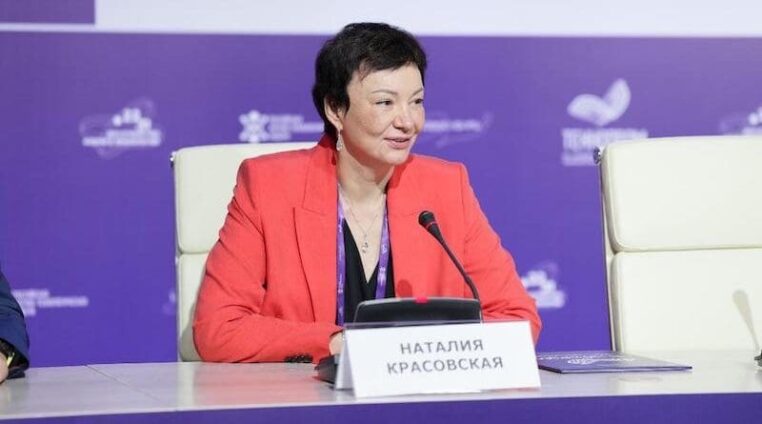
For Executive Director of the Center for Public Diplomacy,Dr Nataliia Krasovskaia, culture is central to this approach.
“Culture helps people understand each other beyond politics,” she says. “When people learn each other's language, read each other's books, listen to each other's music and understand each other's history, the relationship becomes more human.”
It is an approach that places cultural understanding alongside education and agriculture as the three pillars of the CPD'swork in Africa.
Culture as the starting point
At the Russian House in Accra, cultural programming offers Ghanaians opportunities to encounter Russian traditions through celebrations such as Maslenitsa and Victory Day, film screenings, poetry, visual arts and other community activities.
These activities serve a purpose beyond entertainment. They create opportunities for direct engagement, particularly among young people who may have limited personal experience of Russia.
Ghanaian stories are also part of this cultural exchange.
In 2024, Ghana’s then opposition leader and current President,John Dramani Mahama's memoir, My First Coup d'État and Other Stories from the Lost Decades of Africa, was launched in its Russian translation at the Russian Academy of Sciences in Moscow. The book recounts aspects of Mahama's upbringing and his experience studying in the Soviet Union.
The episode illustrates how cultural diplomacy can operate in both directions, introducing Russian audiences to Ghanaian experiences while giving Ghanaians opportunities to engage with Russian language and culture.
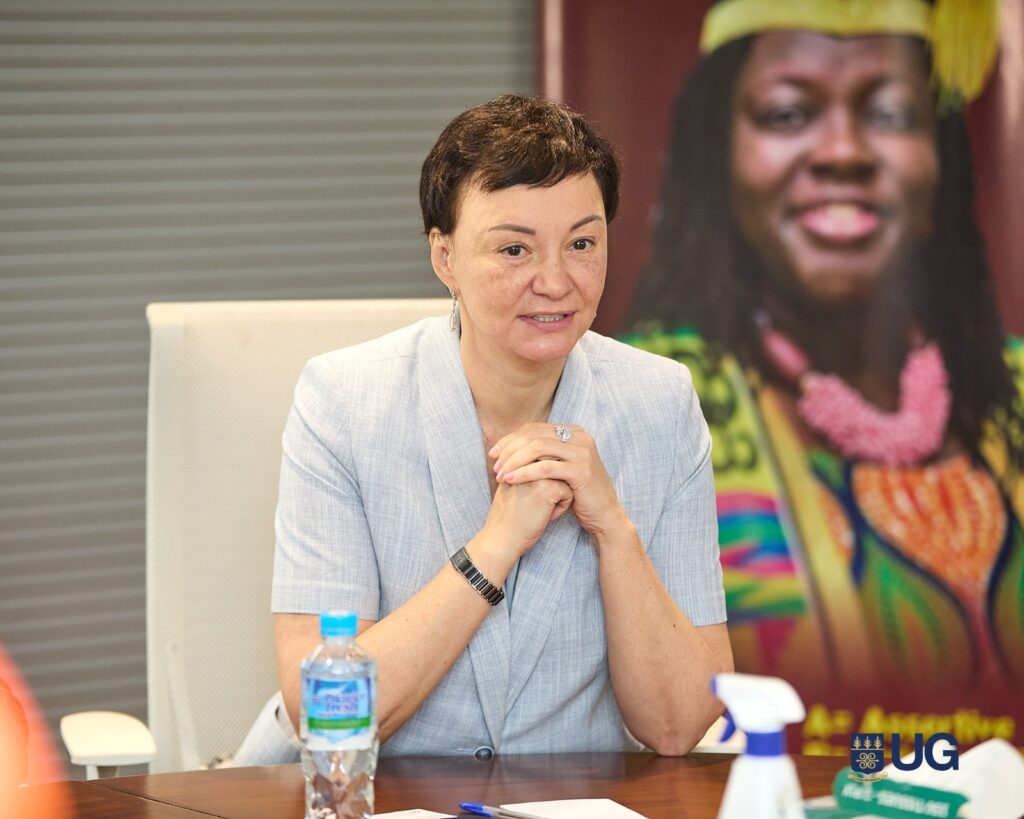
Working alongside Dr. Krasovskaia are Ghana Country Director Polina Kvitnykh and Deputy Head Ashot Arakelyan, whose roles form part of the centre's efforts to translate this cultural engagement into practical educational and institutional relationships.
For the CPD, the objective is to build familiarity that can provide a foundation for longer-term cooperation.
Education: from cultural familiarity to opportunity
Education is one of the principal ways in which these relationships are being developed.
The CPD says the Russian House has established partnerships with 12 Ghanaian educational institutions, including universities and technical institutions.
In the Bono-East Region, preparatory faculties have been established in partnership with Novosibirsk State Technical University. In the Volta Region, an engineering class introduces secondary-school students to physics, mathematics, programming and introductory energy studies, alongside Russian language instruction.
The intention is to prepare students locally before they pursue further education in Russia.
“We want young people to be prepared before they go to Russia,” Dr. Krasovskaia explains. “If they understand the language, the academic environment and something about the culture, their transition becomes much easier.”
The programme also invests in the people who will pass that knowledge on. Through cooperation with Yaroslavl State Pedagogical University, Ghanaian teachers and lecturers are being trained in Russian language instruction.
The CPD reports that more than 270 students are enrolled in its local Russian-language programmes, while 28 Ghanaian students secured direct university admission in Russia for 2026.
Beyond individual scholarships, the approach seeks to establish lasting connections between Ghanaian educators, students and Russian institutions.
Agriculture: putting knowledge to work
Another important pillar is agriculture, where the emphasis shifts from cultural understanding and academic opportunity to practical development.
The Russian House is exploring cooperation between Ghanaian agricultural communities and Russian universities and research institutions, with potential areas including technical training, scientific research, technology transfer and modern farming methods.
For Dr. Krasovskaia, the value lies in connecting education and research to the needs of local communities.
“Agriculture is not only about food production,” says the Executive Director. “It is about technology, science, young people and the future of communities. We want cooperation that gives people knowledge they can use when they return home.”
For Ghana, the potential benefits will ultimately depend on whether such partnerships translate into applicable skills, stronger research capacity and improvements in agricultural productivity.
The emphasis on local application is important. International cooperation becomes more meaningful when knowledge acquired abroad can be adapted to domestic priorities and sustained by local institutions.
A growing African network
The work in Ghana forms part of a wider continental presence. The CPD says it currently operates in 12 African countries, with a concentration in West Africa that includes Ghana, Burkina Faso, Mali, Niger, Senegal, Guinea, Togo, Sierra Leone and Liberia. It aims to extend its presence to 14 countries by the end of 2026.
Under the leadership of General Director Dmitrii Savelyev in Moscow, the organisation is developing a network that combines cultural engagement with educational and humanitarian cooperation.
This expansion comes as Russia seeks to deepen its relationships across Africa, where international partnerships increasingly encompass education, agriculture, technology, trade and other areas of development.
For African countries, the central consideration is how these relationships serve their own priorities. Cultural exchange can encourage mutual understanding, while educational and agricultural partnerships offer opportunities for skills development and knowledge transfer.
The wider geopolitical context remains relevant, but the value of these initiatives will also be determined by the relationships they establish and the results they deliver.
Planting for the next generation
Soft power rarely develops through a single event or agreement. It accumulates through repeated encounters, shared experiences and relationships that endure beyond individual programmes.
A young Ghanaian who learns Russian may eventually study at a Russian university. A teacher trained through an exchange programme may introduce the language to generations of students. An agricultural researcher may bring new expertise into local farming. A Ghanaian writer may find new readers thousands of kilometres from home.
“We are thinking about the long term,” Dr. Krasovskaia says. “It is not only about what happens today. It is about creating relationships that can continue through the next generation.”
The CPD's planned expansion from 12 to 14 African countries will test its ability to extend that approach across different national and institutional settings.
For now, the work at the Russian House in Kanda demonstrates how the quieter instruments of diplomacy can complement formal relations between states.
Culture opens the door. Education builds understanding and skills. Agricultural cooperation offers a pathway towards practical outcomes.
Together, they represent an effort to cultivate relationships that, if sustained by mutual benefit, can grow well beyond the cultural events and classrooms where they begin.
The Author: Francis Doku is a Ghanaian media executive, journalist and strategic communications consultant with more than 25 years of experience across media, marketing communications, tourism and destination development. He is Founder and CEO of Maestro Africa Group, Publisher and Managing Editor of Africa Meets Magazine, and Executive Producer and Host of the Africa Rising Podcast. He also serves as West Africa Regional Director of Africa Tourism Partners and is a Consulting Editor and contributor to VoyagesAfriq. Doku writes on tourism, culture, international relations and Africa’s evolving engagement with the world.
Latest Stories
-
Gender Ministry launches 2026 National Breast Cancer Awareness Month in Ho
4 minutes -
GAPTE must stick to advertised times for the contra-flow system – Local Minister
14 minutes -
Mahama links recent Hohoe flooding to extreme weather linked to climate change
15 minutes -
President Mahama directs MMDCEs to hold biannual Accountability Series
18 minutes -
Ghana Christian International High School, North York Academy deepen Ghana-Canada educational partnership
23 minutes -
GNAT, NAGRAT, PTTA-GH tell teachers in Volta and Oti to stay out of classrooms
44 minutes -
Salaga North MP calls for immediate implementation of NADMO fund
51 minutes -
La Dade-Kotopon MP protests Pleasure Beach demolition, says authorities were not informed
52 minutes -
Diplomatic Seeds and Cultural Roots: Russia’s Growing Soft Power Footprint in West Africa
54 minutes -
Anthony Karbo dismisses claims of Bawumia-backed candidates in NPP executive elections
55 minutes -
Kurt must go
60 minutes -
St Augustine’s, Mfantsipim, Prempeh and Corpus Christi battle for 2026 Investment Quiz crown
1 hour -
Nepal avalanche kills at least 15 expedition workers
1 hour -
Photos: Mahama tours Mercy Ships hospital, commends life-changing medical mission
1 hour -
‘Government has no knowledge’ – La MP questions Labadi Beach demolition
1 hour