

Audio By Carbonatix
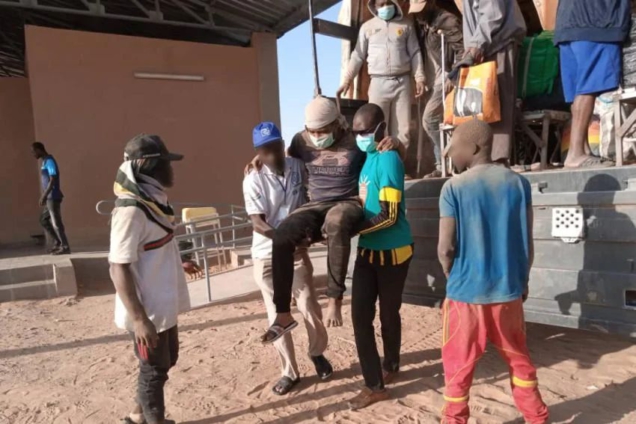
From January to May 2022, 14,196 migrant people were expelled from Algeria, and abandoned in the middle of the desert at the Algerian-Nigerian border, in the so-called “Zero Point” area 15 km from the town of Assamaka, according to Médecins Sans Frontière (MSF).
Among the 2,000 people deported each month from Algeria and Libya are seriously injured, women raped or severely traumatized.
Nearly 70% of the people supported by Médecins Sans Frontière (MSF) testify having suffered violence and abuse at the borders of Algeria and Libya.
“The seriousness of the abuses committed against subsaharan migrants is indisputable. The testimonies of our patients and their physical and mental health upon their arrival in our health facilities prove that these people have experienced extreme violence during their expulsion from Algerian and Libyan territories,” said Jamal Mrrouch, Head of Mission of MSF in Niger.
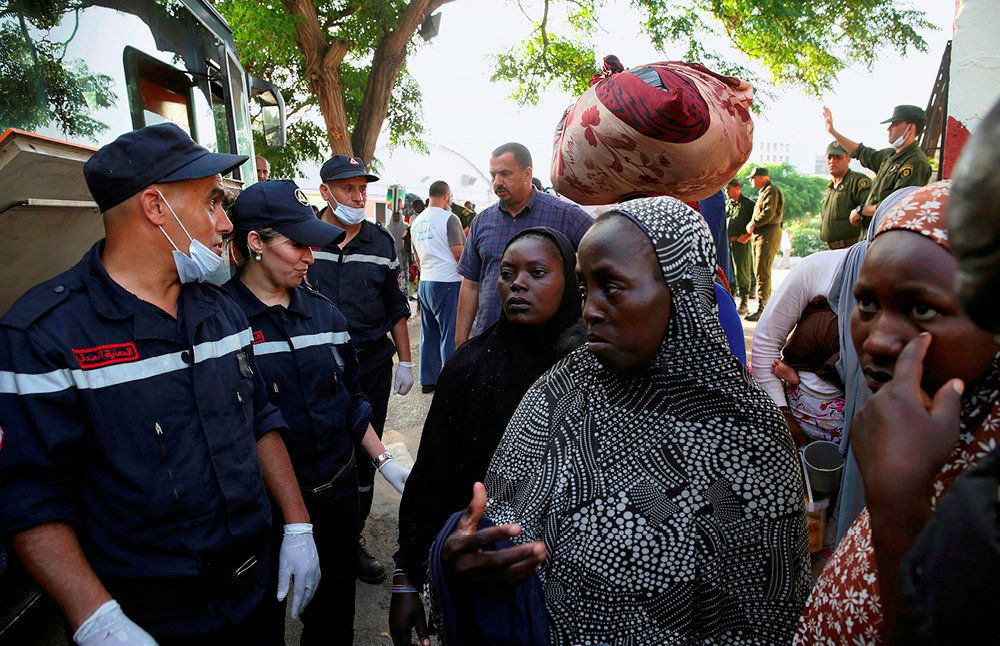
In 2021, 27,208 migrants were deported from Algeria in inhumane conditions to Assamaka on the Niger border. This represents an increase of over 17% over 2020.
The initiatives launched by the European Union to curb the migratory phenomenon oblige migrants and smugglers to use excessively dangerous corridors in the desert to avoid controls. As a result, the exploitation of migrants by traffickers has increased. Migration routes have become more deadly.
For displaced migrants in Niger, access to basic services, including health care, is becoming very complicated. Since 2018, MSF teams have regularly organized missions to help migrants lost or abandoned in the desert.
By supporting several Integrated Health Centers and mobile clinics in the Agadez region, MSF teams provide free health care, psychosocial support, referrals for complicated cases and emergency evacuations.
In 2021, more than 47,000 medical consultations were conducted, including 34,276 mental health consultations. Thirty-eight (38) bodies were found between 2020 and 2021.
Faced with this situation, MSF is calling on the regional authorities and their partners to find urgent and appropriate responses to put an end to the mistreatment of displaced migrants from Algeria and Libya in the Sahel desert.
“As a humanitarian actor and witness to the terrible suffering of thousands of migrants in this region of the Sahel, it is our duty to denounce this humanitarian tragedy,” said Jamal Mrrouch.
It is also our duty to appeal to the authorities concerned, to the European Union and to humanitarian partners to take immediate action to respect human dignity in border control. We can no longer simply ignore this situation and think that the problem will solve itself.”
Latest Stories
-
Catholic Bishops pressure gov’t to sign long-delayed mission schools agreement
19 minutes -
Cedi under fresh pressure as Christmas import demand drives dollar surge
34 minutes -
Ato Forson eyes first-week November for 2027 Budget, promises jobs and major infrastructure push
43 minutes -
SHS placement crisis deepens as Catholic Bishops demand probe into ‘protocol’ admissions
51 minutes -
SHS placement: Catholic Bishops demand probe into alleged payments for school places
1 hour -
Facts about Nigeria’s Dangote oil refinery Initial Public Offering
2 hours -
Trump says AI safety fears a ‘hoax’ as he rejects calls for greater safeguards
2 hours -
Oil climbs as Saudi pipeline outage, fresh attacks heighten supply concerns
2 hours -
Donald Trump Jr and Bettina Trump say Putin ally paid for some wedding festivities as a ‘gift’
2 hours -
EU is set to propose ban on social media and AI chatbots for under-15s
2 hours -
No SHS space shortage – GES says 800,000 places available for just over 600,000 students
2 hours -
Emmys 2026: The winners and nominees in full
3 hours -
African banks’ foreign subsidiary contributions increasing; Access Bank records fastest cross-border growth
3 hours -
Food prices in Ghana remain largely stable – AGRA report
3 hours -
Fiscal economy to remain firm despite execution risks – Databank Research
3 hours