

Audio By Carbonatix
The European Union will propose a ban restricting under-15s from social media, video-sharing platforms, AI chatbots and online games, in the most sweeping plan yet to protect children from online dangers, a European Commission document seen by Reuters shows.
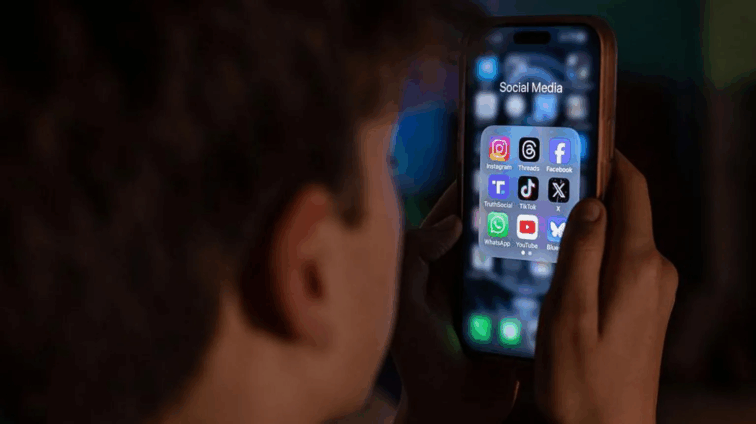
Concerns have mounted globally about the impact on children's health and safety of major outlets, including Meta's Facebook and Instagram, TikTok, Google's YouTube, and ChatGPT.
The EU proposal is part of an EU Kids Act that European Commission President Ursula von der Leyen and EU tech chief Henna Virkkunen will present on Thursday. The former may announce details of the upcoming EU policy in her State of the Union address on Wednesday.
"The Union's approach should allow minors to benefit from the huge potential of digital services, while protecting them from abuse and exploitation. It needs to limit the access of tech companies to our children, and not the other way around," the document said.
The Commission's proposal, which will also cover video gaming platforms, allows for gradual access to various services by age, while the obligations imposed on companies will depend on the type of service and the age of the children.
The Commission declined to comment.
COMPANIES WOULD HAVE TO PAY A SUPERVISORY FEE
According to the document, companies will have to pay a supervisory fee to fund regulators' enforcement and supervision.
Children aged 15 and over can set up their own accounts under the proposal, while children aged 13 to 14 can ask their parents to open introductory accounts for social media and video-sharing platforms under parental control, with limited contacts and strict time limits.
Accounts for children between 3 and 12 will be fully controlled by parents and will be limited to child-friendly services with strict safety standards, the document said. Under-3s would have no access to the services.
Details may still change ahead of the announcement.
The Commission will need to work out the draft with EU countries and the European Parliament in the coming months before it can become law.
The draft seen by Reuters sets out requirements for companies, including avoiding addictive designs and harmful feeds.
They would also have to provide tools to enable children to easily report harmful content and effective parental control tools.
Social media and video-sharing platforms will be required to verify children's ages when a user opens a new account, while online game platforms will have to verify children's ages before they can download games.
The companies say they take precautions, and many set a minimum age of at least 13 to sign up for social media platforms.
Latest Stories
-
Election Watch Ghana raises concern over low female representation in NPP leadership
3 minutes -
Four drinks that help manage blood sugar
3 minutes -
Ray Michael Djan Jr puts Ghanaian creativity on global stage with Chelsea anthem
13 minutes -
Matilda Dibloni Kokar elected USAG president after two-year dormancy
16 minutes -
NPP delegates wanted youthful energy with Kojo Bamba’s election – Political scientist
19 minutes -
Zenith Bank supports Childhood Cancer Unit at Greater Accra Regional Hospital
19 minutes -
KMA empowers 64 persons with disabilities; Mayor unveils plan for sustainable skills centre
21 minutes -
DJs Union urges musicians to prioritise respect, communication amid industry tensions
29 minutes -
“Ghanaian DJs deserve their flowers” – Lasmid
29 minutes -
Zenith Bank supports childhood cancer unit at Greater Accra Regional Hospital
31 minutes -
‘Who’s in charge doesn’t really matter; we’re all servants’ – John Boadu on leader of NPP
34 minutes -
SLTF to advance fees for first-year students facing admission payment deadlines
53 minutes -
Ghana Institute of Architects calls for action to make adequate housing a human right
53 minutes -
BoG, Police arrest seven over alleged misuse of Ghana Cedi as bouquets
53 minutes -
NCPTAs appeal to striking teachers to return to classroom
54 minutes