

Audio By Carbonatix
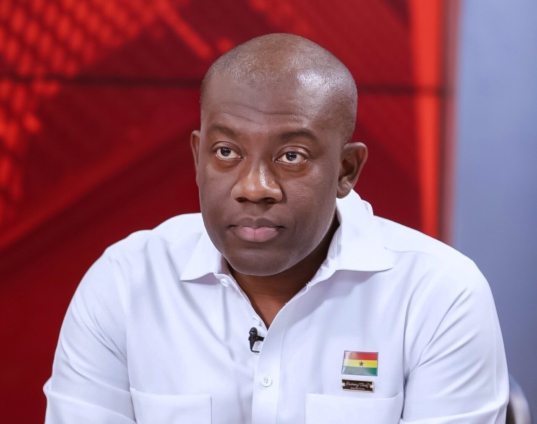
The Information Minister, Kojo Oppong Nkrumah, has dismissed claims that government is the cause of the country’s decline in the 2022 Press Freedom Index.
Speaking in Parliament, the Minister noted that after comprehensive investigations, the slump can be attributed to poor remuneration of journalists.
In May, it came to light that Reporters Without Borders (RSF) in its Press Freedom Index had ranked Ghana in the 60th position.
The latest report meant the country had dropped 30 places from the previous position.
Following the revelation, considerable conversation transpired with some blaming state agents’ attacks on journalists as the cause of the slump.
But addressing the House on Thursday, Mr Oppong Nkrumah said the inability of media houses to adequately pay their journalists is a major cause of the decline.
He explained that except for the economic context, the press in Ghana performed extremely well under the other four parameters of the new methodology.
The Minister indicated that:
- Legal framework - 81.42%
- Social-cultural context - 79.64%
- Political context - 66.61%
- Security of journalists - 62.25%
- Economic context - 47.22%
On the back of this, the Information Minister noted that economic context “dragged us heavily on the composite score.”
And here, [Economic] RFS refers to the poverty of individual journalists and media houses. And the facts are clear in this country that because we have opened up the media landscape extensively which is a very good thing, a number of media houses have sprung up and a chunk of them struggle to make ends meet.
“Even this week, you will find a number of reports about some media houses struggling to pay salaries and the RFS contends that when journalists are not paid, the ability to do a sacrosanct free job is questionable,” he explained.
Already, the New Patriotic Party (NPP) has condemned portions of the 2022 World Press Freedom Index which tagged the Akufo-Addo administration as “intolerant of criticism from citizens and the media.”
The Party argued that, in contrast, the media under the NPP is the freest ever.
The NPP’s Director of Communications, Yaw Boaben Asamoa noted that the party’s contribution to the growth of the media under the Fourth Republic is rather exceptional.
“The NPP believes Ghana’s media is the freest ever and that its contribution to media growth are unparalleled in the Fourth Republic.
“In sum, NPP decriminalised speech, supported infrastructure and training with the International Press Centre and support funds and improved spectrum allocations and regulatory oversight,” he said.
Latest Stories
-
Total expenditure as of July 2026 amounted to GH¢147.07bn, 16% below target – BoG
3 hours -
Total revenue & grants stood at GH¢144.5bn in July 2026, slightly below target – BoG
3 hours -
Ghana Sports Fund urges sports federations to submit credible proposals and measurable targets
3 hours -
Sally Rooney books withdrawn in UK over Palestine Action support
3 hours -
Musk says US government may be behind slowdown of Ukraine drone speeds
4 hours -
Picking Chief Justices nearing retirement could give Mahama immense power – Bentil
4 hours -
Netflix to shed 1,000 jobs in steepest cuts since 2022
4 hours -
Burnham had two hospitality dinners with Man City chairman, deleted records show
4 hours -
Semenyo ‘froze’ after alleged racist abuse, court told
4 hours -
‘Shameless’ – Mourinho critical of Vinicius Jr ban timing
5 hours -
Loyalty can outweigh competence in Chief Justice selection – Bentil
5 hours -
Man City suffer as PSG masterclass sets up Champions League win
5 hours -
Customer Service Africa CEO urges business leaders to observe staff and customer interactions
5 hours -
On night of mayhem for Liverpool, Barcola arrives in style
5 hours -
Muzic Mensah finds healing and renewed love in new single ‘WayƐ Late’
6 hours