

Audio By Carbonatix
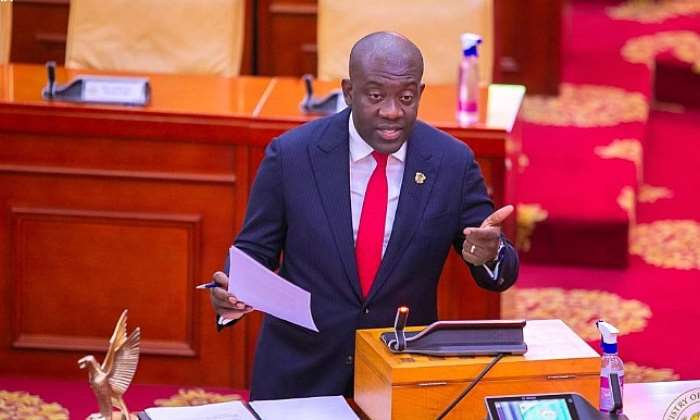
Member of Parliament for Ofoase Ayirebi, Kojo Oppong Nkrumah, says the recent surge in Ghana’s public debt by more than GH¢70 billion in just three months is evidence that the country’s economic fundamentals remain weak, despite earlier claims of improvement.
Speaking on Newsnite on Joy FM, the Ranking Member on Parliament's Economy and Development Committee cautioned against what he described as the government’s earlier celebration of temporary declines in headline debt figures.
He argued that those movements were driven largely by exchange rate effects and debt restructuring rather than meaningful fiscal or monetary reforms.
“You recall that we cautioned the government against celebrating temporary movements in headline numbers while ignoring the structural weaknesses that are still underneath the economy,” he said on Monday.
According to the former minister, the earlier slowdown in debt accumulation was not the result of changes in government spending patterns or revenue mobilisation, but rather two short-term factors, a sharp appreciation of the cedi and the impact of the domestic debt exchange programme.
“But nothing significantly had changed both on the fiscal or on the monetary side,” he stressed.
Mr Oppong Nkrumah argued that the recent 20 per cent depreciation of the cedi over the past three months has quickly reversed those gains, pushing the debt stock up by about GH¢70 billion.
He explained that about GH¢50 billion of the increase could be attributed mainly to exchange rate movements, which inflate the cedi value of Ghana’s foreign-denominated debt without any new borrowing.
“Just a small depreciation in three months and the debt stock has gone back up by about GH¢70 billion because the structure and the fundamentals have not changed,” he said.
Beyond currency effects, Mr Oppong Nkrumah pointed to additional factors contributing to the debt increase, including a US$360 million facility from the World Bank, which he said government attempted to present as a financing arrangement rather than a loan when it was brought before Parliament.
He also noted that about US$1 billion worth of restructured debt is now being capitalised and treated as new disbursements in the government’s accounting, even though no fresh funds have entered the economy.
“Even if you account for those two, you still have about a GH¢50 billion change in our debt stock, which is mostly because of the currency,” he added.
Latest Stories
-
Ghana at the heart of global PR excellence
4 minutes -
Ghana Institute of Architects clarifies position on ARC-ASG dispute amid ongoing case
5 minutes -
NDC supporters storm Fomena constituency office over alleged disqualification of chairman aspirant
8 minutes -
NPA CEO assures tanker drivers of action on welfare concerns
8 minutes -
Karpowership seeks contract extension as Ghana’s power demand grows
11 minutes -
Gender Ministry inaugurates committee to drive early childhood development
13 minutes -
Four Schools, One Crown: Prempeh, Corpus Christi, Mfantsipim and St Augustine’s battle for NIQ trophy
14 minutes -
HIV status cannot be used to deny employment under Ghana law – Ghana AIDS Commission
15 minutes -
Buffer Stock calls for expansion of national storage capacity as it falls below 50,000 metric tonnes
16 minutes -
Central Regional Minister urges use of religious platforms to change environmental, sanitation practices
38 minutes -
Henry Kweku Banning
39 minutes -
Execution of US murderer Christa Pike halted an hour before it was due to happen
41 minutes -
GoldBod generates US$1.87bn in FX in September, exceeds monthly target
44 minutes -
SOE comments controversy: ‘We must never abandon our humanity because of judicial office’ – CJ
54 minutes -
Samuel Kojo Brace declares intention to contest NPP parliamentary primary in Ahanta West
55 minutes