

Audio By Carbonatix
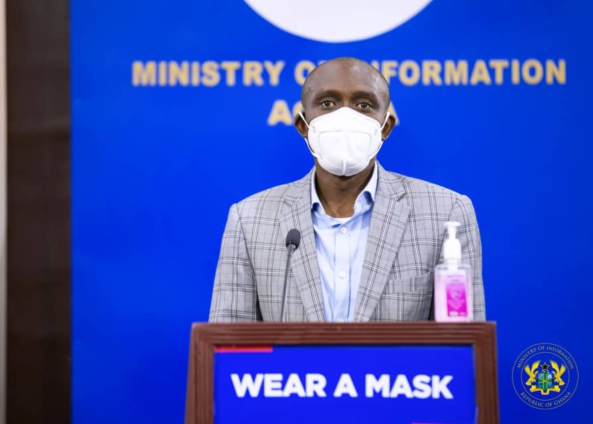
The Director of Public Health at the Ghana Health Service, Franklin Asiedu-Bekoe, says currently about 98 persons have been identified in a contact tracing effort in relation to the recent outbreak of the Marburg virus in the country.
This follows two positive cases reported in the Ashanti Region on July 8.
The first case was a 26-year-old male who checked into a hospital on June 26 and died on June 27. The second was a 51-year-old male who went to the hospital on June 28 and died the same day.
The two patients had reported at the same hospital with symptoms including diarrhea, fever, nausea and vomiting, before dying.
According to the Director, the number of contact traced persons is likely to increase over the coming days as the Ghana Health Service is bent on ensuring that no possible contacts become a source of transmission.
“As far as we are concerned we have been able to identify 98 contacts, that is not all the contacts. Because if you look at the trajectory it’s been like 34, we’ve gone to 63 and now 98. I’m sure we’ll still get more contacts, so don’t get surprised when we get more contacts tomorrow because we’re exploring to be sure that where did these people go so that we can be able to establish…but for now we have 98.
“Of the 98, 50 are from the Ashanti Region and 48 are from Sawla-Tuna-Kalba. So the 50 from Ashanti based on our 21-day incubation period they have recovered. So you can say that they have been discharged. So now we’re looking at the 48 in Sawla-Tuna-Kalba. So that is the status now, and I think that we will continue to monitor to be sure that we don’t miss any possible contacts because that may be a source of transmission,” he said on JoyNews’ PM Express.
He noted that so far all tests conducted on contact traced persons have come out negative and the GHS hopes to carry out more random tests in the near future to prevent a spread.
“It was only one health worker who showed symptoms so they took samples and they were sent to Noguchi that was negative. Then I think we did something which was not atypical, normally you take samples when you show symptoms but we try to randomly select some of the contacts, we took samples, they were negative. But I think that it’s a period, so for now they’re stable and we’re monitoring them,” he said.
Marburg is transmitted to people from fruit bats and spreads among humans through direct contact with the bodily fluids of infected people, surfaces and materials, the WHO says.
No treatment yet exists for Marburg, but doctors say drinking water and treating some of the symptoms improve survival rates.
Latest Stories
-
Barcelona close to deal for Arsenal’s Jesus
8 minutes -
Three-week international break a concern – Mourinho
18 minutes -
Bellingham scores as Mourinho’s Real win again
27 minutes -
Tech trouble leaves Chelsea game ref without comms
35 minutes -
Wife of man who died after turbulence sues airline
46 minutes -
Russia says it helped to repel Niger attempted coup
55 minutes -
Michail Antonio helps young Ghanaians chase Premier League dreams
2 hours -
Zambian opposition leader charged with treason
3 hours -
Iceland votes against restarting EU membership talks
3 hours -
WhatsApp chat used to launder cash for crime and extremism
3 hours -
US judge blocks Pentagon’s Anthropic blacklisting
3 hours -
Tinubu files case in US court to block release of alleged drug trafficking record – Lawyer
3 hours -
‘Powder Guy’ denies $32,000 visa fraud charges
4 hours -
Two suspects arrested over lynching at Daboya
4 hours -
Mobile phones contributing to Christians’ spiritual decline – Bishop Patu
4 hours