

Audio By Carbonatix
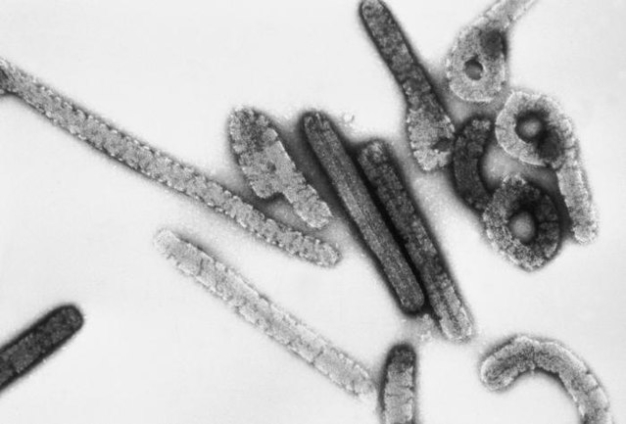
A Global Health Expert and Health Adviser at the Tony Blair Institute for Global Change, Dr. Banda Khalifa, says the transmission of Marburg virus is normally done through close direct contact with infected surfaces and materials other than through the air like Covid-19.
According to him, one is most likely to contact Marburg by touching or getting into contact with an infected person’s bodily fluids like blood, urine, saliva, rather than by just sitting across them at a table, for instance.
Speaking on JoyNews’ PM Express, he said “Classically we don’t say it’s airborne. So Marburg, Ebola and the other haemorrhagic fevers are not classically airborne infections. So the probability of you getting it if you’re sitting across it is very unlikely.
“The mode of transmission is such that you’d have to be in direct contact with someone who is infected. Direct contact means that you coming in close proximity with substances that are infectious. So you’d have to be in direct contact with fluids that are known to contain the virulent agent.
“So for example, if somebody is bleeding, there’s blood, if you touch the blood and you have exposed skin surfaces you can get infected. If somebody, let’s say urine, or saliva and in some cases even through semen; these are when you come directly in contact with them.
“Then the materials that the person might have used, maybe the bed sheets and all those things, if there are fluids on it and you touch it it’s most likely you’ll get infected. But until you get directly in contact with those things you’re not at risk."
On July 8, two positive cases were reported in the Ashanti Region.
The first case was a 26-year-old male who checked into a hospital on June 26 and died on June 27. The second was a 51-year-old male who went to the hospital on June 28 and died the same day.
The two patients had reported at the same hospital with symptoms including diarrhea, fever, nausea and vomiting, before dying.
Meanwhile, health experts have advised frequent washing of hands with soap and water as a good way to avoid infection.
Latest Stories
-
NDC threatens sanctions over oversized campaign posters, gives aspirants 5 days to comply
18 minutes -
Star Oil paid GH¢2.7bn in taxes, levies in nine months of 2026
32 minutes -
Samson’s Take: The rule of law is cheaper before the bulldozer
33 minutes -
GRA blames system failure for delay in issuing receipt over passenger’s customs duty
54 minutes -
Livestream: Newsfile discusses World Cup visa scandal, beach demolitions, education strikes, BRICS bid
58 minutes -
NC-PTAs welcomes end of teachers’ strike, urges parents to prepare children for Monday
1 hour -
Government procures over 2,000 transformers as Ghana’s electricity access hits 89.13% – Energy Minister
2 hours -
UTAG-UG threatens strike on October 19 over unpaid allowance
2 hours -
Let The Constitution direct Chieftaincy to deliver “All Development Is Local”
3 hours -
John Jinapor outlines renewable energy, nuclear power priorities for 2027
3 hours -
Ghana explores centre of excellence for hearing, communication and cochlear implant care
4 hours -
Schizophrenia-related disorders lead mental health cases recorded in Ghana
5 hours -
Dutch authorities enlist Ghana in hunt for fugitive drug lord Bolle Jos
5 hours -
Ghana housing finance conference adopts communiqué to improve affordable housing access
9 hours -
Special Initiatives Minister urges Wa Technical Institute to enrol more girls as EU-backed solar training lab opens
10 hours