

Audio By Carbonatix
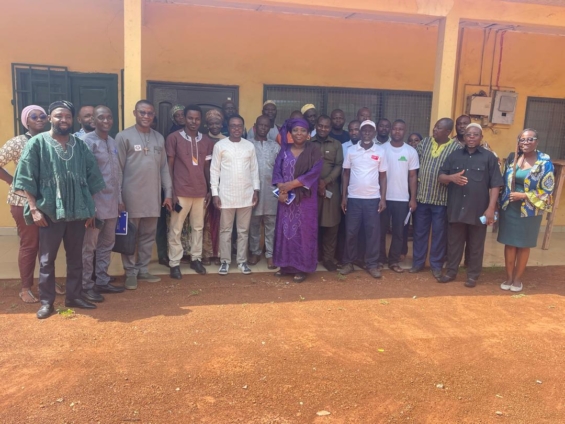
Participants at a day’s stakeholders’ workshop on phase two of the Planting for Food and Jobs (PFJ 2.0) programme, have called on the government to suspend its implementation for this year to prevent poor results.
They said the government should use the year for thorough preparation towards smooth implementation of the programme next year instead.
The workshop, held in Tamale, was organised by the Peasant Farmers Association of Ghana (PFAG) with support from OXFAM and had participants including selected members of PFAG and heads of District Departments of Agriculture drawn from Tamale, Saboba, Yendi, Gushegu, and Chereponi in the Northern and North East Regions.
It was part of PFAG’s efforts to update members and stakeholders on the commencement of the PFJ 2.0, reveal the identified bottlenecks and seek redress for them.
It was also to relook at the implementation design of the PFJ 2.0 and propose reforms that would respond to the needs of farmers.
During the workshop, it was revealed that there were challenges confronting the ongoing registration of farmers for the PFJ 2.0 as most of the Agricultural Extension Agents did not receive the tablets to facilitate the exercise coupled with network challenges making it difficult to take coordinates of farms on time.
It was also revealed that so far, less than 10 per cent of farmers in the various districts had been registered, and input providers were also yet to import their products although the farming season is just about to start.
The participants also suggested that politicians should minimise their influence in the implementation of the PFJ 2.0 and allow technical staff of the Ministry of Food and Agriculture (MoFA) and the Department of Agriculture at the decentralised levels to handle the programme.
They argued that in this way, no new Minister or government would be in a rush to review the programme because the frequent reviews of the programme and other agricultural policies were affecting smooth implementation.
The PFJ 2.0 was launched in August last year to allow farmers to take farm inputs from sellers on credit and pay after harvest.
The Director, Northern Regional Department of Agriculture, Hawa Musah, urged the District Departmental Heads to visit farmers, especially the chiefs to explain the PFJ 2.0 and the processes of getting registered onto the programme to them to enable them to join the programme.
She further expressed the need for them to be quick in resolving the registration challenges to ensure that more farmers were registered on time.
Mr Bismark Owusu Nortey, the acting Executive Director, PFAG said the discussions at the workshop showed that there was a consensus that the PFJ 2.0 should rather be piloted this year instead of full implementation.
He said PFAG would hold similar workshops in other parts of the country and added that inputs collated would be put into a policy brief document to engage MoFA.
Latest Stories
-
US immigration officials defend ICE agents who shot man in same car as child
2 minutes -
Commentator Katie Zacharia picked as new White House press secretary
5 minutes -
Drone strike by Sudan paramilitary kills 41 near Ethiopian border, rights group says
12 minutes -
King warns malicious online actors are evolving tactics
19 minutes -
Several injured as Saudi capital airport reportedly hit again
21 minutes -
Christa Pike discharged from hospital and returned to prison, her lawyers say
24 minutes -
Ghana’s BRICS move requires clear strategy to manage risks – Godfred Bokpin
2 hours -
Pay teachers realistic income – Duncan Amoah to gov’t
2 hours -
Bechem to become chicken capital of Ghana – Mahama projects
2 hours -
Gov’t targets recruitment of 16,500 health professionals in 2026
3 hours -
Two-week strike will not derail academic calendar – GNAT President
3 hours -
Headmaster detained after BBC investigation into alleged sexual abuse of students
3 hours -
GNAT pushes for clear implementation procedures of teachers’ conditions of service
3 hours -
Recurrent strikes threaten quality of education and academic calendars – Prof Bokpin
4 hours -
‘Cockroach’ group leaders among hundreds detained in Delhi protest
4 hours