

Audio By Carbonatix
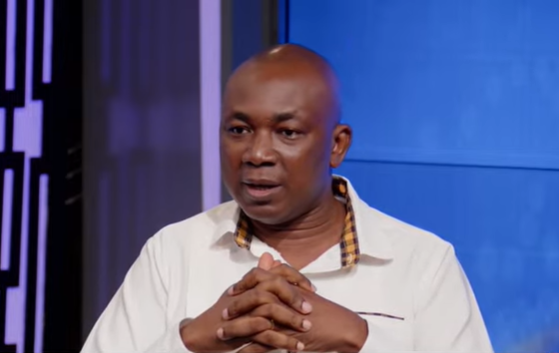
Economist and University of Ghana Business School Professor Gofred Bokpin has warned that recurrent labour strikes in Ghana’s education sector are undermining teaching time, academic calendars and the quality of graduates.
Speaking on JoyNews' Newsfile on Saturday, he said Ghana had experienced significant disruptions in the health and education sectors every two to three years over the past 15 to 20 years, describing the trend as a major concern for a country seeking sustained socio-economic development.
Prof. Bokpin said lost instructional time could not be recovered, even when negotiations eventually led to the resolution of disputes.
He argued that industrial harmony in education was essential to developing human capital, improving labour quality and supporting national development.
Prof. Bokpin said the situation was particularly worrying for senior high schools operating under the Free Senior High School policy, where the double-track system and infrastructure constraints had already affected the time students spent in school.
He warned that further disruptions could compromise the quality of education, adding that students were not receiving the level of tuition they needed while the state continued to provide for their upkeep.
He also questioned the effectiveness of online learning as a substitute for classroom teaching when students on double-track arrangements returned home.
The economist said universities were facing uncertainty over their academic calendars, noting that the Kwame Nkrumah University of Science and Technology (KNUST) had announced a postponement of its next academic year's reopening.
He said universities had worked to restore their academic calendars following the COVID-19 pandemic, but disruptions caused by industrial action were now creating further difficulties.
While acknowledging that teachers, lecturers and administrators had demands that needed to be addressed, Prof. Bokpin said the government must prioritise industrial stability in the education sector.
He argued that strikes often ended with negotiations and some concessions to workers, but the resulting loss of teaching time and productivity could not be reversed.
Prof. Bokpin also cautioned against pursuing fiscal discipline at the expense of social priorities, saying government spending decisions should reflect the country's development aspirations and the needs of its people.
He urged the government to manage labour relations more effectively to protect the academic calendar and ensure that students receive quality education.
Latest Stories
-
Two-week strike will not derail academic calendar – GNAT President
6 minutes -
Headmaster detained after BBC investigation into alleged sexual abuse of students
16 minutes -
GNAT pushes for clear implementation procedures of teachers’ conditions of service
35 minutes -
Recurrent strikes threaten quality of education and academic calendars – Prof Bokpin
39 minutes -
‘Cockroach’ group leaders among hundreds detained in Delhi protest
43 minutes -
Don’t let speed of information become your judgement – CJ tells new lawyers
1 hour -
World Cup visa scandal: People have leveraged public office to facilitate fraud – Senyo Hosi
1 hour -
Glut! Farmers count losses as prices crash, customers happy
2 hours -
GSA postpones auction of unserviceable vehicles
2 hours -
Man charged with attempted murder after stabbing
2 hours -
World Cup visa scandal: Senyo Hosi says issue goes beyond calls for Sports Minister’s resignation
2 hours -
Yaw Ampofo Ankrah hasn’t taken or received any money to facilitate visas – Lawyer insists
2 hours -
World Cup visa scandal: Senyo Hosi urges focus on constitutional accountability
2 hours -
La Beach demolition: Senyo Hosi condemns lack of consultation
3 hours -
Russian glide bomb attack on Zaporizhzhia kills at least 15 people
3 hours