

Audio By Carbonatix
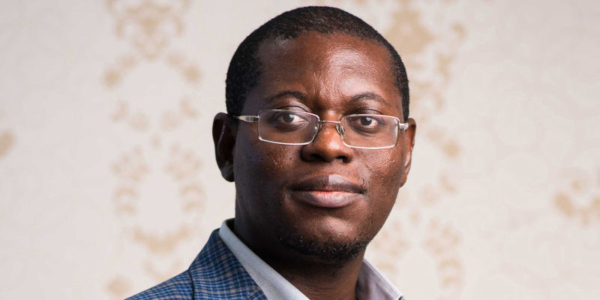
Policy Analyst, Bright Simons, has revealed that Ghana had exited its previous International Monetary Fund (IMF) programme prematurely.
According to him, the government had failed to meet certain structural benchmarks which were required to complete the programme in 2019 and instead had opted for waivers, assuring the IMF that it would meet those benchmarks outside of the programme, independently.
Unfortunately, all but two of the structural benchmarks were not met, Bright Simons said.
Ghana had signed up for a three-year IMF Extended Credit Facility in 2015 to fill a $930m gaping hole in the economy.
On exiting the programme in 2019, the Finance Minister, Ken Ofori-Atta had stated that the government's early exit from the programme was proof of the NPP's superior management of the country's finances.
Speaking on JoyNews’ PM Express, Bright Simons said, “On the IMF front we know the big problem was that we exited the IMF prematurely. When we look at when we were exiting in 2019, the Finance Minister insists that we left because the IMF gave us an all clear. Not really.
“We left because we asked for waivers and the IMF cannot force us to be in an IMF programme, we’re a sovereign country. Waives or those waivers we asked for is on the fact that we had not completed the programme because structural benchmarks had not been met which are all fiscal issues that we hadn’t dealt with but we went to IMF and said that things were going to improve because we were going to produce 1billion barrels of oil in a day etc so we want out, and the IMF allowed us out.
“It wasn’t because we left the IMF programme on a clean bill, actually when you look through the programme targets particularly the structural ones most of them were not met and the few that were met, the two that were met, were met with substantial delays.”
Should the IMF accept Ghana’s bid to subscribe to a programme, this would be the 17th time since Independence Ghana would have subscribed to an IMF programme.
Some policy analysts have warned that this would probably not be the last time Ghana seeks a bailout from the IMF, citing the country’s history of fiscal indiscipline and profligate spending.
One of such analysts is Professor Bopkin of the University of Ghana who says the failure of successive governments to adopt prudent measures to stabilize the economy is the reason for the current harsh economic space the country finds itself in.
“This is not the last time we will be going to the IMF. We have failed as a country to successfully do the needful- to say these are the necessary fiscal reforms we need to pride ourselves as a nation that won independence in 1957,” he said on the Super Morning Show, on July 6, 2022.
Latest Stories
-
Ghana’s mining deaths fall sharply, but Chamber insists ‘three deaths are too many’
53 minutes -
Tatale Sanguli officials destroy expired food products, warn traders
59 minutes -
Police arrest two watchmen over alleged defilement of 14-year-old student
1 hour -
The woman behind General Mosquito: Could Ghana be meeting its next First Lady?
1 hour -
Court remands man over alleged Labone bank robbery attempt
1 hour -
Supreme Court to rule today on challenge to legal vacation warrants
1 hour -
Tamale Metropolitan Assembly distributes 10,000 bags of fertiliser to farmers
1 hour -
TUSAAG suspends strike, resumes work after renewed talks with government
1 hour -
PIAC marks 15 years of oil revenue accountability and transparency
2 hours -
Adongo calls for non-political interference in $1.46bn Heritage Fund review
2 hours -
FDA records GH¢70m surplus in 2025 amid concerns over ageing lab equipment
2 hours -
Arise Ghana demands stronger commitment to end galamsey
2 hours -
96% of Ghanaian pensioners willing to work beyond retirement age – Study
2 hours -
Ghana gets nuclear power plant simulator
2 hours -
Temporary Akosombo power control facility to be ready by September – Energy Ministry
2 hours