

Audio By Carbonatix
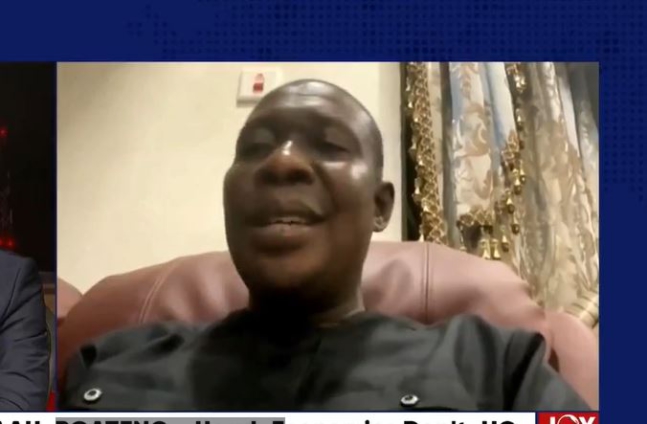
Head of Economics Department at the University of Ghana, William Baah-Boateng has commended the Bank of Ghana (BoG) for its swift approach to increase the policy rate by 300 basis points to 22%, after an Emergency Monetary Policy Committee.
Speaking in an interview on JoyNews’ Business Edition of PM Express, Dr. Baah-Boateng indicated that had the BoG not intervened, the country’s inflation rate would have been 100%.
“In economics, there is something we call counterfactual so if the problem is coming and they don’t even step in at all, perhaps we would have been in the 100’s,” he said.
Currently, year-on-year inflation shot up to 31% in July 2022, latest data from the Ghana Statistical Service (GSS) has revealed.
Dr. Baah-Boateng's comments are in relation to the decision by the Bank of Ghana to increase the policy rate by 300 basis points to 22%, after an Emergency Monetary Policy Committee meeting on August 17, 2022.
The move is part of measures to address the risks to the inflation outlook.
However, the cost of borrowing is expected to go up significantly, and consequently, increase cost of living and doing business.
In the meantime, a Partner at Deloitte Ghana, Yaw Lartey has expressed worry about the increased policy rate, saying it will not address the rising inflation rate, but rather shoot up cost of borrowing.
According to him, though the monetary policy rate historically has helped to manage inflation, the current economic situation proves otherwise
Dr Baah-Boateng, in response, stated that, since the measures have been implemented “and we are here, it will be very difficult for you to measure whether indeed the policy is not working.”
For this reason, he urged that comments that the policy is not working should be put in perspective.
He explained that fiscal policy and monetary policy are supposed to play complementary roles, adding that both cannot stand alone therefore there is a need to observe where the inflation is coming from.
He observed that the inflation is coming from the supply side therefore Central bank has no role to play.
According to him, the exchange rate is the bigger issue driving inflation in the country.
“You can look at inflation from January to now the moment the exchange rate depreciates, you know it reflects on fuel prices, fuel prices become cost push. So it means that there is some kind of demand element there moving into supply and therefore you cannot have the fiscal and monetary standing alone, they need to play a complementary role,” he stressed.
Latest Stories
-
Sam George directs Communications Ministry staff to enrol on One Million Coders programme
6 minutes -
From 4Fs and 3Es to Oxford: Dr George Asiamah tells his ‘back route’ story
6 minutes -
China to pump $54bn into state banks and insurers to boost economy
7 minutes -
Volta Region to get cancer research and treatment centre under CEANA
8 minutes -
OpenAI chief scientist warns no one is prepared for consequences of AI
9 minutes -
‘We don’t know when’ – Affected communities await compensation for Accra-Kumasi expressway
10 minutes -
Nepal observes national day of mourning for victims of flash flood disaster
11 minutes -
Government to train 50 digital champions, Senior officials in AI by December
15 minutes -
Rugby Africa president Herbert Mensah joins ACG advisory board
16 minutes -
Sam George outlines digital sector reforms before year-end
19 minutes -
Dolly Parton’s sister pleads for end to ‘AI garbage’ posts after singer’s death
20 minutes -
US envoys ‘very encouraged’ after peace talks in Russia and Ukraine
20 minutes -
Free Primary Healthcare expands to 135 districts as gov’t targets nationwide coverage by 2027
21 minutes -
Probe begins into why cargo plane overran Miami runway
25 minutes -
Germany’s far-right AfD wins historic victory, but falls short of majority in Saxony-Anhalt
25 minutes