

Audio By Carbonatix
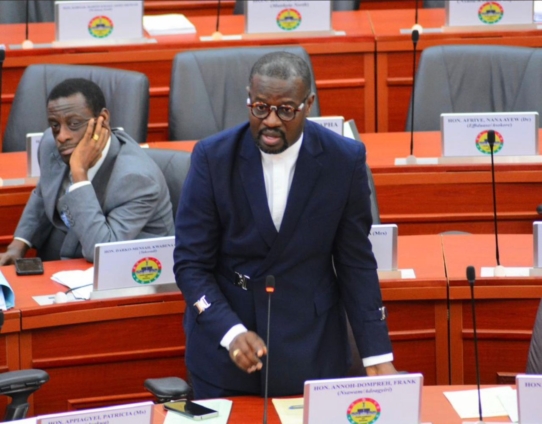
The Minority Chief Whip and Nsawam-Adoagyiri MP, Frank Annoh-Dompreh, is calling for global recognition of ecocide as an international crime alongside genocide.
Addressing Parliament on Monday, he urged Ghana to take legislative steps to criminalise large-scale environmental destruction and support international efforts to classify ecocide as one of the world’s gravest crimes.
“Honourable Speaker, I rise today with a profound sense of urgency and responsibility — to speak on a matter that transcends partisan politics, economic growth, and short-term development agenda.”
“I speak to the need for legislative action against ecocide — the mass destruction of ecosystems — and for Ghana to align itself with a growing global movement to make environmental devastation a punishable crime both domestically and internationally.”
He explained that ecocide refers to acts that cause severe and long-lasting damage to the environment.
“Ecocide, as defined by an independent expert panel convened by Stop Ecocide International, refers to ‘unlawful or wanton acts committed with knowledge that there is a substantial likelihood of severe and either widespread or long-term damage to the environment’.”
“This is not abstract rhetoric; it is a legal concept with measurable criteria — damage that is severe, widespread, or long-term.”
According to him, the current international legal framework does not yet recognise ecocide as a standalone crime during peacetime.
“The current legal framework in international law — notably the Rome Statute of the International Criminal Court — lists genocide, crimes against humanity, war crimes, and aggression.”
“Ecocide is not yet recognised as a standalone international crime during peacetime, even though environmental destruction today causes consequences on par with the gravest human rights abuses.”
He warned that this gap in international law allows corporations, governments and individuals to cause major ecological damage with limited criminal consequences.
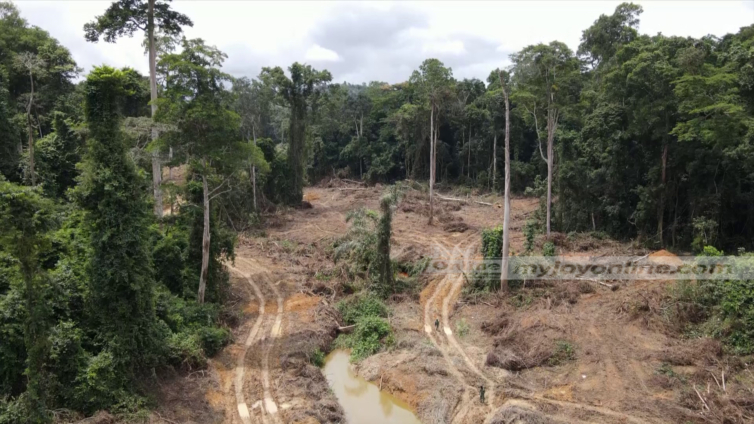
“This absence in international law creates a legal vacuum: corporations, state actors, and individuals can commit ecological destruction — deforestation, industrial pollution, oil spills, and climate-amplifying activities — with limited criminal liability.”
He cited the environmental devastation in Nigeria’s Niger Delta as an example.
“The Nigerian Niger Delta, for example, has suffered over 7,000 oil spills from 1970–2000, devastating water, soil, and human health, with full environmental restoration estimated to take decades.”
Mr Annoh-Dompreh noted that momentum is growing globally to criminalise ecocide.
“At least 11 countries have already incorporated ecocide into domestic law, including Armenia, Belarus, Kazakhstan, Russia, Ukraine, Moldova, Georgia, Ecuador, Chile, France and Belgium.”
“In 2023, Belgium became the first European Union country to criminalise ecocide as part of its penal code revisions.”
He said the move is about justice and moral responsibility. “This is not merely environmental law — it is justice law.”
“Recognising ecocide as a crime embeds a moral framework into our legal system.”
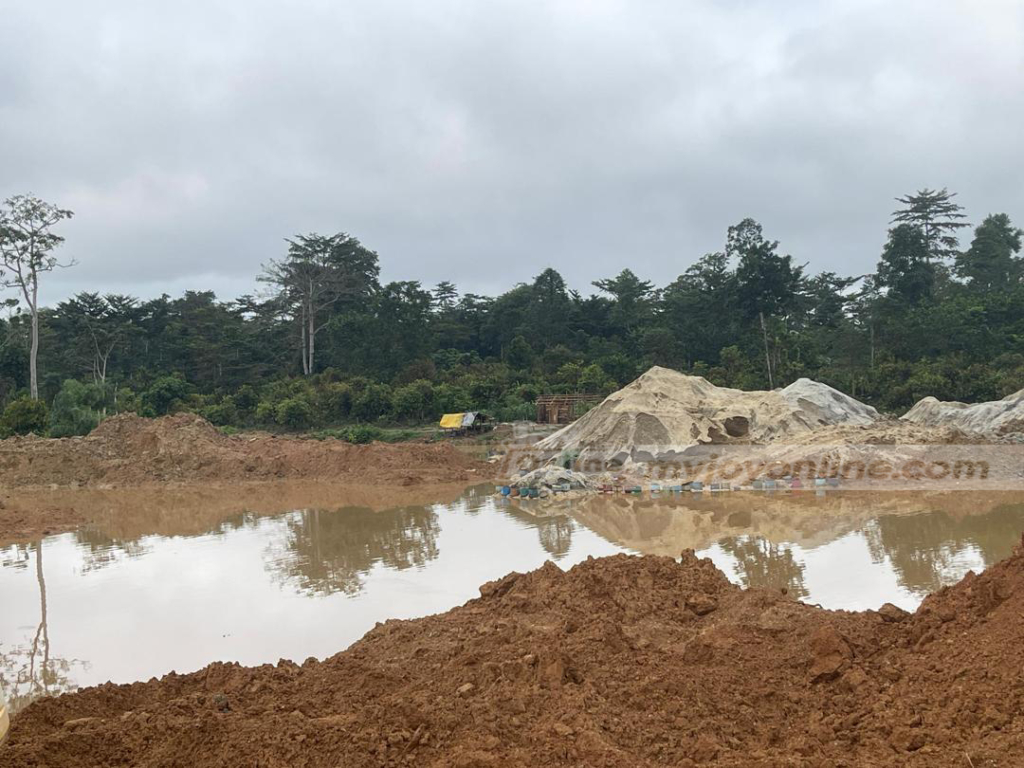
He also pointed to the environmental threats facing Ghana, particularly illegal mining.
“As a country affected by deforestation, illegal mining (galamsey), and water pollution, Ghana’s ecosystems are under severe stress.”
“Recent reports indicate that up to 60% of our water bodies have suffered pollution due to illegal mining — a form of uncontrolled environmental degradation that threatens health, agriculture, and future prosperity.”
The Nsawam-Adoagyiri MP argued that environmental protection must be seen as a long-term national responsibility.
“Environmental stability is foundational to food security, human health, and sustained economic development.”
“The consequences of ecological damage are intergenerational — they affect our children, their livelihoods, and their right to a healthy environment.”
He urged Ghana to introduce a domestic law criminalising ecocide and push for global recognition of the offence.
“Pass a Domestic Ecocide Law: Introduce a standalone legal provision defining and criminalising ecocide with clear thresholds for severity, duration, and impact.”
“Align with International Law: Advocate at the Assembly of States Parties of the International Criminal Court to include ecocide as the fifth international crime.”
Mr Annoh-Dompreh also commended proposals to create a national crime of ecocide as part of Ghana’s constitutional review process.
“I commend the government in proposing the creation of a national crime of Ecocide as part of the proposals made by the Constitutional Review Committee.”
He urged swift action to protect the country’s environmental future.
“I urge a swift progression in the creation of national ecocide legislation to protect our economy now and into the future.”
Latest Stories
-
Sammy Gyamfi never BoG has not ceded forex role to us – GoldBod
21 minutes -
High Court sets November 4 for ruling on Wontumi’s bail application
35 minutes -
Tetteh Kwetey files nomination for NDC Greater Accra Regional Chairmanship
44 minutes -
Korle Bu appeals for more doctors, nurses as A&E Centre struggles under pressure
57 minutes -
AFCON 2027Q: ‘I’m optimistic Black Stars can turn things around’ – Agyemang-Badu
58 minutes -
Digital innovation could widen Africa’s inequalities if people are left out – Sam Jonah
1 hour -
Galamsey is an economic, health and moral problem – Sam Jonah
1 hour -
Africa must create AI technology instead of paying to use it – Sam Jonah
1 hour -
2026 U-17 WWC: Black Maidens to face Norway, Brazil and Canada in Group C
1 hour -
Agbodza, Sam George move to curb fibre optic cable cuts during road works
1 hour -
2026 U-17 WWC: Black Maidens unveil 21-player squad for competition in Morocco
1 hour -
South Africa evacuation and the minority’s half-truth
1 hour -
‘You never know tomorrow’ – Anthony Baffoe on contesting for GFA Presidency
1 hour -
Obuasi SHTS head accused of sexually abusing students is NDC Juaben secretary seeking chairmanship
2 hours -
Cedi depreciates by 7.11% against dollar in August 2026 – BoG report
2 hours