

Audio By Carbonatix
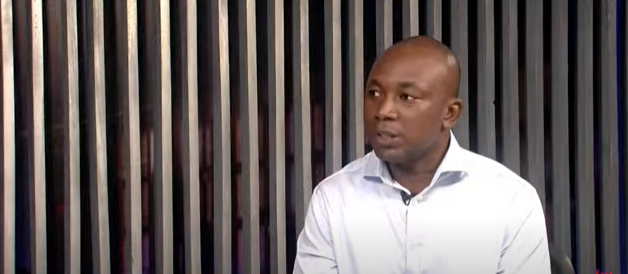
Economist, Professor Godfred Bokpin, says the International Monetary Fund (IMF) expects that Ghana’s negotiation team will engage in a transparent manner with them as the country’s domestic recovery plan is assessed for approval.
According to him, the IMF has already collected enough data to be able to pinpoint exactly what the problem is for the country, however, to avoid being blamed for government’s failure to fully and effectively implement an economic plan, it has delegated the drawing of the plan to the government.
He noted that if the government stays transparent and admits exactly where Ghana’s current fiscal problem stems from, it is likely the negotiation process for the IMF loan will be much shorter.
This means the government would be able to secure a deal, hopefully by the end of the year as has been projected.
Speaking on JoyNews’ PM Express Business Edition, he said, “I think it is more about what the country presents, and the country must go to the negotiation knowing very well that the IMF is not ignorant. They’ve been with us, they understand the issues, and more importantly because we just exited the 16th IMF programme and their latest report as honourable Seth Terkper said actually captures what the issues are.
“So what would shorten the negotiation would be more of transparency and full disclosure, and that is why the Fund will not impose a programme on us. Because it’s a bit more dangerous if the Fund imposes a programme on the country, so what it means is that if the programme doesn’t work, the blame goes to the Fund.
“But here, the Fund is asking you to make a diagnosis of the problem, how you see it. And sometimes too, when the Fund is asking you to make a diagnosis of the problem, the Fund is actually asking you to admit that the problem came from you, so that is important.”
Professor Bokpin stated that the government’s ability to make a proper diagnosis of the problem would inform the extent to which the government will be able to implement the programme at the close of negotiations, when the deal is approved.
“Because the programme will not be implemented by the IMF, it’s going to be implemented by we ourselves and that is why they call it Ghana government programme supported by the Fund. So transparency, full disclosure is very important.
“And we all know that there is a way that data speaks even if you don’t love the data, and for the IMF they’re driven by the data because data is their oxygen, and that is how they do it, it’s not only with respect to Ghana,” he said.
Latest Stories
-
Ghana’s mining deaths fall sharply, but Chamber insists ‘three deaths are too many’
55 minutes -
Tatale Sanguli officials destroy expired food products, warn traders
1 hour -
Police arrest two watchmen over alleged defilement of 14-year-old student
1 hour -
The woman behind General Mosquito: Could Ghana be meeting its next First Lady?
1 hour -
Court remands man over alleged Labone bank robbery attempt
1 hour -
Supreme Court to rule today on challenge to legal vacation warrants
1 hour -
Tamale Metropolitan Assembly distributes 10,000 bags of fertiliser to farmers
1 hour -
TUSAAG suspends strike, resumes work after renewed talks with government
1 hour -
PIAC marks 15 years of oil revenue accountability and transparency
2 hours -
Adongo calls for non-political interference in $1.46bn Heritage Fund review
2 hours -
FDA records GH¢70m surplus in 2025 amid concerns over ageing lab equipment
2 hours -
Arise Ghana demands stronger commitment to end galamsey
2 hours -
96% of Ghanaian pensioners willing to work beyond retirement age – Study
2 hours -
Ghana gets nuclear power plant simulator
2 hours -
Temporary Akosombo power control facility to be ready by September – Energy Ministry
2 hours