

Audio By Carbonatix
The World Bank Group in collaboration with the National Disaster Management Organisation (NADMO), National Development Planning Commission (NDPC) and other major stakeholders held a stakeholders consultation workshop towards the development of a national social protection shock response strategy to show the importance of shock response strategies in Ghana.
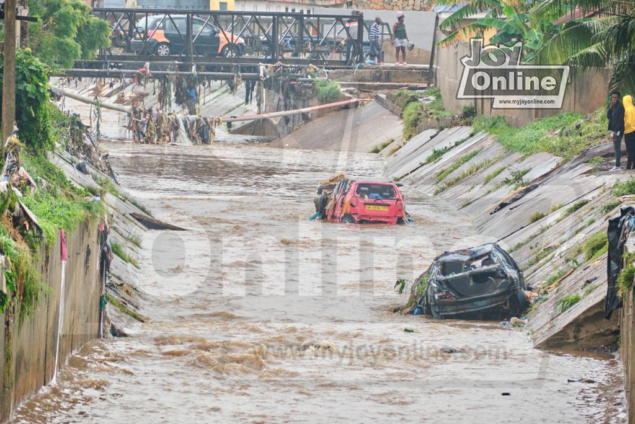
According to them, Ghana is rated “high” (the highest level on a four-point scale) for several climate-related shocks, including extreme heat; water scarcity; and urban, river and coastal flooding.
These were accounted to be some of the major risk factors in the country.
Estimates by the United Nations Office for Disaster Risk Reduction and CIMA Research Foundation indicated that, on average, floods in Ghana adversely affect 45,000 individuals annually accounting for 0.16 per cent of the country’s population, thus, reducing annual national Gross Domestic Product (GDP) by 0.23 per cent.
Also on average, drought in the country adversely affects 3.5 million individuals annually indicating 13 per cent of the population and reduces annual inflation by 15 per cent.
The accumulated effect of both flood and drought is a 15.23 per cent reduction in GDP and affects some 3,545,000 individuals annually representing some 13.16 per cent of the population.
The workshop focused on examining; the spatial distribution of drought and flood risk in Ghana, the association between the distribution of these risks and the distribution of the country’s population and poverty levels across districts to determine which region requires what social safety plan, and finally the association between the distribution of the risk and the distribution of social safety net programs participation levels across districts in the country.
The World Bank Group also discovered that both drought and flood risks are determined as increasing functions of “hazard” and “vulnerability” and decreasing functions of “capacity”.
That is, as “hazard” and “vulnerability” rise, floods and drought also rise likewise a fall in “capacity” leads to a fall in both floods and drought.
Hazard, according to them, is the probability of occurrence of a climatic shock, vulnerability is the potential impact of climatic shock as determined by land use and population density, and capacity is the institutional and organisational strength to respond to the shock.
Latest Stories
-
Mahama honours Nkrumah’s role in founding Non-Aligned Movement
10 minutes -
Tanker drivers demand audit and elections, cite poor representation and toll increase
25 minutes -
Bayport Ghana reports strong financial and ESG performance in 2025
31 minutes -
IGP deploys reinforcement team to contain violence in New Winneba shooting incident
33 minutes -
Two dead, 6 injured in Accra-Kumasi Highway crash
43 minutes -
Birth, death registration are mandatory – Deputy Registrar tells Ghanaians
1 hour -
GoldBod defends $1.315bn forex generation, says transactions backed by GANRAP
1 hour -
Sherif Ghali steps down as CEO of Ghana Chamber of Young Entrepreneurs after 10 years
1 hour -
Signals Bureau case: ‘I had about 60 questions’ – Atta Akyea welcomes extra cross-examination day
1 hour -
Africa’s colonial ecological debt could exceed hundreds of trillions of dollars – Report
1 hour -
Ibrahim Sulemana joins Sassuolo on loan from Atalanta
2 hours -
Former UK Prime Minister Keir Starmer to stand down as MP to focus on world affairs
2 hours -
Built to Last, Left to Rot: Ghana’s maintenance crisis
2 hours -
Japan Motors Ghana appoints Amine Kabbara as new Managing Director
2 hours -
Number of debit cards issued by banks decreased by 11.8% to 5.7m in 2025
2 hours