

Audio By Carbonatix
The International Monetary Fund has stated that Ghana breached the Debt Sustainability Analysis (DSA) thresholds, a situation that led the country into debt distress.
In a statement titled “Request for an arrangement under the Extended Credit Facility Programme”, the Fund said Ghana is in debt distress. It added that the country's debt level is also unsustainable.
“Given the ongoing debt restructuring and large and protracted breaches to the Debt Sustainability Analysis (DSA) thresholds, Ghana is in debt distress, and debt is assessed as unsustainable”.
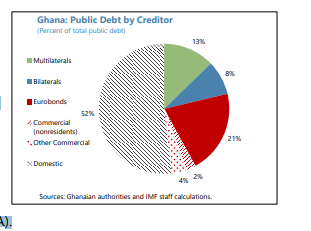
It pointed out that public debt increased to 88.1% of Gross Domestic Product by end-2022, almost evenly split between external (42.4% of GDP) and domestic (45.7% of GDP).
Again, the Fund mentioned that gross financing needs have reached about 19% of GDP.
“Under the proposed programmes baseline projections, which do not consider the possible outcome of the ongoing debt restructuring, the ratios of present value of public and external debt to GDP, and the ratios of external debt service to revenues and exports are and would remain above their LIC-DSF thresholds over the medium and long term”, it added.
Outlook subject to significant downside risks
The Fund further said that the outlook is subject to significant downside risks.
It explained that the baseline projections are predicated on successful programme execution and swift progress in implementing the authorities’ comprehensive debt restructuring and plans to address the large stock of domestic arrears, including to independent power producers (IPPs).
Notwithstanding mitigation strategies, it said that the domestic debt exchange presents significant risks to domestic financial sector stability, adding “exchange rate, credit, and liquidity risks further add to the vulnerabilities”.
“The authorities’ debt restructuring plans still leave a substantial need for T-bill [Treasury bills] issuance in the near term and expose Ghana to the uncertainty in domestic market conditions, though programme implementation and outreach may help mitigate financing risks. Domestic policy slippages represent a significant downside risk to the projections, further compounded by risks associated to the end-2024 general elections.”
Latest Stories
-
Skills Bridge Ghana Foundation trains 50 professionals in solar energy
3 minutes -
Photos: Mahama Ayariga inspects waste evacuation exercise at Agbogbloshie
4 minutes -
Photos: Mahama meets world leaders at 81st UN General Assembly
4 minutes -
From the Accra Reset to Reparatory Justice: Inside President Mahama’s diplomatic agenda in New York
6 minutes -
Photos: Ghana-China relations strengthened at China’s 77th anniversary celebration
8 minutes -
Majority says stronger enforcement drove rise in NACOC arrests
8 minutes -
He took fees above legal limit – Inusah Fuseini alleges in Baffour Awuah case
9 minutes -
Jan Alessie joins African Collaborations Group advisory board
9 minutes -
It has absolutely nothing to do with Salomey – Inusah Fuseini on Baffour Awuah’s EOCO case
19 minutes -
GES orders SHS heads to refund unauthorised fees collected from parents
22 minutes -
African Collaborations Group appoints Paulo J. Cruz as founding CEO
24 minutes -
Ethiopia and Tigray accuse each of launching offensives, fuelling fears of new war
24 minutes -
Teshie residents turn to wastewater as desalination plant shutdown deepens water crisis
28 minutes -
EPL: Semenyo earns Player of the Month nomination for September
29 minutes -
576 volunteers help remove 51.5 tonnes of waste from Nungua Beach, Accra
30 minutes