

Audio By Carbonatix
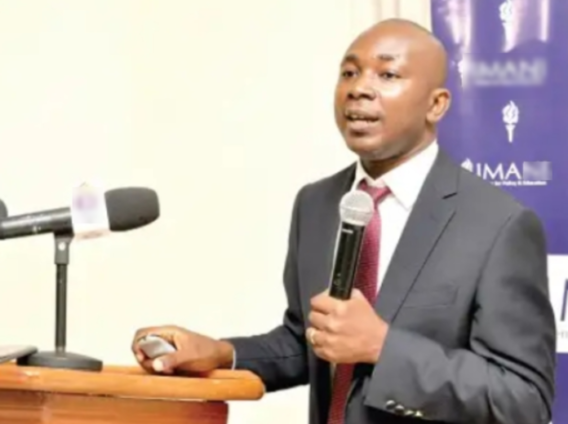
Economist Professor Godfred Bokpin has expressed worry that the design of the current International Monetary Fund (IMF) programme does not address the leakages and wastage of public funds.
According to him, the Fund overemphasised the need to increase revenue without setting up anti-graft systems that will prevent corrupt acts in Ghana’s public financial management system.
Speaking to Joy Business, Prof. Bokpin, argued that the current deal will leave Ghanaians more vulnerable.
“I have a problem with the design of the programme. By the time we are done, it will leave more Ghanaians vulnerable than it sought to achieve”, he said.
He explained that even though Ghana’s tax-to-GDP is not the best, improving revenue collection without blocking the loopholes that encourage corruption will yield little results.
“In as much as a spoiled child needs money, that spoiled child needs more discipline and measures to tackle corruption”, he said, adding that increasing revenue without proper measures to ensure its efficient usage will be counterproductive.
Prof. Bokpin is of the view that for a developing country with revenue leakage challenges, the programme should have outlined strict measures that will be disincentive acts of corruption.
“I have gone through the programme. The programme is largely mute on corruption measures. The programme is largely mute on wasteful expenditure cut. The programme is heavily based on revenue based fiscal consolidation. I think by design, it is an error”.
He stressed that it will be in the interest of the country to self-impose anti-graft measures to stop wastage in the public sector.
Businesses unhappy with aggressive revenue moves
The Ghana National Chamber of Commerce and Industry (GNCCI) earlier expressed worry about the revenue mobilisation under its $3 billion IMF support programme.
According to the Chamber, if the suggestions are implemented, it will adversely affect businesses that are already burdened with numerous taxes and other unfavourable conditions.
The Chief Executive Officer of the Chamber, Mark Badu-Aboagye indicated that at present, the country is undergoing some level of economic crisis.
“Businesses in Ghana are very ready. I told you, the last time that we conducted a research, we realised that the SMEs in Ghana are growth-oriented, which means that by giving them the opportunity they can grow to become multinationals.
However, he pointed out that, “When you introduce externalities like taxes, like high-interest rates, like levies, then you go to the bottom line and you realise that all of them are making losses, which means that, that component needs to be managed”, he said.
Latest Stories
-
Hearts of Oak star John Antwi eyes Black Stars recall
2 minutes -
GRA begins enforcement against uncustomed vehicles after amnesty ends
5 minutes -
Nilee Consult to host fifth Business Growth Accelerator Workshop in Accra
6 minutes -
Transport Minister admits Tema Port congestion, promises infrastructure upgrades
8 minutes -
Court fines trader GH¢12,000 for counterfeit Amuzu bitters and forged trademarks
8 minutes -
NPP challenges Sam George’s rural telephony claims, demands full project status report
10 minutes -
Bawumia mourns Anbariya Sunni leader Sheikh Saeed Abubakari
11 minutes -
Court rejects Mustapha Abdul-Hamid’s adjournment plea, orders trial to resume tomorrow
14 minutes -
Kumasi to go digital with outdoor advertising from 2027 – MCE
14 minutes -
Kuffour puts $5,000 on Kotoko to win 2026/27 GPL
20 minutes -
CSSPS challenges: Parents demand more placement centres as hundreds crowd GNAT Hall
40 minutes -
Corporal punishment ban contributing to falling academic performance – Adorye
49 minutes -
WHAT IS WRONG WITH US: We keep training Africa’s youth to search for chairs instead of building tables
51 minutes -
CIB Ghana launches 2026 edition of The Ghanaian Banker Magazine
57 minutes -
GRA warns buyers: Verify vehicle customs status before payment
1 hour