

Audio By Carbonatix
The rising cost of agriculture inputs, including fertilizer, is taking a huge toll on crop production and food prices.
In Ghana, high cost of fertilizer can lead to less production.
To mitigate the impact of the high cost of fertilizer on food security and to strengthen food system resilience in Ghana, SOS-GrEEn is promoting the production of organic fertilizer in some regions.

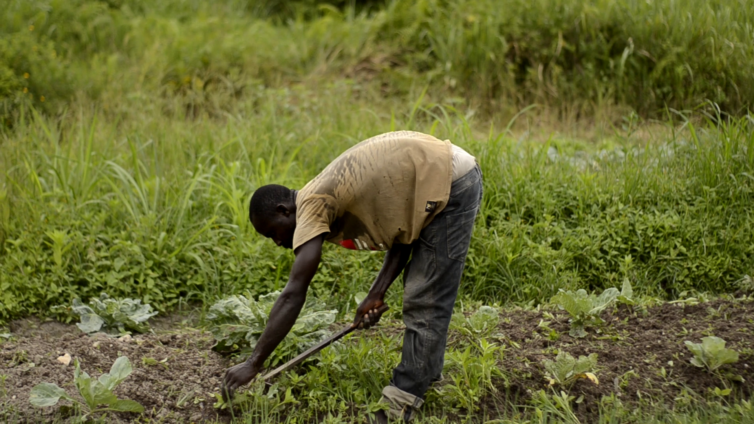
Frank Otu Acheampong spends over 2,000 Ghana cedis buying 6 boxes of fertilizer for his ten acre farm.
The high cost of farm production has affected his farm business financially.
"After SOS-GrEEn trained us on how to produce organic fertiliser with waste, I don't buy organic fertilizers anymore and this has help me to be financially stable," he said.
Currently, all inorganic fertilizers are imported with Nitrogen Phosphorus and Potassium (NPK) taking about 50% of the imports while urea, ammonia and the rest cumulatively take the remaining 50%.
In 2020, Ghana imported about 620,000 metric tonnes of fertilizer to feed the agricultural sector, especially for the planting for food and jobs programme, which had a significant impact on production.
SOS-GrEEn has trained farmers in the Ashanti and Western regions to make organic fertilizer to mitigate the challenges faced by farmers.

According to farmers, including Frank, "opting for organic fertilizer for his farm has improved yields and reduced cost"
Agnes a farmer said, "The training has really helped improve my rice farming. I use to spend the little I have on inorganic fertiliser but after learning how to produce fertilizer locally, I spend less on my own 3 acre of rice."
The SOS-GrEEn Project under the EU and UN Capital Development Fund (UNCDF) is effectively managing community waste and utilizing organic manure as fertilizer to reduce the presence of POPs (Persistent Organic Pollutants) in the environment while securing higher crop yields.

"The project has the goal of reducing the use of inorganic manure on farms and boost harvest. As part of our green agenda the skills we've equip the beneficiaries with to produce organic fertilizers will conserve the earth,"SOS-GrEEn Project Coordinator, Shaibu Fuseini revealed.
Latest Stories
-
Rockland Farms CEO Calls for Greater Support for Women in Agriculture
14 minutes -
AFCON 2027Q: Interim Black Stars technical team to take charge of November games
40 minutes -
Gov’t suspends implementation of L.I. restricting preaching and hawking in moving vehicles
45 minutes -
Three Saudi nationals killed in Houthi attacks on Riyadh airport
1 hour -
Jinapor demands accountability from energy sector agencies ahead of 2027
1 hour -
Cars torched and shops looted as anti-migrant violence erupts in South Africa
1 hour -
We’ll strengthen unity and party structures to win 2028 election – John Boadu assures Kufuor
1 hour -
Mahama’s meeting with UN financial inclusion renews focus on women’s access to finance – Joyce Bawah Mogtari
1 hour -
‘Africa is not the future; Africa is the now’ — Sammy Gyamfi tells African youth
1 hour -
Mahama begins 2-day ‘Resetting Ghana’ tour of Ahafo Region
1 hour -
It is a nuisance law; stop pretending it is a religious war
2 hours -
KGL U17 Colts 2026: Prempeh Elite Academy, Western Region, two others battle for final berths
2 hours -
LA 2028: Near misses and the crashouts, but Black Queens cannot afford another Olympic Games slip-up
2 hours -
Wode Maya recounts how he won Miss Trudy’s heart with Shatta Wale’s song
2 hours -
Dede Chancelor makes appearance at Milan Fashion Week 2026
3 hours