

Audio By Carbonatix
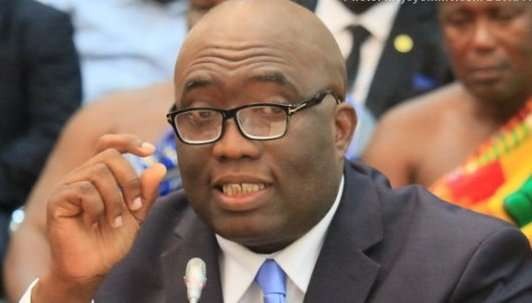
Former Minister of Railways Development, Joe Ghartey has stated that he never paid any money to AI Sky neither did he authorize the payment of US$2 million to fund the failed Accra Sky Train Project.
Speaking to Accra-based Citi FM, he stated that he initially made the promoters of the Accra Sky Train Project aware that his Ministry did not have the budget to fund the proposed project.
He, however, said he welcomed the project as a Build, Operate Transfer (BOT) Project.
Mr Ghartey, who's an aspiring flagbearer of the governing New Patriotic Party (NPP), said his Ministry then signed a Memorandum of Understanding in February 2018 and signed another agreement with the promoters in November 2018.
He added that a concession agreement was signed with the promoters in 2019 which was subject to several conditions precedent including approval by Cabinet, approval by Parliament, approval by the Ministry of Finance, and the conduct of a Value for Money Audit, among others.
All these conditions needed to be satisfied before the concession agreement took effect.
He clarified that the US$2 million transaction was between Ghana Infrastructure Investment Fund (GIIF) and the investors, hence all questions and demands should be channeled to the Fund and not him.
"It is the Ghana Infrastructure Investment Fund that paid the money and the Fund is mandated to make such payments and so if the Minority wants anyone to refund the money, they should tell the Auditor General to ask the Fund to refund the money."
“It is the statutory corporation that has the power to make such payments and so you can ask them," he explained.
The Member of Parliament for Essikado-Ketan further explained that the 2019 concession agreement was signed in South Africa and the investors were supposed to come to Ghana with their technical team to execute the project and complete all agreements in 2020.
However, due to COVID and lockdowns in both South Africa and Ghana, their programme was disrupted while he was serving as Minister.
"I went to South Africa in 2018 to make the presentation because the quality of life is affected by heavy traffic and then the South Africans came."
"The company went back and said they wanted a concession agreement of thirty years and I said it was not possible. The company went away and was supposed to come in 2020 and then there was COVID-19."
"And so as far as my Ministry is concerned, we did not give them any money. I didn't have any money and I didn't have the power to pay any money and I did not pay any money. I don't have the power to write for payment to the company in Mauritius,” Mr. Ghartey mentioned.
The Ghana Infrastructure Investment Fund was established to mobilize, manage, coordinate and provide financial resources for investment in a diversified portfolio of infrastructure projects in Ghana.
Latest Stories
-
Jerry Aye: The life & times of Robert Mugabe
9 minutes -
Asiedu Nketiah says better government begins before Election Day
18 minutes -
Colleges of Education call for National AI Policy and digital resources for teachers
19 minutes -
AngloGold Ashanti empowers 22 Sanso women through apprenticeship to entrepreneurship programme
29 minutes -
Gov’t advances National Data Exchange Hub under US$50m digital project – Sam George
36 minutes -
Alex Asmah Foundation launched in Kumasi to support youth development across Ghana
36 minutes -
School placement is absolutely free – Education Ministry
37 minutes -
Burkina Faso FA Prez Oumarou Sawadogo takes over as WAFU B President
39 minutes -
CSSPS self-placement portal opens for candidates unable to secure choices
43 minutes -
James Korsah-Brown calls for Tourism Minister to be changed
45 minutes -
Death in the dark: Family demands answers after dialysis patient dies at TTH during power outage
52 minutes -
11 Ghanaian Universities to embed One Million Coders certifications in degree programmes
53 minutes -
Government to pilot Electronic Document Wallet in fourth quarter – Sam George
56 minutes -
Kenya minister warns foreigners against ‘misusing’ visas to trade
59 minutes -
NACOC shuts down Amsterdam pub at Laboma over suspected Narcotics activities
59 minutes