

Audio By Carbonatix
In Ghana’s second-largest city, a climate journalist turns everyday transport into a quiet form of resistance against carbon emissions.
In Kumasi, Ghana’s second-largest city, the traffic rarely sleeps. From early morning until dusk, engines idle, horns blare and exhaust fumes hang in the air, a familiar haze in a city expanding faster than its roads can cope with. Congestion here is not just an inconvenience; it is a steady contributor to air pollution, rising transport costs and carbon emissions – a reality shared by many growing cities across the Global South.
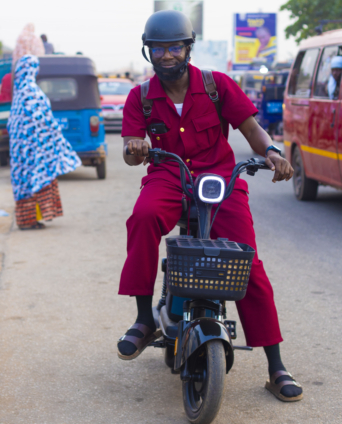
Threading his way through this daily gridlock on an electric bicycle is Engr. Mahmud Mohammed-Nurudeen, a science and climate journalist who has decided that the climate crisis he reports on should also shape how he lives.
For Mohammed-Nurudeen, the e-bike is neither a novelty nor a lifestyle statement. It is a practical response to a problem he has spent years documenting: the gap between climate rhetoric and everyday behaviour.
From reporting the crisis to living the response
Mohammed-Nurudeen’s work sits at the crossroads of journalism, advocacy and policy. He reports widely on health, the environment and climate change, while also serving as executive director of the Centre for Climate Change and Food Security (CCCFS) and as a director of the West African Journalists for Environment, Science, Health and Agriculture (WAJESHA). These roles place him firmly within West Africa’s climate communication and engagement space.
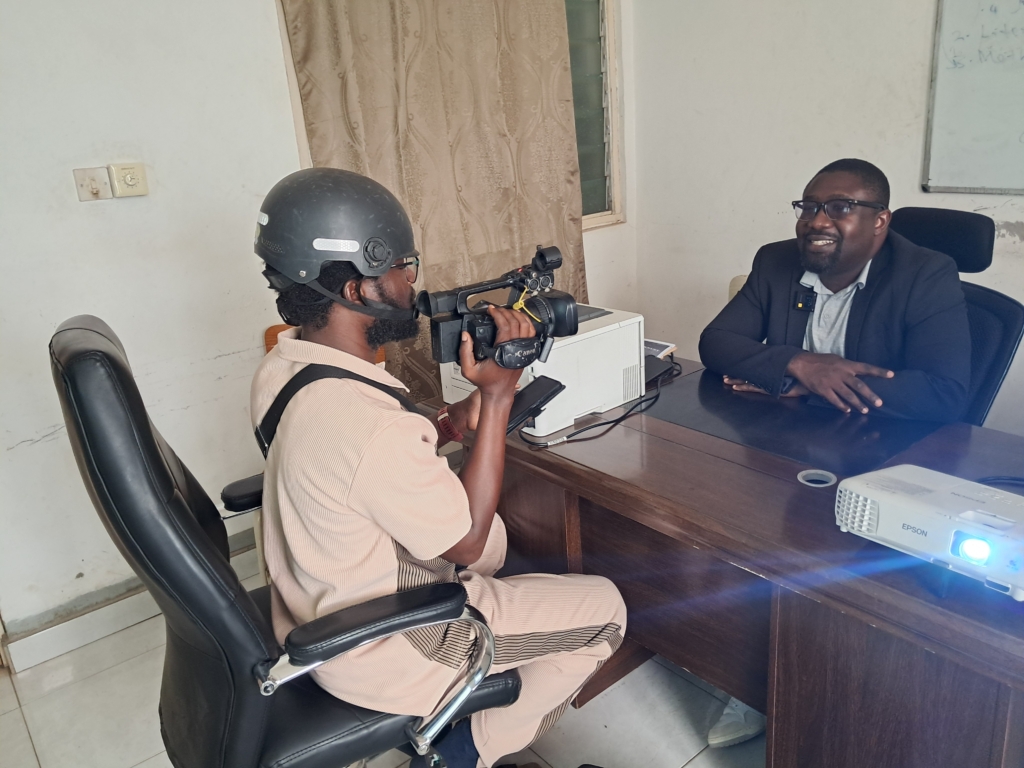
“Climate leadership must be visible,” he says. “We cannot continue to speak about solutions while our daily choices contradict the message.”
That belief led him to adopt an electric bicycle for most of his daily movements – from reporting assignments to official meetings – in a city where petrol-powered vehicles dominate the streets.
Moving through the city, differently
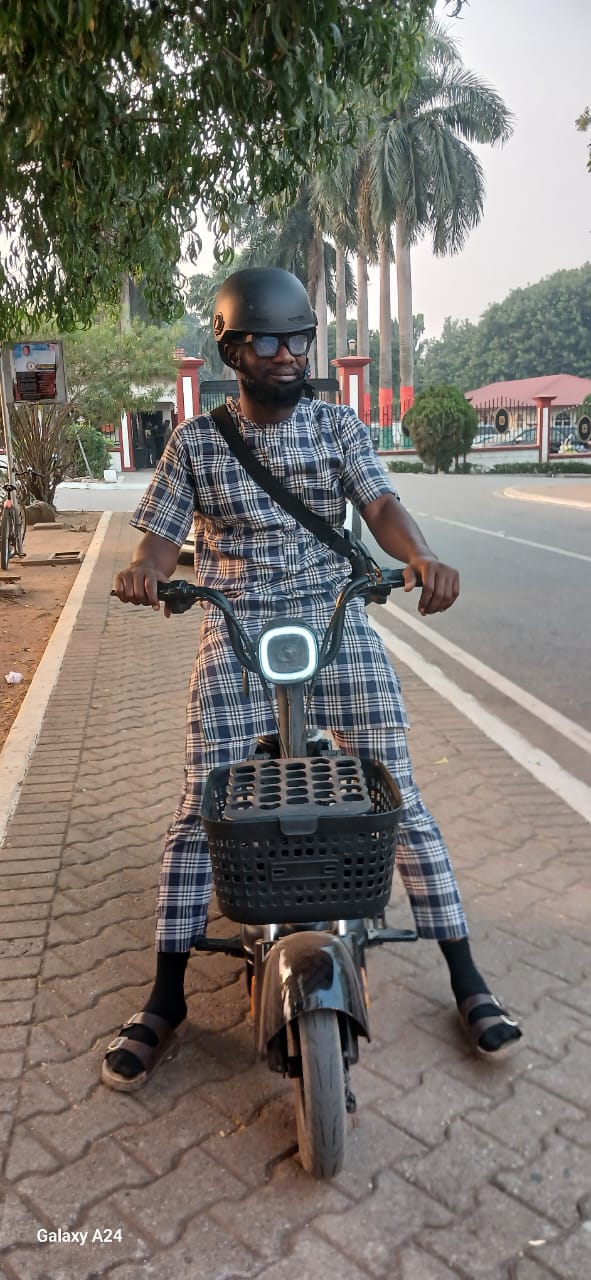
Like many African urban centres, Kumasi’s transport system is defined by congestion and unpredictability. Commuters often spend hours in traffic, negotiating fares that fluctuate with fuel prices and road conditions. For Mohammed-Nurudeen, the e-bike offers a different experience of the city.
“While passengers are stuck in traffic and negotiating fares, I move freely in and out of the central business district,” he says.
The environmental benefit comes with an economic one. A single charge, he explains, can last up to three days, depending on usage – a cost-saving alternative to fuel-powered transport in a city where transport expenses eat into daily incomes.
When the street becomes a classroom
Riding an electric bicycle through Kumasi also attracts attention. Mohammed-Nurudeen says curious onlookers frequently stop him.
“People ask how it works, how far it can go, and where they can get one,” he says.
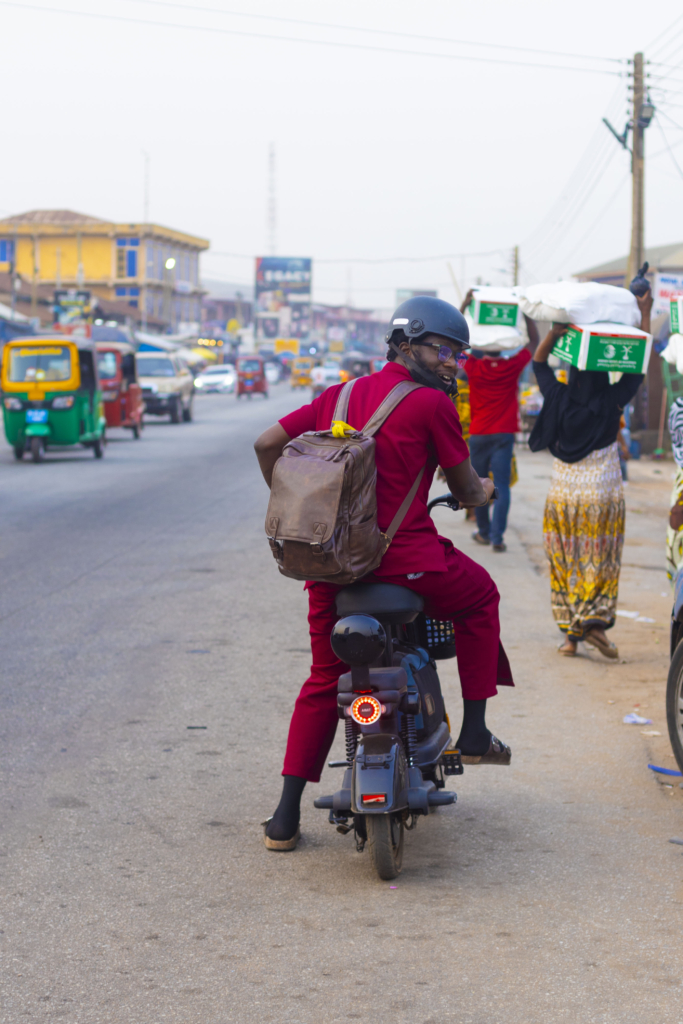
These conversations, he believes, are as important as organised climate campaigns. They turn streets into informal classrooms, where climate solutions feel tangible rather than abstract, and where curiosity replaces scepticism.
Campuses as climate laboratories
One setting where Mohammed-Nurudeen believes e-bikes could make an immediate difference is on university campuses. Across Ghana and much of Africa, campuses are increasingly crowded with private cars and motorbikes, contributing to localised air pollution.
“E-bikes are ideal for students moving between lectures and hostels,” he says. “If even half of the students adopted them, university campuses could become living examples of climate solutions.”
Beyond emissions reductions, he argues, such choices could help shape climate-conscious habits among young people – a crucial consideration on a continent where the majority of the population is under 30.
Globally, transport remains one of the fastest-growing sources of carbon emissions, particularly in urban areas of developing countries. Mohammed-Nurudeen is clear that personal action cannot replace large-scale policy reform. But he insists it still matters.
“Climate action is not only about governments and agreements,” he says. “It is also about daily decisions – how we move, consume and live.”
His quiet journeys through Kumasi align with Ghana’s climate commitments under its Nationally Determined Contributions and echo the broader ambitions of the Paris Agreement and the UN Sustainable Development Goals, particularly those focused on climate action and sustainable cities.
In a world searching for scalable responses to the climate crisis, Mohammed-Nurudeen’s electric bicycle offers a modest reminder: that sometimes the most persuasive climate arguments are not delivered in conference halls or policy documents, but played out daily on the streets – quietly, persistently, and on two wheels.
Latest Stories
-
Let The Constitution direct Chieftaincy to deliver “All Development Is Local”
14 minutes -
Ghana explores centre of excellence for hearing, communication and cochlear implant care
2 hours -
Schizophrenia-related disorders lead mental health cases recorded in Ghana
2 hours -
Dutch authorities enlist Ghana in hunt for fugitive drug lord Bolle Jos
2 hours -
Ghana housing finance conference adopts communiqué to improve affordable housing access
7 hours -
Special Initiatives Minister urges Wa Technical Institute to enrol more girls as EU-backed solar training lab opens
7 hours -
In the matter of my first year at the Bar
7 hours -
ActionAid Ghana calls for an end to child marriage, greater investment in girls’ rights
8 hours -
Newsfile to tackle World Cup visa scandal, beach demolitions, education strikes, BRICS bid
8 hours -
UK-Ghana Trade & Investment Summit: Trade Resource Centre to help businesses maximise UK-Ghana trade opportunities
8 hours -
Embassy of Denmark celebrates World Maritime Day
8 hours -
Linking LEAP to productive inclusion could cut extreme poverty by 2030 – UNICEF
9 hours -
Trade Ministry backs use of creative arts to rehabilitate prison inmates
9 hours -
Negotiations with government to continue despite strike suspension – GNAT
10 hours -
‘Ghana cannot afford to waste public resources; every cedi has a job’ – Ato Forson
10 hours